Turn the Page into a Sandstorm Safety Map
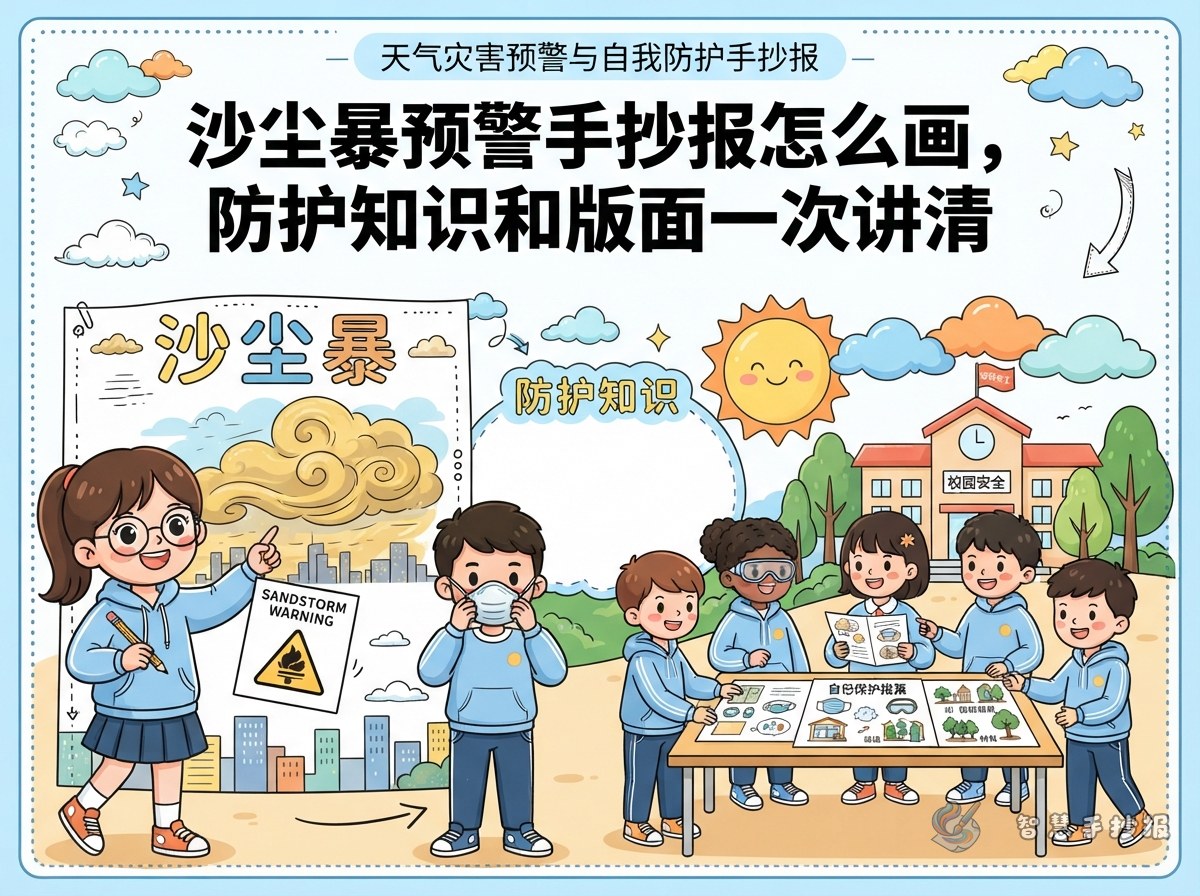
A sandstorm warning poster does not need to cover the whole page with swirling dust. Instead, design it as a route from “receiving a warning” to “getting home safely.” Place the title at the top or in the center, and use yellow, brown, and blue to show dust, sky, and safe spaces. The main idea should be clear at first glance: this is a poster about protecting yourself.
- Warning point: Draw a weather alert sign and write “Check local weather updates.”
- Protection section: Add small icons of a mask, protective glasses, and closed windows with short explanations.
- Danger spots: Show trees, billboards, and temporary structures that people should stay away from.
- Safe destination: Use a house, family, or classroom to remind readers to follow adults’ and teachers’ instructions.
Build the Message Around Four Stops
Check the warning and stay indoors when possible
You can write: “Before a sandstorm arrives, check local weather alerts and notices from school or family members. If going outside is not necessary, stay indoors.” Put this message in the upper-left corner as the starting point of the poster.
Cover yourself if you must go out
Explain the advice in child-friendly words: if going outside is necessary, go with an adult, wear a suitable mask and protective glasses, cover exposed skin, and spend as little time as possible in the dust. If sand gets into the eyes, do not rub them hard; tell an adult right away.
Stay away from unstable objects
Add a bold reminder: “Keep away from large trees, walls, billboards, and temporary structures. Do not wait in exposed windy places. Slow down near roads and look carefully.” Short sentences are easier for elementary students to read and remember.
Clean up after returning indoors
For the final stop, write: “Close the windows, wash your hands and face, and remove dust from your clothes. If your eyes, throat, or breathing feel noticeably uncomfortable, tell a parent and seek help when needed.”
Show the Wind Without Covering the Page in Yellow
Draw a curved stream of dust through the center. On one side, show blowing sand; on the other, draw a safe house with closed windows. Add a mask, protective glasses, window, tree, and warning symbol beside the dust line so that each picture matches one safety message.
- Use orange-yellow lettering or a dark brown outline to make the title feel connected to changing weather.
- Place key reminders inside blue or green boxes so they contrast with the warm colors of the dust.
- Keep each section to two or three sentences and leave some blank space around the borders.
- Connect “check the warning—stay indoors—protect yourself—clean up” with arrows to guide the reading order.
Finish with a Quick Safety Practice
After completing the poster, point to each section and ask yourself: Where can I check a warning? When should I avoid going outside? What should I cover when I go out? What should I do first after returning home? If each question can be answered in one sentence, the poster has explained the main ideas clearly. To continue arranging the page, bring these sections and materials into the Zhihui Shouchaobao WeChat Mini Program and choose a suitable layout.