Start with a clear purpose
A heat warning poster should do more than show summer drawings. Its main job is to remind readers how to stay safe in very hot weather. Students can imagine the poster is for classmates, parents, or family members. That makes the content more practical and easier to organize.
You can use a title like “What Should We Do During a Heat Warning?” or “Summer Heat Safety Tips.” A short subtitle such as “Stay Cool, Stay Safe” also works well.
Three key ideas to write about
What a heat warning means
Use a few simple sentences to explain that a heat warning tells people the weather is unusually hot and that heatstroke or dehydration may happen more easily. The explanation should be short and easy for children to understand.
When heatstroke is more likely
- Playing outside for a long time under strong sunlight
- Not drinking enough water
- Wearing thick clothes in hot weather
- Staying in stuffy rooms with poor airflow
- Going outside without shade or protection
How to stay safe
- Drink water regularly
- Avoid going out during the hottest hours
- Wear a sun hat and light clothing
- Rest in cool or shaded places
- Sleep well and avoid overexertion
- Tell an adult right away if you feel dizzy or sick
Useful sections for the poster
To make the page feel complete, break the content into small blocks instead of writing long paragraphs.
- Heat Alert Basics: Explain the meaning of the warning in 2 or 3 sentences.
- Warning Signs: List symptoms like dizziness, thirst, weakness, and heavy sweating.
- Cool Choices: Add hydration, shade, rest, airflow, and safe exercise habits.
- Family Reminders: Mention extra care for children and older family members.
- Safety Slogan: Add one short and memorable line.
Try a warm-and-cool page layout
This topic looks great with contrast. Use orange or yellow in the top area to show heat and sunshine, then use light blue below to show water, cooling, and protection. This creates a more interesting layout than a standard box design.
- Place the main title in the center
- Put the meaning of the warning and symptoms on one side
- Put prevention tips and outdoor reminders on the other side
- Use the bottom area for a checklist or a short safety pledge
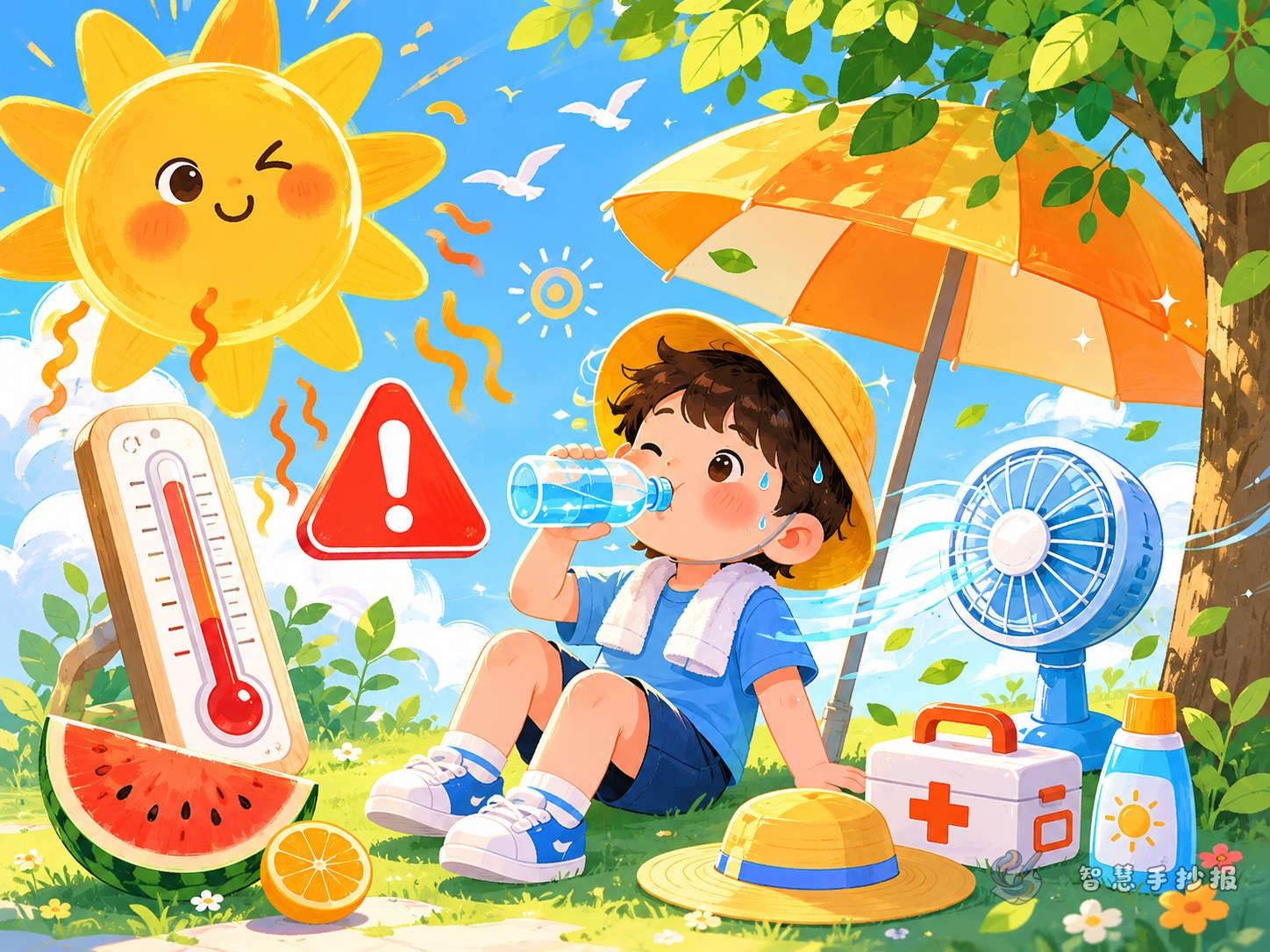
Decorations can include the sun, water bottle, hat, fan, watermelon, or thermometer, but leave enough space so the text stays easy to read.
Short lines students can copy
- Drink water often in hot weather.
- Too much time in strong sunlight can cause heatstroke.
- Wear a hat and stay in the shade when possible.
- Rest well and avoid too much exercise in the heat.
- If you feel sick, tell an adult at once.
- Heat safety starts with small daily habits.
Check these points before finishing
- Does the poster clearly connect heat warnings with heatstroke prevention?
- Are the safety tips specific and useful?
- Is the layout easy to read, with a clear title and neat sections?
If you want to keep improving the page, you can continue refining the layout, colors, and sections in the Zhihui Handwritten Newspaper mini program.