Start with One Main Idea: Inside Earth and on the Surface
A common problem with this poster is drawing the Earth's layers in one corner and writing about plates in another, with no clear link. Keep one main idea in mind: Earth has layers inside, and the outer rocky layer is broken into plates. This gives your poster a clear direction.
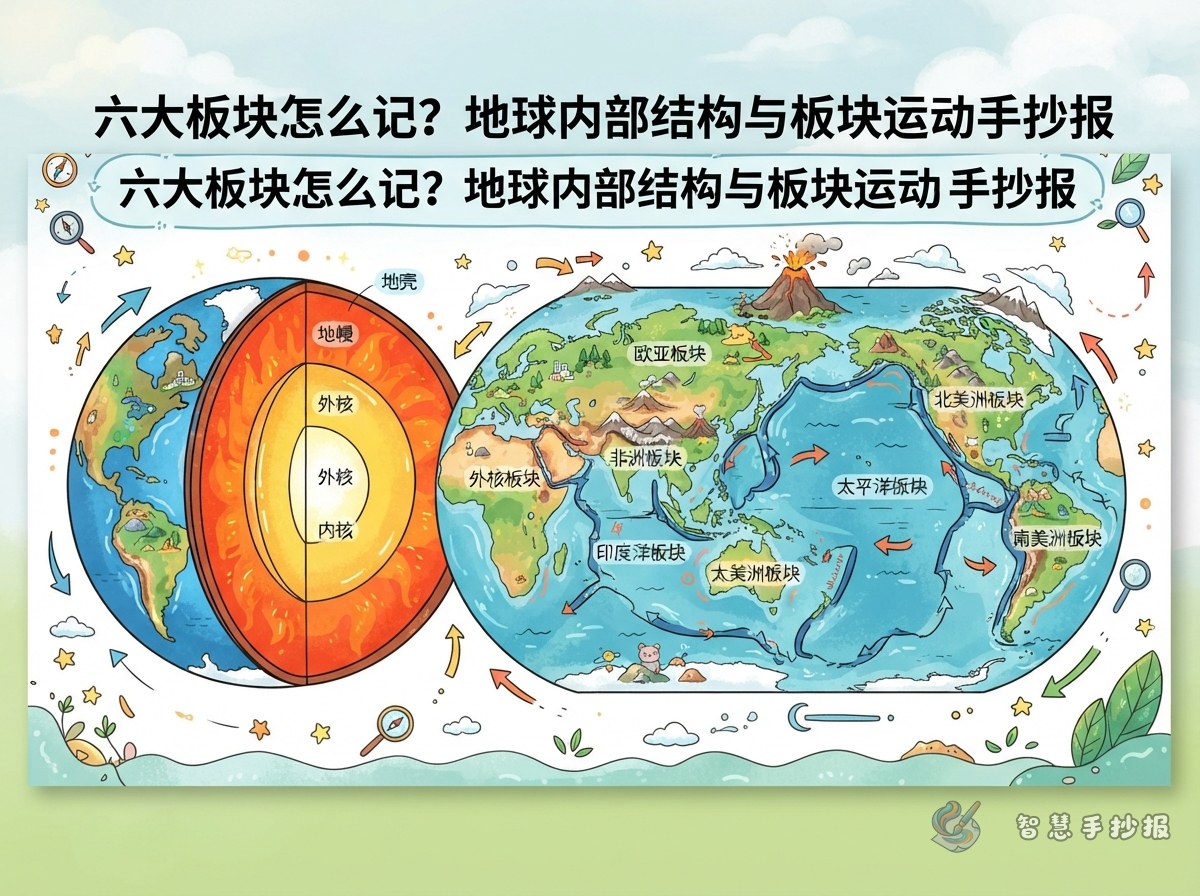
Divide the page into three parts: a cross-section of Earth on the left, a simplified plate map in the middle, and memory phrases or short questions on the right. Readers can then see how the inside and the surface connect.
A Memory Phrase for the Six Major Plates
The six major plates are the Eurasian, African, American, Pacific, Indian Ocean, and Antarctic plates. Use the short phrase “Asia, Africa, America, Pacific, Indian, Antarctic” to remember them in order.
- Asia: Eurasian Plate
- Africa: African Plate
- America: American Plate
- Pacific: Pacific Plate
- Indian: Indian Ocean Plate
- Antarctic: Antarctic Plate
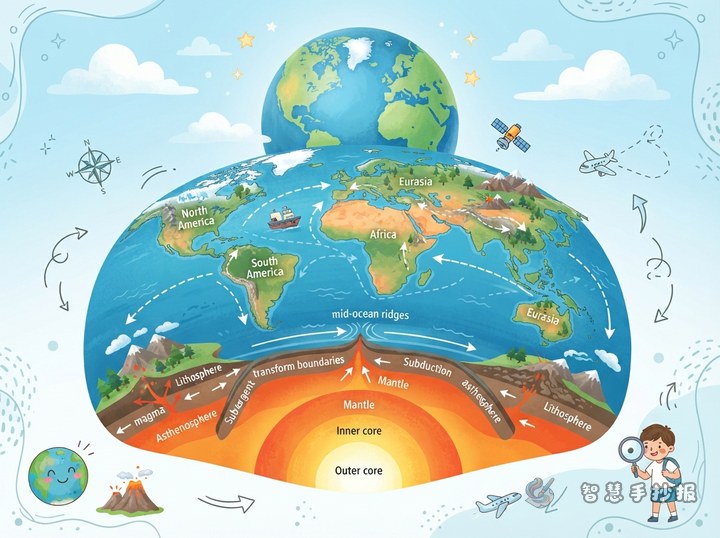
On the poster, simplify the world map into large puzzle-like pieces. Color each plate differently and add a sentence: “Plates are like a puzzle, but they slowly move.” This is easy to understand and introduces plate motion.
Short Fact Cards You Can Copy onto the Poster
If you are not sure what to write, use small fact cards. Each card can have only two or three sentences:
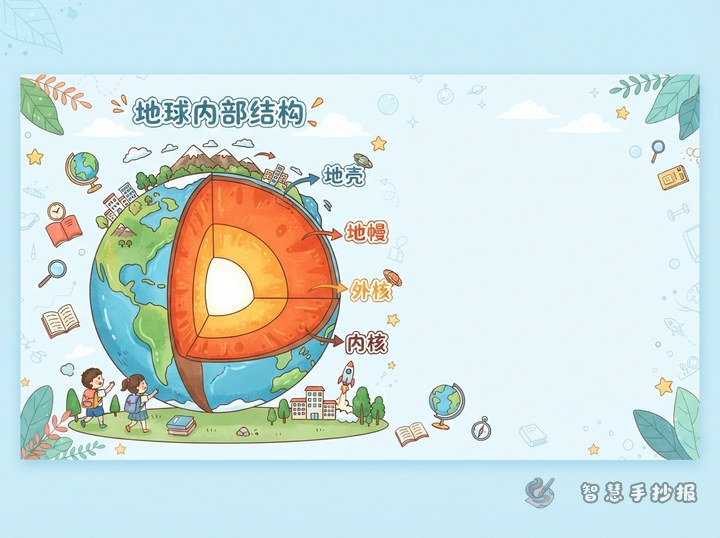
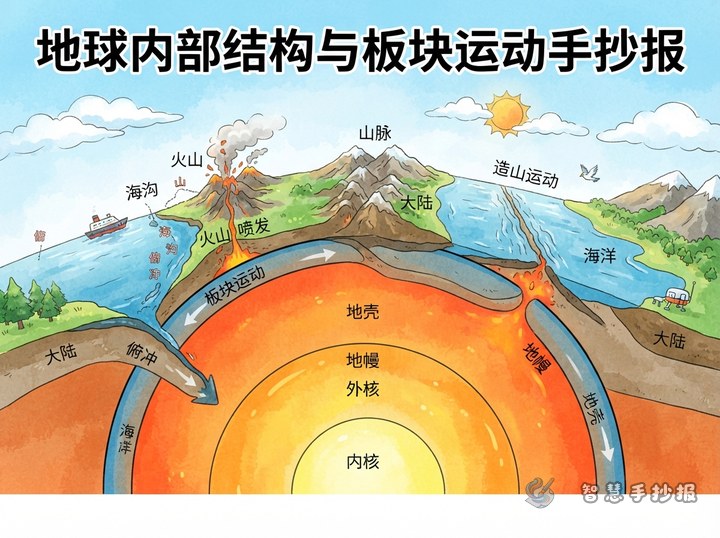
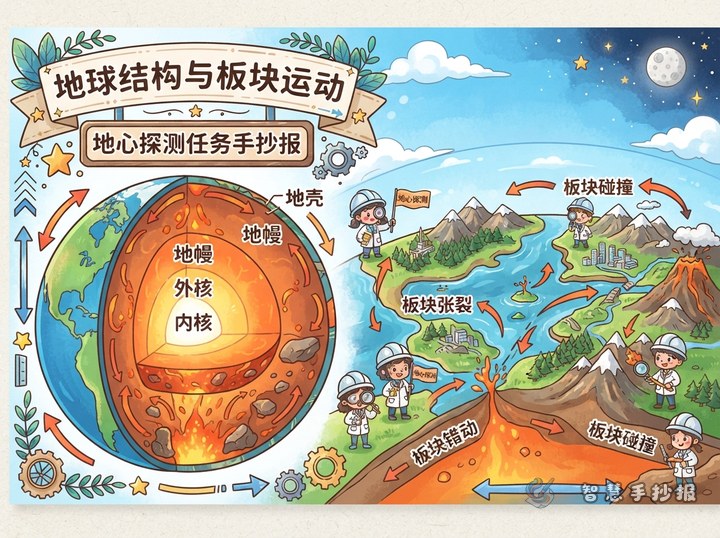
- Earth's layers: Earth is roughly divided into the crust, mantle, outer core, and inner core. The crust is thin, the mantle is thick, and the core is at the center.
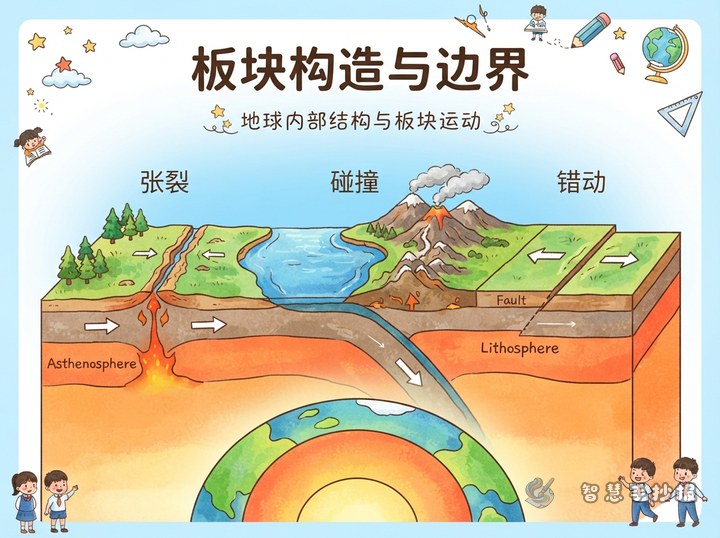
- Lithosphere: The lithosphere includes the crust and the top of the mantle. It is a hard outer shell that is broken into plates.
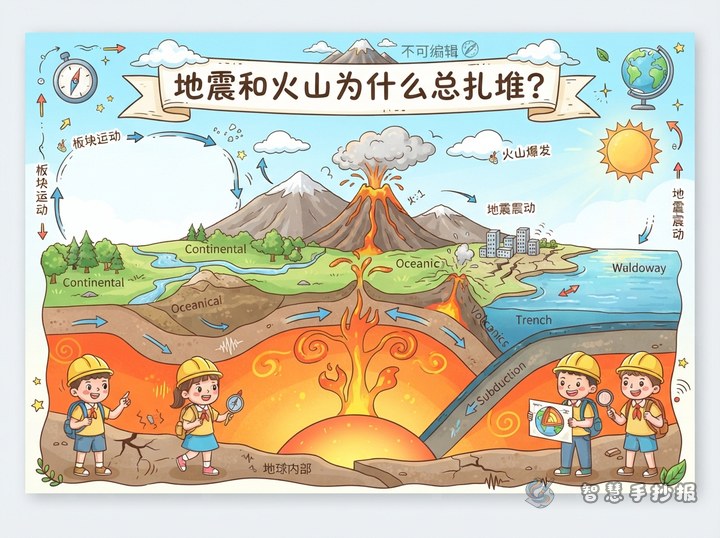
- Plate motion: Plates can push together, pull apart, or slide past each other. Pushing can form mountains, pulling apart can form rift valleys, and sliding can cause earthquakes.
- Memory card: Asia, Africa, America, Pacific, Indian, Antarctic — six major plates to remember.
Do not turn the poster into a textbook. Short cards leave room for drawings and make the layout cleaner.
Layout Plan: Cross-Section, Plate Map, and Mini Q&A
Here is a simple layout that works well for primary school students:
- Top title: Write “The Moving Earth Puzzle” or “What Is Inside Earth and Why Does the Surface Move?”
- Left column: Draw a large Earth circle and label the crust, mantle, outer core, and inner core with different colors.
- Middle column: Draw a simplified world map, divide it into six major plates, and label them with the memory phrase.
- Right column: Add a mini Q&A: Why do plates move? Why do earthquakes and volcanoes often happen near plate boundaries?
- Bottom: Add a small banner with a closing line such as “Earth is active, and science is fun.”
To make the poster lively, draw small arrows, wavy lines, or tiny volcanoes near plate boundaries. Leave enough white space so the text and pictures do not feel crowded.
Step-by-Step Making Order and Common Mistakes
Use pencil first, then color. Draw the large shapes before the small text. The order can be: draw the Earth circle and inner layers; sketch the world plate map; write the title and fact cards; color, outline, and add small decorations.
Three common mistakes are: writing “six major continents” instead of “six major plates”; drawing only Earth's layers without plate motion; and making the text too dense. If you include the cross-section, the plate map, and the memory phrase, your poster will be complete. If you want to adjust the layout further, you can use the WeChat mini program “Smart Handwritten Newspaper” to find templates and materials and continue improving your work.