Turn Earth into a Moving Puzzle
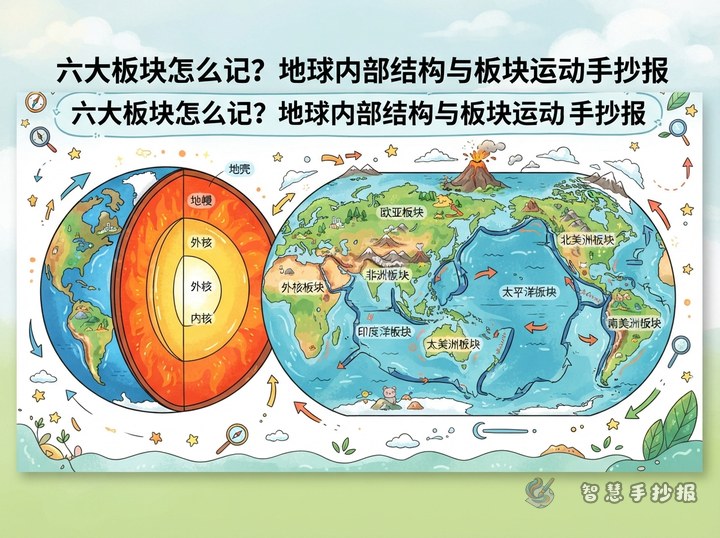
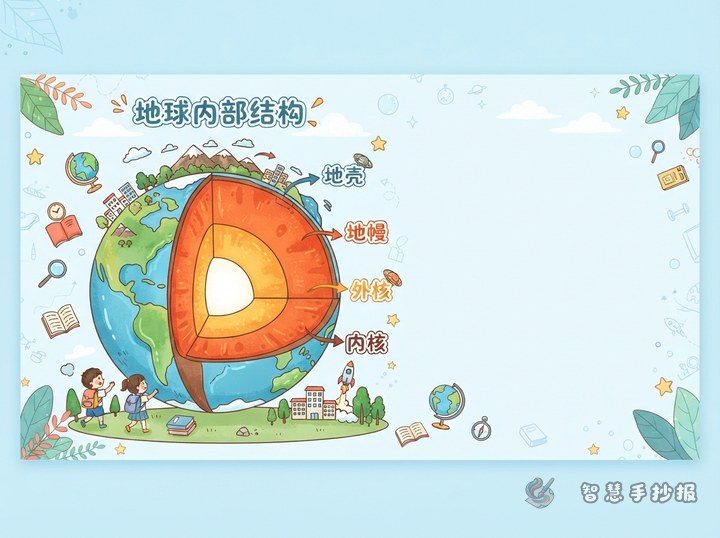
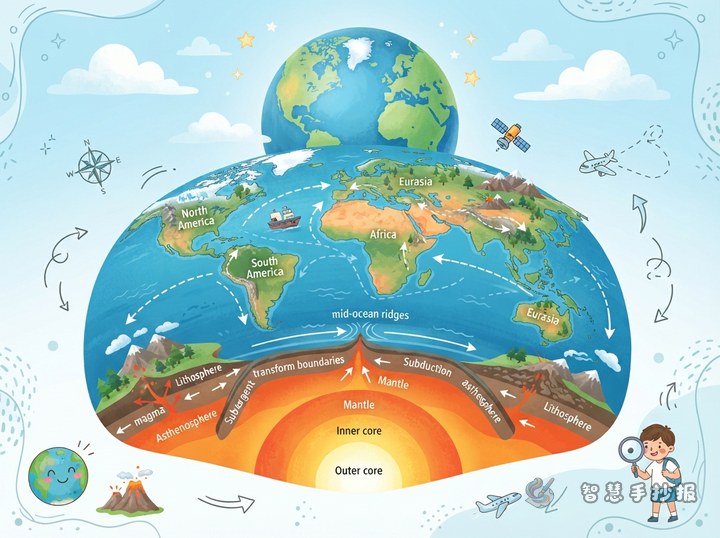
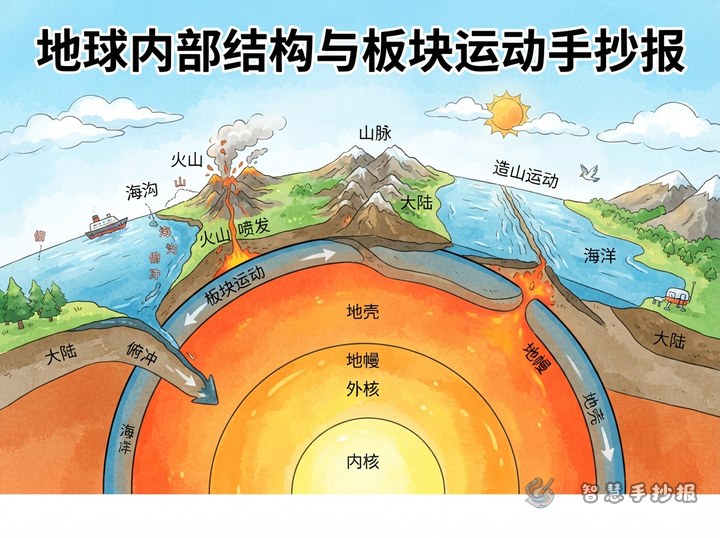
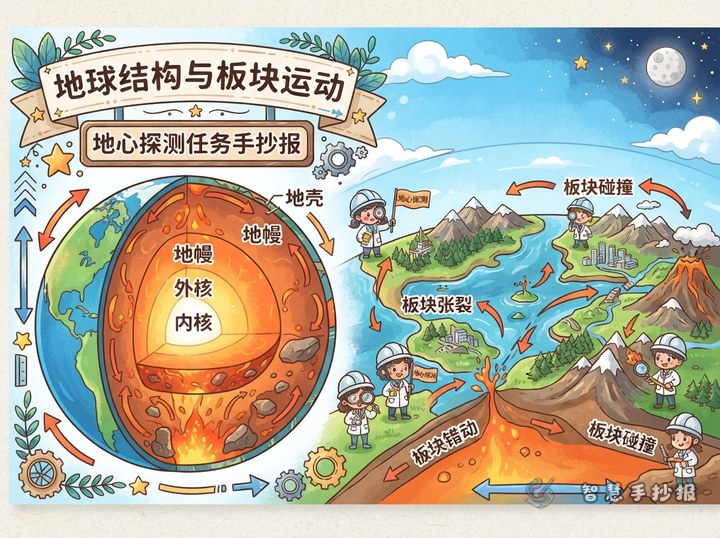
This poster can focus on plate boundaries instead of becoming a general introduction to Earth. Draw a cutaway Earth in the center: label the crust, mantle, outer core, and inner core, then add several uneven rock plates at the surface. Use bold arrows to show plates moving apart, toward each other, or sideways.
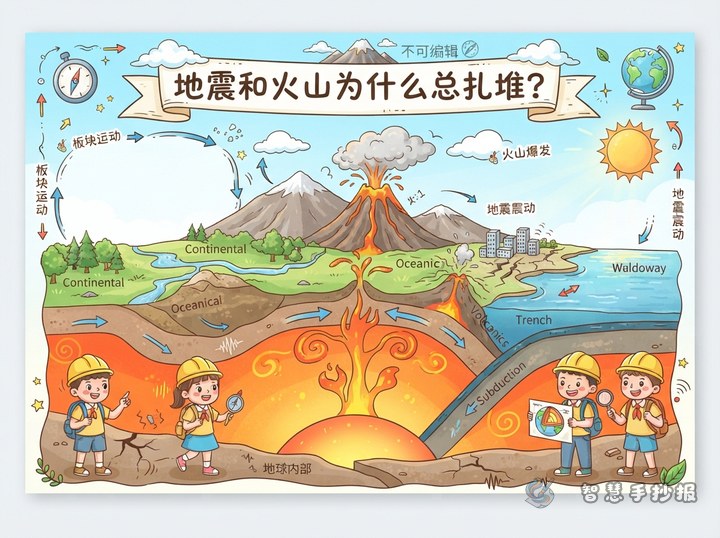
Main idea: The lithosphere at Earth’s surface is divided into many plates rather than forming one unbroken shell. These plates move slowly over the softer upper mantle, and their boundaries are often active areas for earthquakes, volcanoes, and changes in landforms.
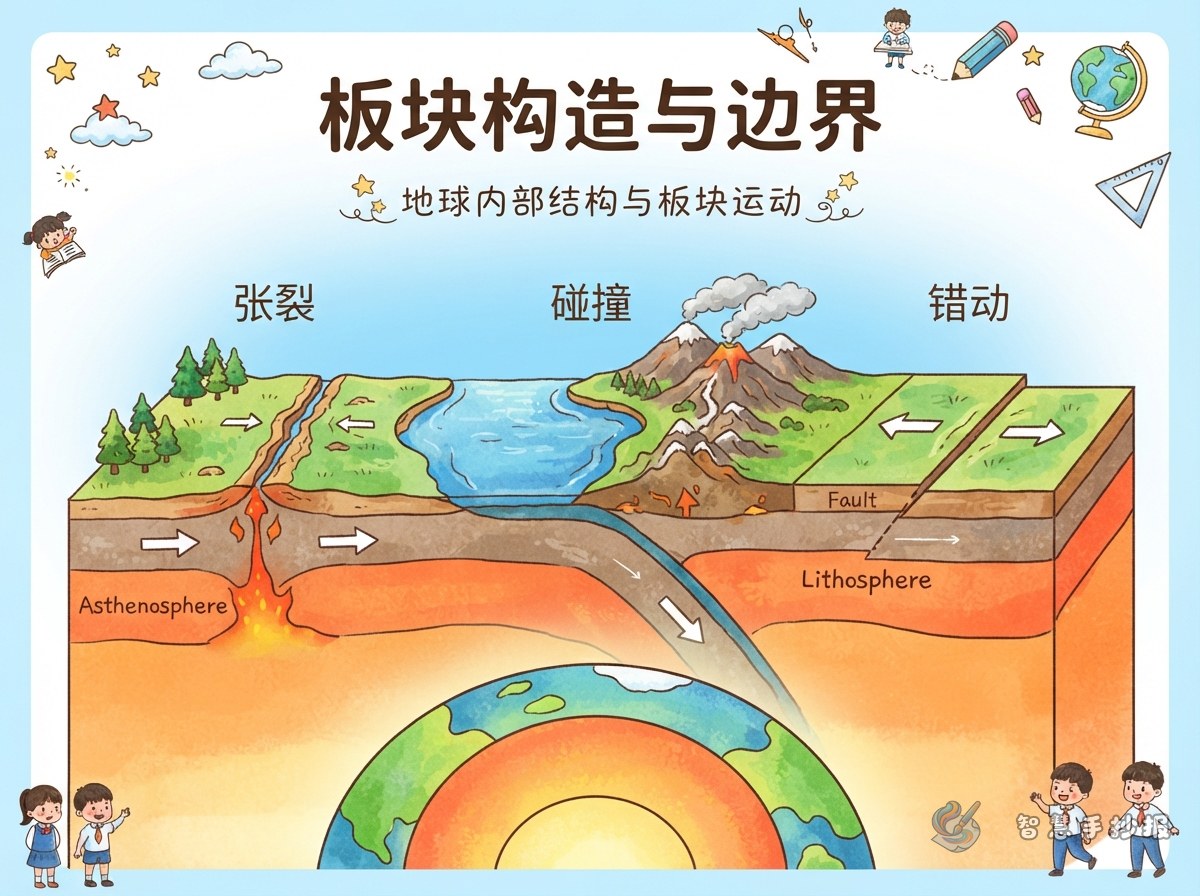
Show the Three Plate Boundaries as Mini Cards
1. Divergent boundary: plates move apart
Draw two plates moving away from each other and add an upward arrow to show material rising from the mantle toward the surface. A short caption could say: “When plates separate, new rock can form.” Mid-ocean ridges and seafloor spreading can be included as small examples.
2. Convergent boundary: plates meet
Draw two arrows pointing toward each other. If one plate sinks beneath another, add a volcano and a downward arrow. If two continental plates push together, draw folded mountains. A useful caption is: “Collision and pressure can create new landforms.”
3. Transform boundary: plates slide past
Draw two plates moving in opposite horizontal directions along a crack, with a few short vibration lines. The caption can explain: “The plates do not clearly separate or collide, but friction may build up energy.” This makes the third type easy to distinguish.
Short Text Ideas for the Poster
- Theme sentence: Earth’s surface is like a puzzle that moves slowly, and plate boundaries reveal forces inside our planet.
- Structure fact: From the outside inward, Earth includes the crust, mantle, outer core, and inner core. The plates are mainly part of the rigid lithosphere.
- Observation tip: Follow the arrows to decide whether plates are separating, converging, or sliding along a boundary.
- Safety note: Learning about natural events is important, and students should follow teachers and parents during an earthquake or other emergency.
Make the Arrows Guide the Whole Layout
Try a horizontal layout with divergence on the left, convergence in the center, and transform motion on the right. Place the title above the central Earth diagram. Use blue, orange, and green for the three boundary types, while keeping the arrows bright and easy to see. Puzzle pieces, rock shapes, and layer lines can decorate the borders without taking space away from the text.
A Final Check Before You Finish
- Make sure the Earth layers are labeled clearly from the outside inward.
- Check the direction of every arrow in the three boundary diagrams.
- Match each diagram with a short explanation instead of filling the page with difficult terms.
- Plan the sections with a pencil before adding outlines and color.
If you want to refine the title, colors, and section placement, you can continue in the “智慧手抄报” WeChat mini program and arrange the plate arrows and Earth cutaway more neatly on the final page.