Start with Three Clues on Earth’s Surface
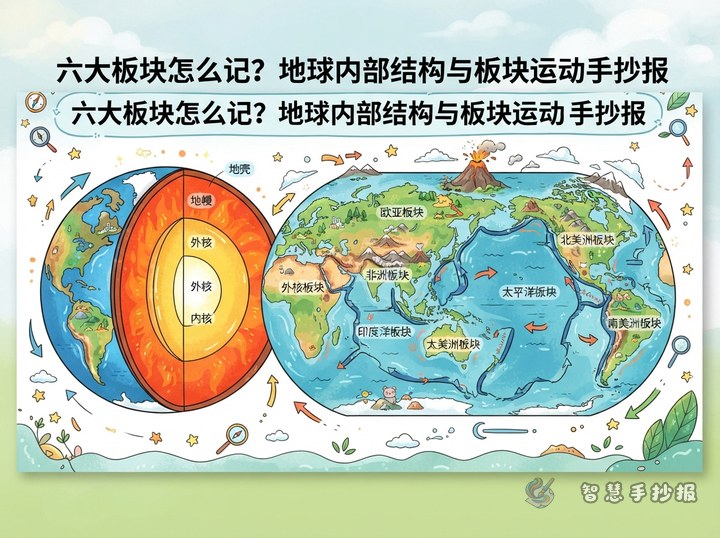
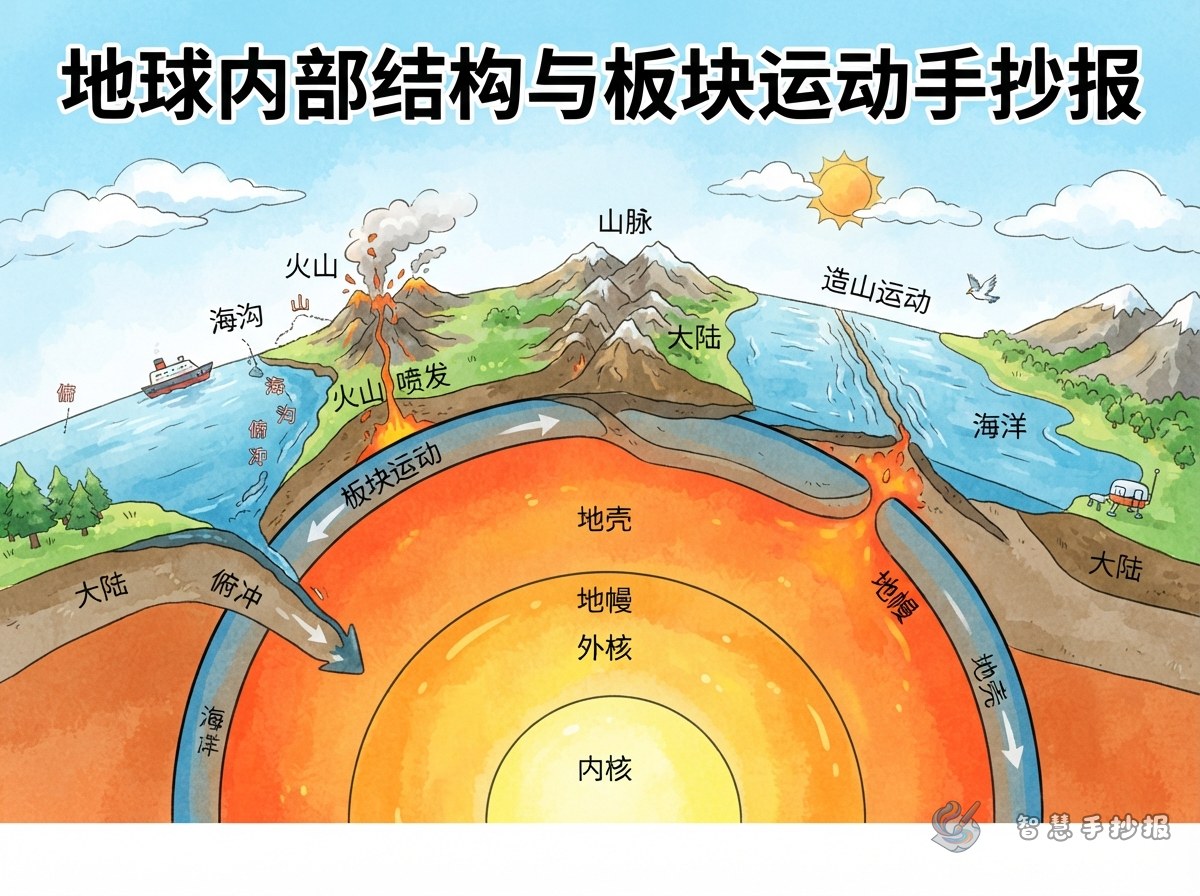
Instead of treating Earth’s interior and plate motion as two separate topics, build the poster around one question: How are ocean trenches, volcanoes, and mountain ranges formed? Trenches often appear where plates move toward each other, volcanoes may be linked to subduction or spreading, and mountain ranges can rise when continental plates push against one another. These three surface features make a clear opening and help readers connect activity inside Earth with changes on its surface.
- Ocean trenches: When an oceanic plate sinks beneath another plate, a long, deep depression may form on the seafloor.
- Volcanoes: Magma can rise through cracks or weak zones and cool into volcanic rock.
- Mountain ranges: When two continental plates collide, the crust may fold and rise to form mountains.
Draw the Inside-and-Outside Connection
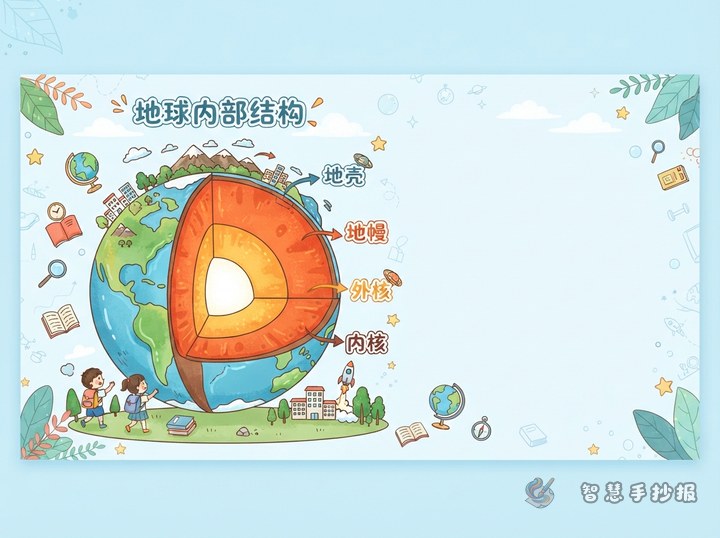
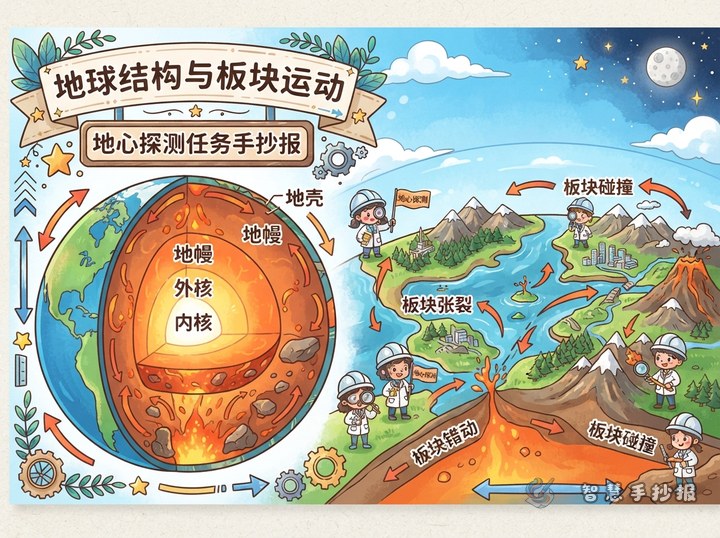
Place a large cross-section of Earth in the center of the poster. Label the crust, mantle, outer core, and inner core from the outside inward. Use light brown for the crust, orange-red for the warmer mantle, and different shades of red and yellow for the outer and inner core. Add short notes beside the drawing: the crust is the layer where people live; the mantle is very hot and its material moves slowly; the outer and inner core lie deeper inside, with the inner core mainly made of solid material.
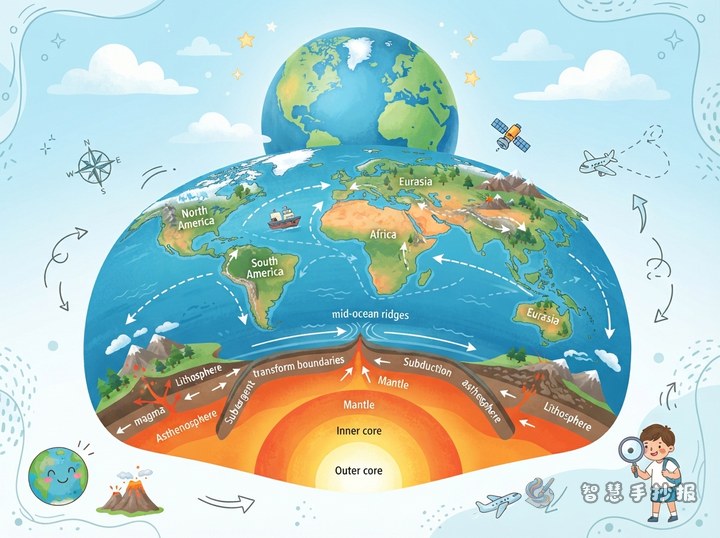
To connect the diagram with plate motion, draw several puzzle-like plates along the crust and add arrows in the mantle to show heat transfer and slow movement. Keep the picture simple. The key idea is that plates belong to Earth’s strong outer layer and move slowly under the influence of heat and other forces from inside the planet.
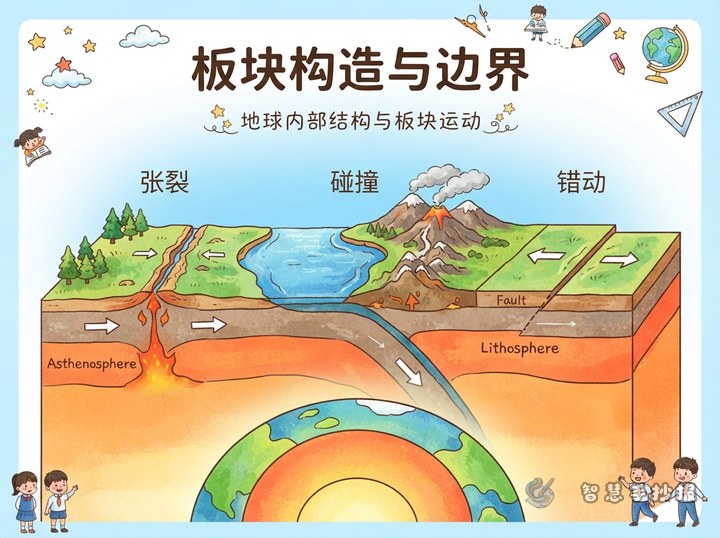
Turn Plate Boundaries into Three Small Scenes
Moving Apart: Rifts and New Seafloor
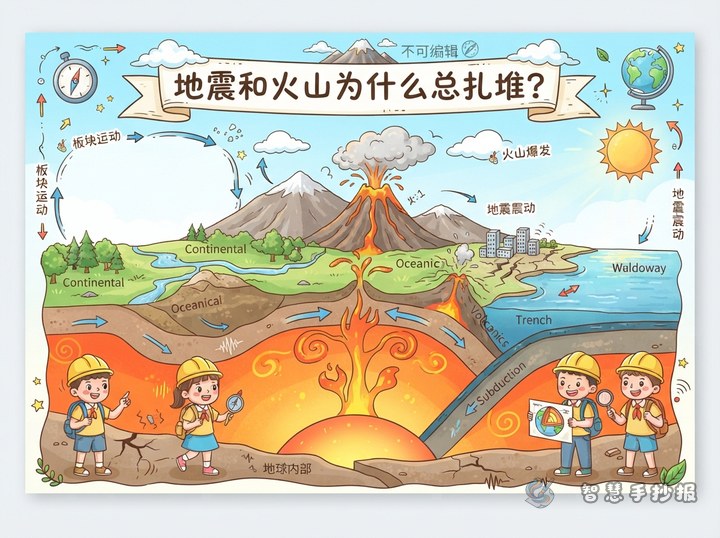
On the left side, draw two plates moving away from each other with a crack between them. Show magma rising from below and write: ‘When plates separate, new crust and seafloor may form.’ Use outward-pointing arrows to show the direction.
Moving Together: Subduction, Trenches, and Volcanoes
In the middle or upper-right area, draw an oceanic plate sliding beneath another plate. Label the boundary as an ocean trench and add a small volcano on the land side. A short note can say: ‘When plates converge, a denser oceanic plate may sink beneath another plate, bringing earthquakes and volcanic activity nearby.’
Sliding Past: Earthquake Zones
In one corner, draw two plates sliding in opposite directions along a fault. Use a zigzag line and a small lightning symbol to show sudden movement. The note can simply explain: ‘Energy may build up and be released near plate boundaries, causing earthquakes.’
Arrange the Poster for Easy Reading
- Put the large question ‘How Are Trenches, Volcanoes, and Mountains Formed?’ at the top, with the subtitle ‘Plate Motion from the Inside of Earth’ below it.
- Place the Earth cross-section in the center as the visual focus, using thin lines to connect the crust, mantle, outer core, and inner core.
- Set up a ‘Surface Clues’ section at the lower left for trenches, volcanoes, and mountains, and a ‘Three Plate Motions’ section at the lower right for spreading, convergence, and sliding.
- Reserve a small ‘My Summary’ box at the bottom for three sentences that bring the topic together.
Use blue for the ocean, brown for land, and orange-red shades for heat inside Earth. Draw plate boundaries with bold lines and keep the arrows in one consistent color. This will make the motion easy to follow while keeping the page neat.
Short Text for the Final Box
Main idea: Earth is not a motionless ball. Heat and the movement of material inside it can affect the plates on its surface.
Quick review: Separating plates may create rifts and new seafloor, colliding plates may form trenches, volcanoes, or mountains, and sliding plates may cause earthquakes.
Science message: Looking at a mountain, a volcano, or an ocean trench is like opening a window into Earth’s interior.
Before finishing, check that the title stands out, every arrow points clearly, and each section has enough empty space. You can also continue making and adjusting the poster in the WeChat mini program, then adapt the details to your grade level and drawing skills.