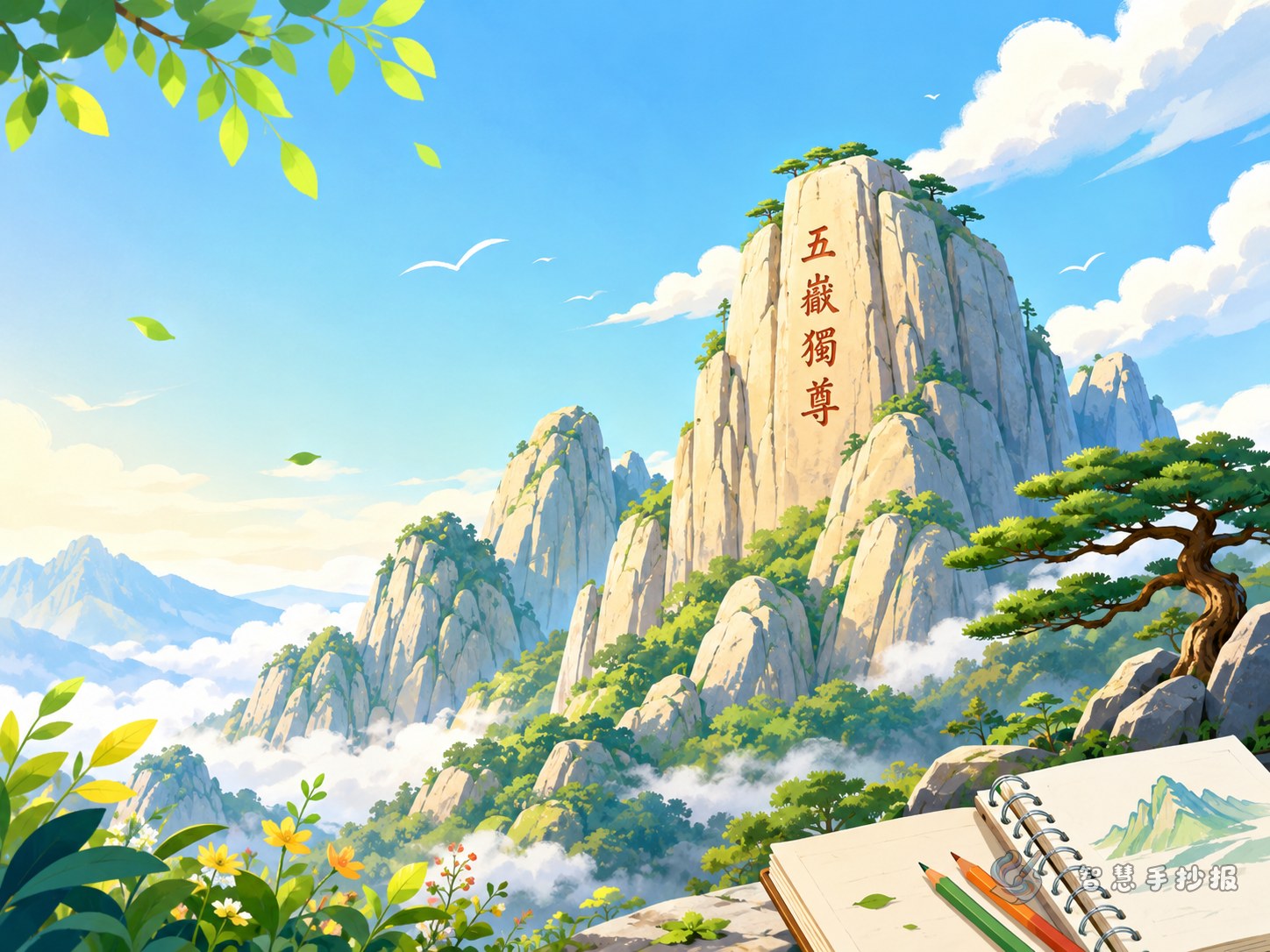
What to Focus On First
A good Mount Tai handwritten newspaper does not need too many facts. Students can begin with a few strong highlights: sunrise, steep climbing paths, the Eighteen Bends, famous stone carvings, and Mount Tai’s place among China’s celebrated mountains.
These points are easy to understand, easy to draw, and easy to turn into small sections on the page.
Useful Section Ideas for the Page
Scenic Spot Notes
Write simple lines about well-known places such as the South Heavenly Gate, the Eighteen Bends, and sunrise viewpoints. Keep each note short and clear.
Nature and Views
Describe clouds, mountain paths, old pine trees, rocks, and changing light in the early morning. This helps the page feel lively and scenic.
Culture and Poetry
Add one or two famous poem lines or short cultural notes to show that Mount Tai is not only beautiful, but also meaningful in Chinese culture.
How to Arrange the Layout
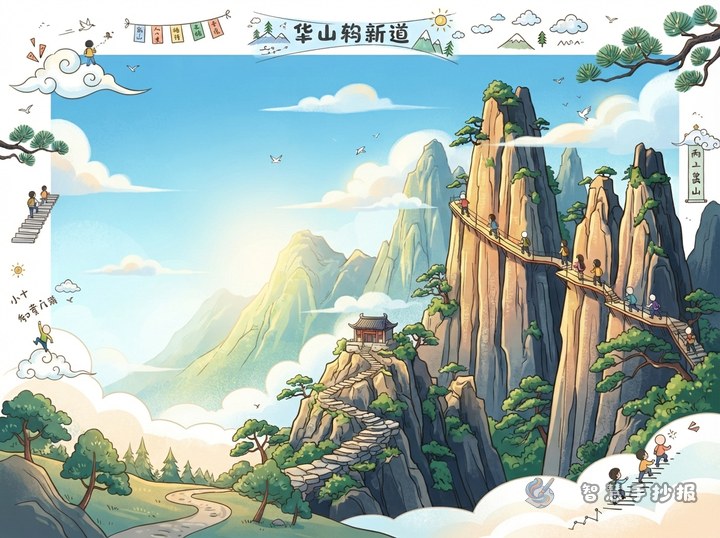
A mountain-shaped layout is one of the best choices. Put the title at the top like the mountain peak, then arrange the sections down the page like climbing steps.
- Top area: title and sunrise drawing
- Middle area: scenic spot notes and cultural content
- Bottom area: environmental tips or personal thoughts
You can also make the page look like a stone path, with each text box placed like a step.
Simple Writing Materials Students Can Use
- Mount Tai is famous for its majestic mountain scenery.
- The sunrise on Mount Tai is one of its most beautiful sights.
- The Eighteen Bends show the steep and exciting mountain road.
- Mount Tai has a long history and rich cultural meaning.
- We should protect the natural environment when visiting scenic places.
Small Decoration Tips
Use drawings of the sun, clouds, mountain peaks, stone steps, and pine trees as decorations. Borders can be made with simple wave lines, rocks, or leaf shapes.
If students want to keep adjusting titles, sections, or neat page styles, they can continue making the work in the Smart Handwritten Newspaper WeChat mini program.