Start with a clear idea: how messages traveled slowly
This handwritten newspaper works best when it explains how letters were delivered in ancient China, instead of only defining post stations. A student-friendly theme is “How did people send letters before phones?” It is easier to understand and easier to turn into a neat page layout.
You can open with a short paragraph like this: In ancient times, communication depended on post stations, relay points, and messengers. Family letters, official documents, and important news were carried across roads, rivers, and long distances. Although delivery was much slower than today, it connected families, government affairs, and people living far apart.
Useful sections for the page
Section 1: What were ancient post stations?
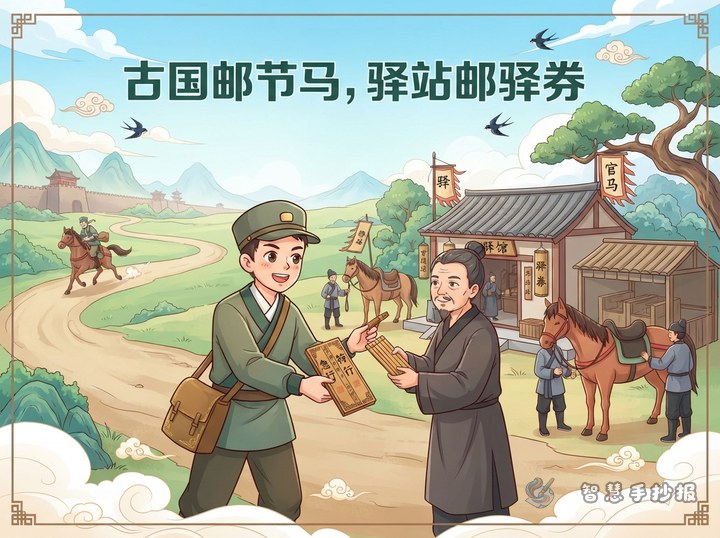
Post stations were relay stops in an organized communication system. Messengers could rest, change horses, and continue their journey. These stations helped information travel farther and more efficiently in ancient society.
Section 2: The journey of one letter
- A writer prepared a letter and addressed it to the receiver.
- The letter was handed to a messenger or sent through relay routes.
- It traveled across roads, mountain paths, checkpoints, or waterways.
- At post stations, people or horses could be changed for speed and endurance.
- The message finally reached its destination.
Section 3: What did letters express?
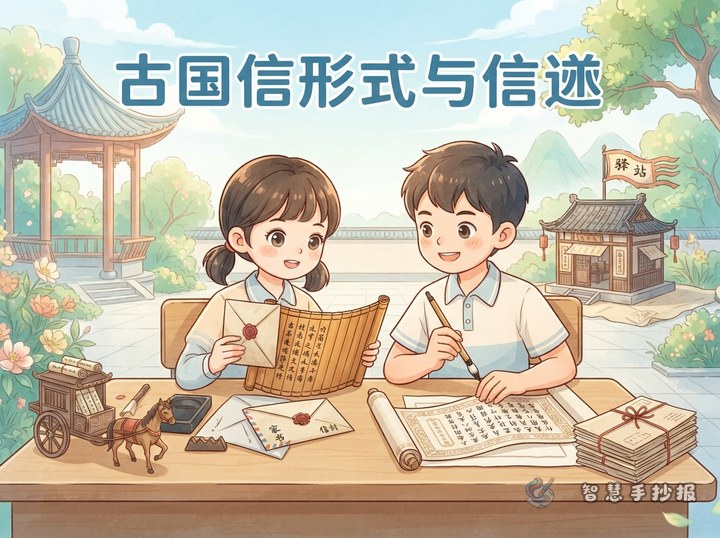
Letters often carried greetings, family news, official messages, feelings of longing, and reports from afar. You can add short phrases such as “Words on paper, feelings from the heart” or “A letter connects distant people” to show the warmth of letter culture.
Short text materials students can use
- Theme line: Long roads, warm letters.
- Theme line: Ancient post routes carried news and care.
- Theme line: One letter could cross mountains and miles.
- Fact line: A post station was not only a resting place, but also an important part of the ancient communication network.
- Fact line: Traditional letter culture valued courtesy, format, and sincere expression.
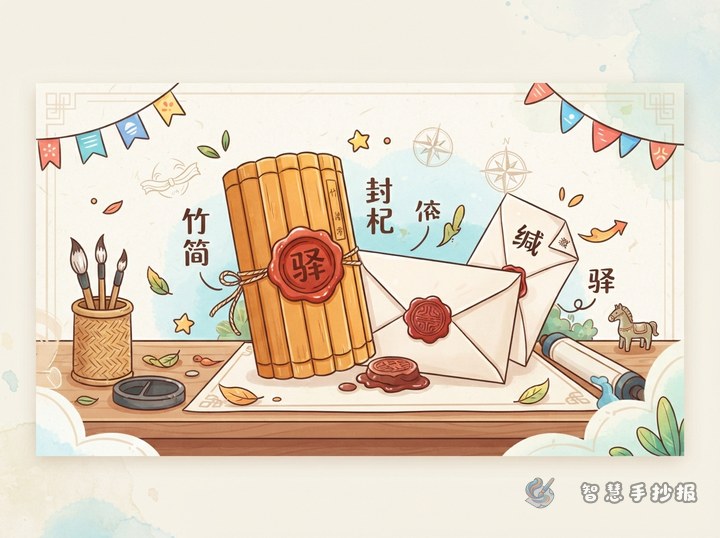
- Fact line: Writing materials changed over time, from bamboo slips and silk to paper, helping communication develop.
How to make the layout feel traditional
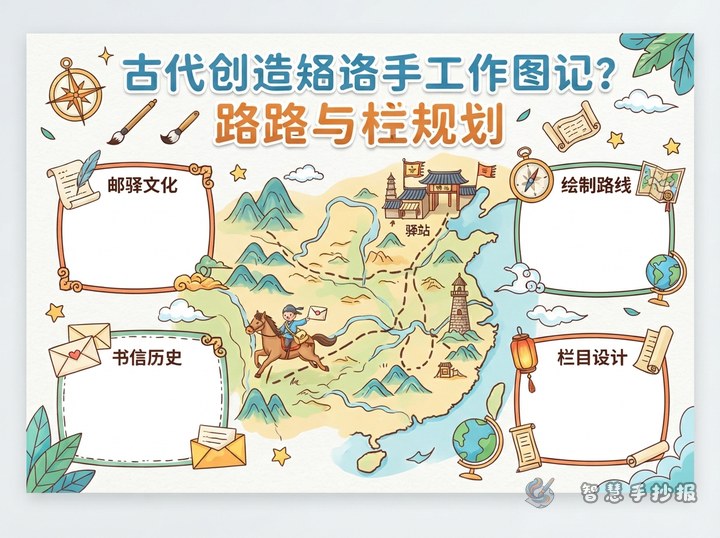
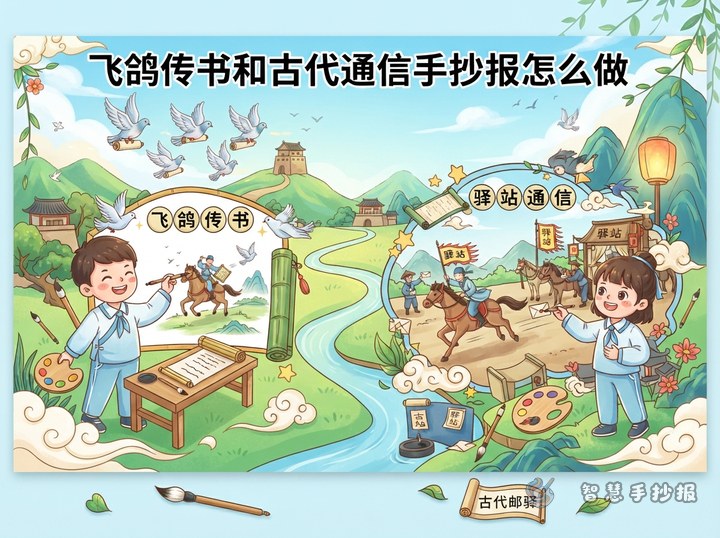
A good design is a large title in the center, two side columns, and a route diagram at the bottom. The left side can explain post stations, while the right side focuses on letter culture. The bottom can show the path of one letter from writer to receiver.
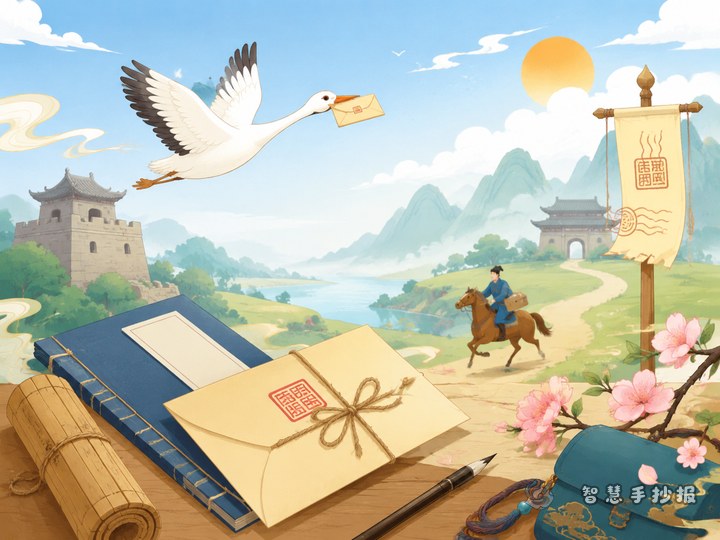
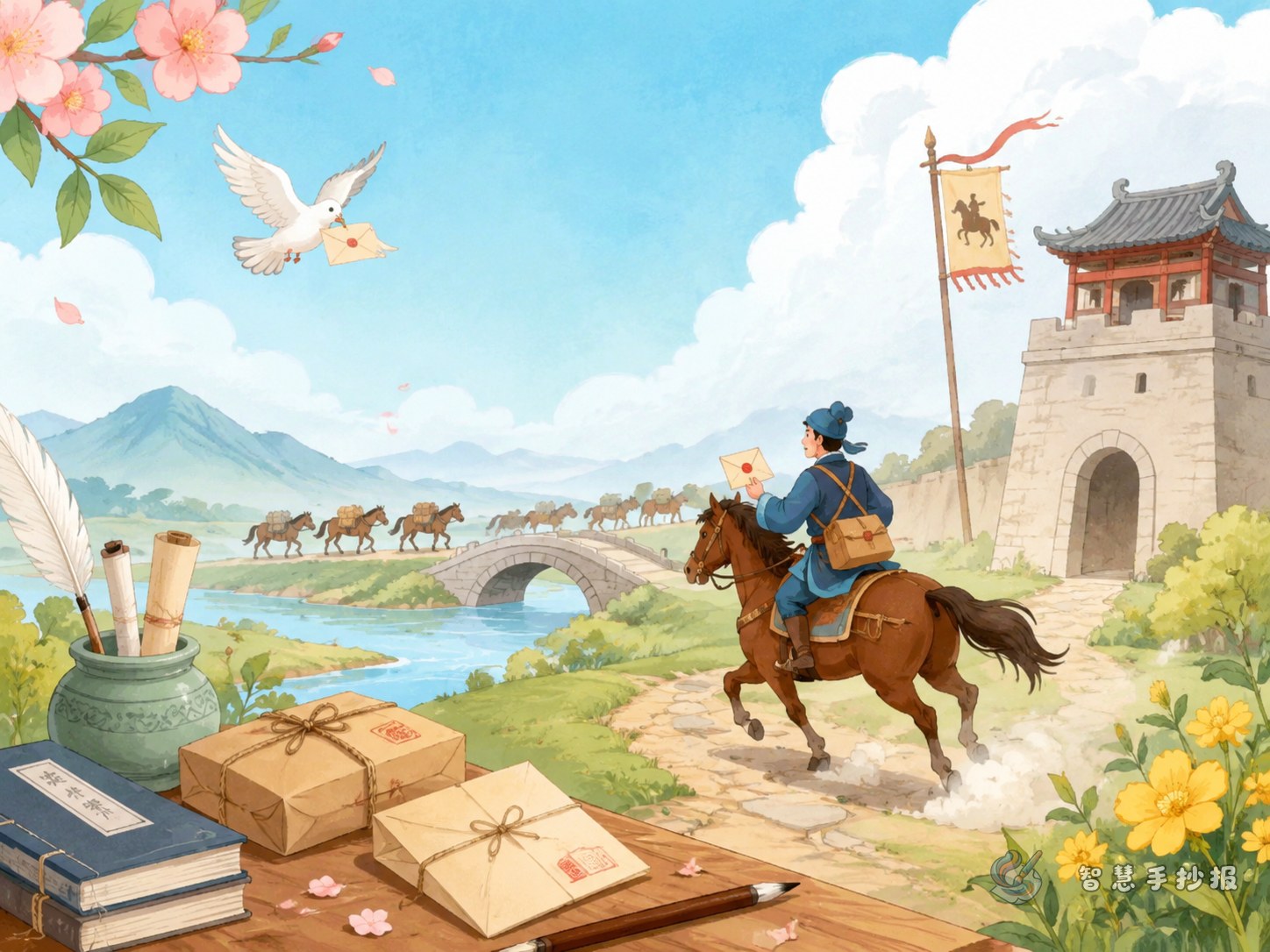
Decorations may include horses, station signs, scrolls, envelopes, brushes, seals, roads, and rivers. Do not overcrowd the page. Soft yellow, brown, green, and red can give it a traditional Chinese feeling. Keep the title bold and the body text neat for classroom display.
A strong ending for the handwritten newspaper
You can end with this idea: Today, messages travel in seconds, but in ancient times people depended on post stations and letters to send news, responsibility, and affection over great distances. Learning about this history helps us understand both communication and the emotional value of written words. If you want to keep improving the title, layout, and decorative borders, you can continue creating in the Zhihui Shouchaobao WeChat mini program.