Start with one clear central question
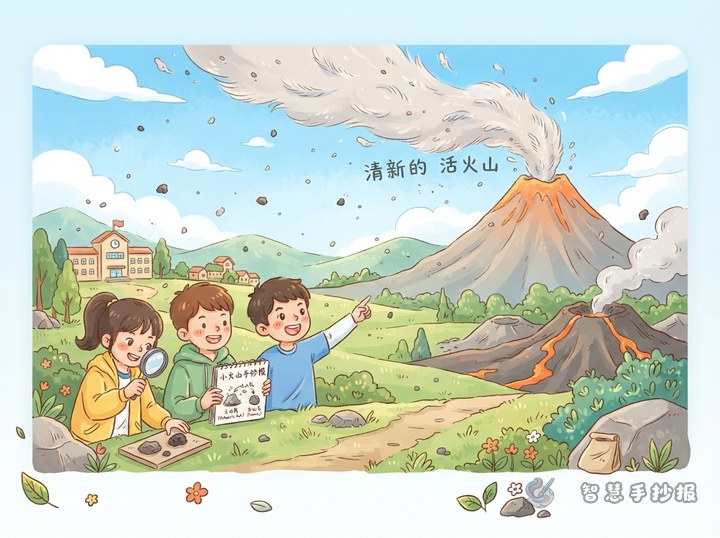
Instead of making the page too broad, build the handwritten newspaper around one simple question: what landforms are formed by volcanic eruptions? Under the title, write a short introduction explaining that magma reaching the surface can cool into rock and also create many different land features.
This kind of opening makes the theme clear and connects naturally to the rest of the page.
Landform sections that are easy to write
Volcanic cone
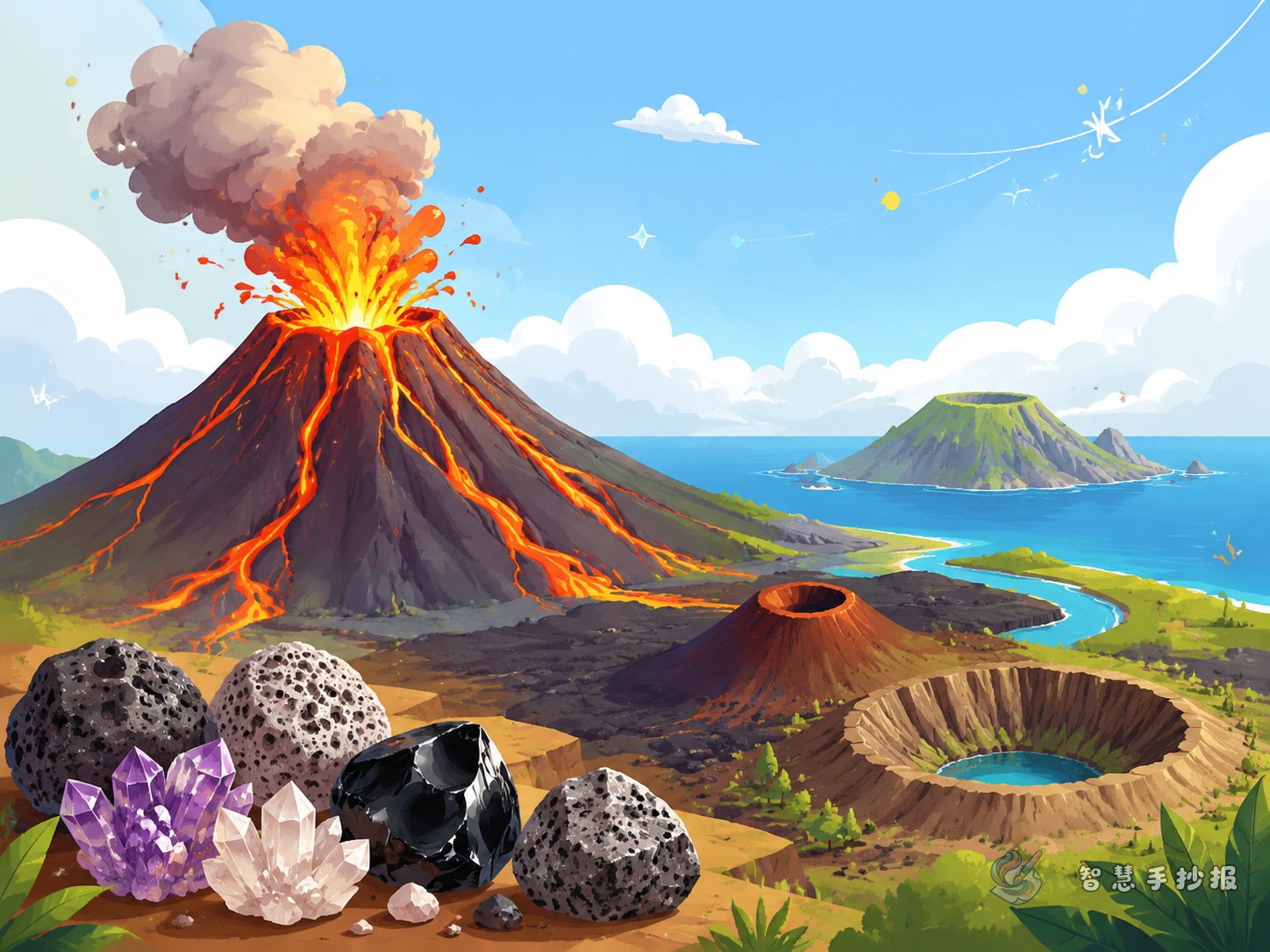
A volcanic cone is formed when lava, ash, and other erupted materials pile up around a vent. Many volcanoes have a cone-shaped or shield-like appearance, making this one of the most recognizable volcanic landforms.
Crater
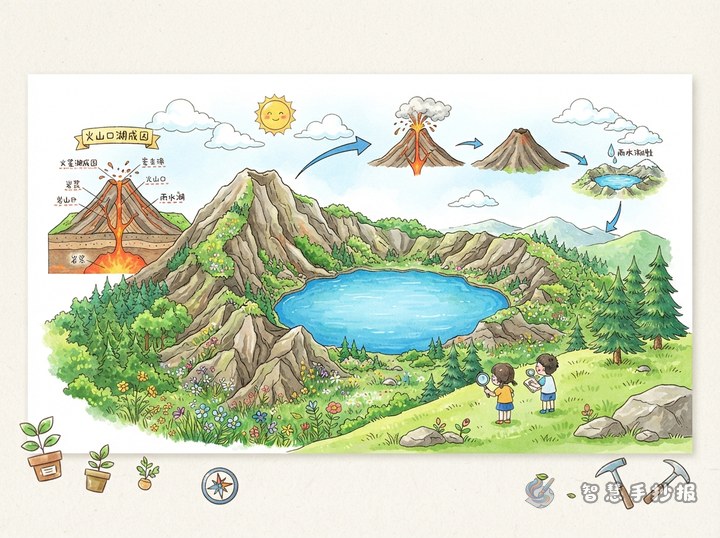
A crater is the opening at the top or side of a volcano where lava, gases, and ash come out. After volcanic activity stops, some craters may fill with water and become crater lakes.
Lava plateau
When large amounts of flowing lava spread out and cool, they can create broad, flat surfaces called lava plateaus. These areas often look wide and layered.
Volcanic island
Repeated eruptions on the seafloor can build up material until it rises above sea level, forming a volcanic island. This shows that volcanoes can shape both land and ocean environments.
- A section title like Landforms Built by Volcanoes works well
- Keep each subtopic to two or three short sentences
- Add tiny sketches to help distinguish each landform
Add rocks and minerals as the next step
Since the theme also includes rocks and minerals, a section called “What is left after an eruption?” fits very naturally. It keeps the page focused while showing how volcanic activity and Earth materials are connected.
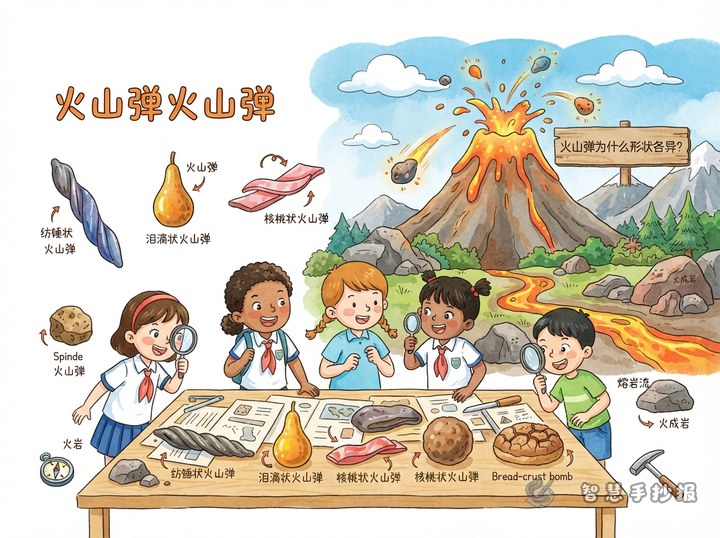
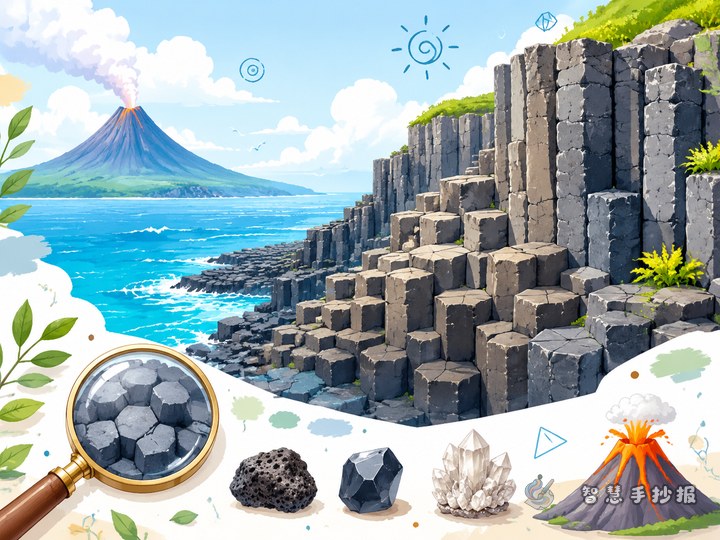
- Volcanic rock: rock formed when magma cools and solidifies, such as basalt.
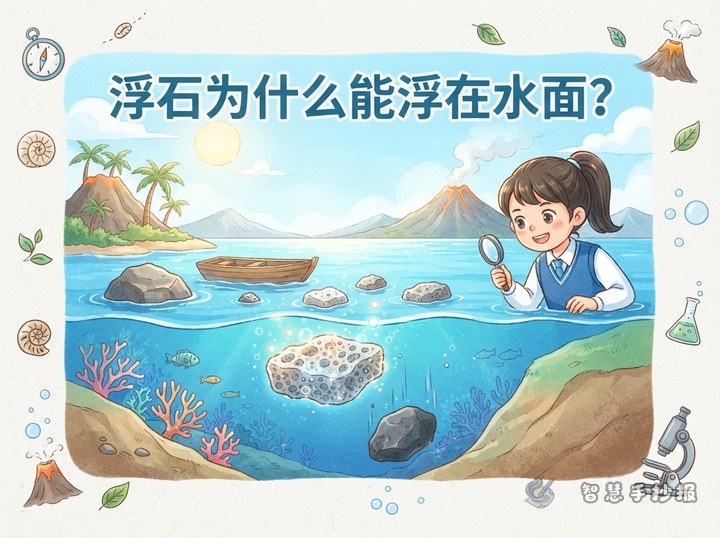
- Pumice: a lightweight volcanic rock full of holes, sometimes able to float on water.
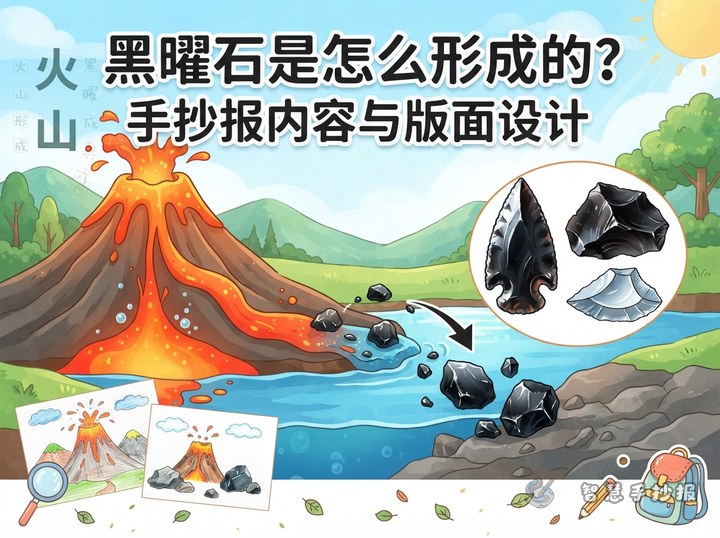
- Obsidian: formed when lava cools very quickly, usually dark and shiny.
- Mineral crystals: some minerals can crystallize during cooling and help people study geological change.
This part works well in small boxed notes with short explanations.
Make the main visual area stand out
A very effective layout is a central volcano drawing with content sections placed around it. You might divide the page into blocks such as landforms, rocks and minerals, fun facts, and what you learned.
- Use red, orange, and brown tones to match the volcano theme
- Try uneven borders for landform sections to suggest rocky shapes
- Use tidy rounded boxes for mineral facts
- Decorate empty spaces with lava lines, stones, or smoke shapes
If one paragraph is longer than the others, place it in a lower corner so the page still feels balanced.
Short lines and section titles you can copy
These short lines are useful for handwritten newspaper writing:
- Volcanic eruptions do not only release lava; they also reshape the land.
- When magma cools, it can form different kinds of volcanic rocks.
- Volcanic landforms show the power of Earth’s inner activity.
- From craters to lava plateaus, each landform has its own formation process.
Possible section titles include Landforms Left by Volcanoes, Rocks After the Eruption, How Earth’s Surface Changes, and My Volcano Notes.
Check the page before finishing
Before completing the work, ask three questions: Is the theme clear? Have both landforms and rocks been included? Is the layout easy to read? If you want to improve spacing, colors, and final presentation, you can continue making the page in the Zhihui Shouchaobao WeChat mini program.