Start with one clear main idea
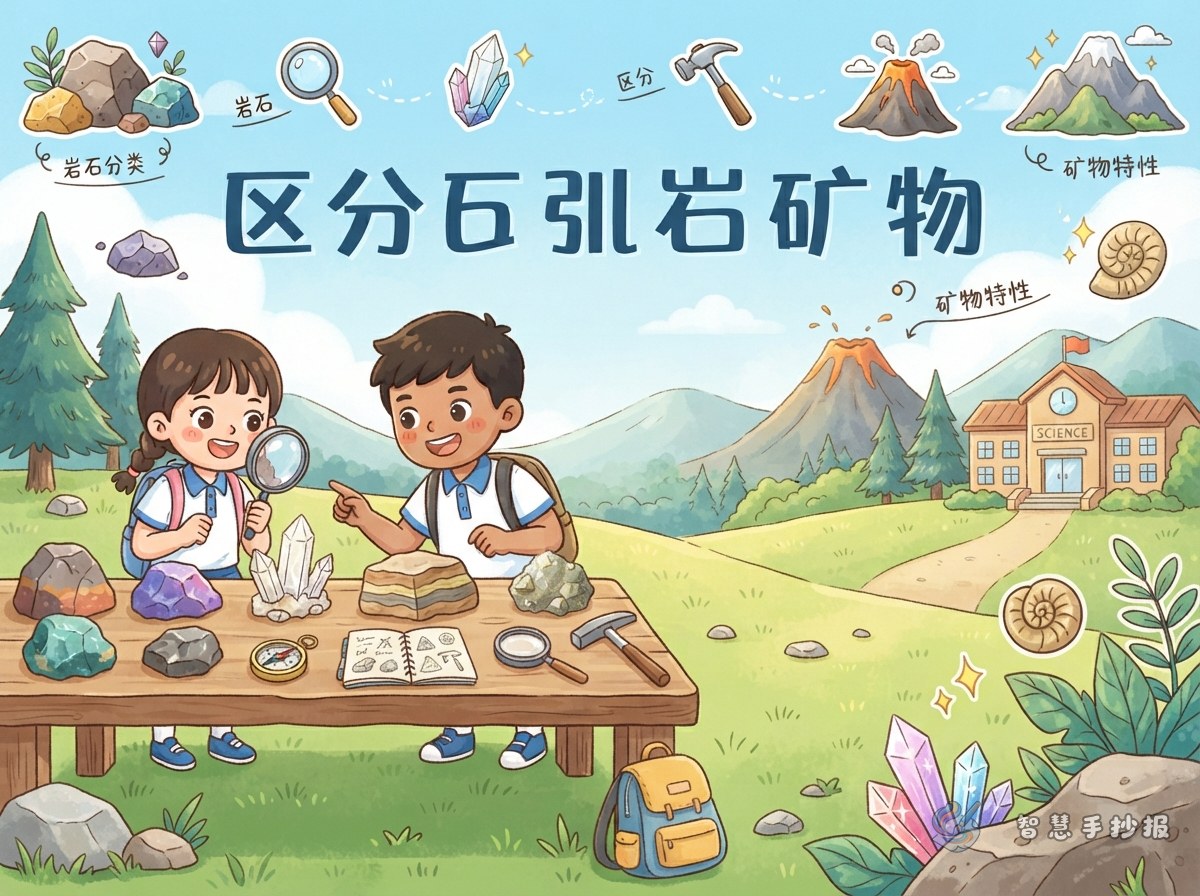
The key sentence for this topic can be: Minerals are the basic substances that form rocks, and rocks are natural solid mixtures made of one or more minerals. Once this main idea is clear, the whole handwritten newspaper will stay focused. A question-style title also works well, such as “What is the difference between rocks and minerals?”
Good section ideas for a student page
- What is a mineral? Explain that it forms naturally and has stable properties.
- What is a rock? Describe it as an important part of Earth’s crust made from minerals.
- How are they different? Compare them by composition, appearance, and use.
- Common examples: Quartz, mica, and calcite for minerals; granite, basalt, and sandstone for rocks.
- Where we see them in daily life: Building stone, decorative crystals, and materials used in tools.
If there is extra space, add a small “Young Observer” section about color, luster, and hardness.
Short text materials you can use directly
About minerals
Minerals are natural substances formed in nature. They usually have fairly stable chemical composition and physical properties. Different minerals may have different colors, shine, and hardness.
About rocks
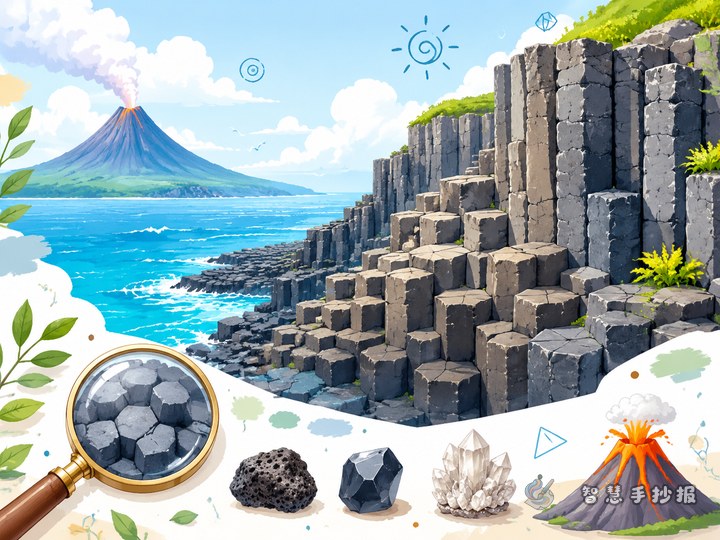
Rocks are natural solids made of one or more minerals. Mountains, cliffs, and many stones we see outdoors are made of rocks.
One-sentence comparison
Minerals are like the building materials, while rocks are the finished natural combinations. For example, quartz is a mineral, but granite is a rock made from several minerals.
Win with structure, not with too many words
This science theme works especially well with a comparison layout. You can divide the page into two columns: minerals on the left and rocks on the right, with a center box showing how they are connected. That makes the information easy to follow at a glance.
- Place the main title at the top center with crystal or mountain shapes around it.
- Use the middle area for a comparison chart with short labels.
- Add an example section below with simple drawings of stones, crystals, or landforms.
- Put a mini quiz in one corner, such as “Is granite a mineral?” with the answer “No, it is a rock.”
Color choices like gray, brown, sand, and deep blue match the topic and keep the page neat.
Small details that improve the final result
- Use short points instead of long encyclopedia-style paragraphs.
- Give a short note for each example instead of listing names only.
- Add a section called “Rocks and minerals around me” to make the topic feel closer to daily life.
- If the page feels too short, add uses and simple observation methods rather than difficult scientific terms.
If the topic is ready but the title design, color matching, or section arrangement still needs work, students can continue building the handwritten newspaper in the WeChat mini program for a cleaner final presentation.