Begin with a Clear Stage Theme
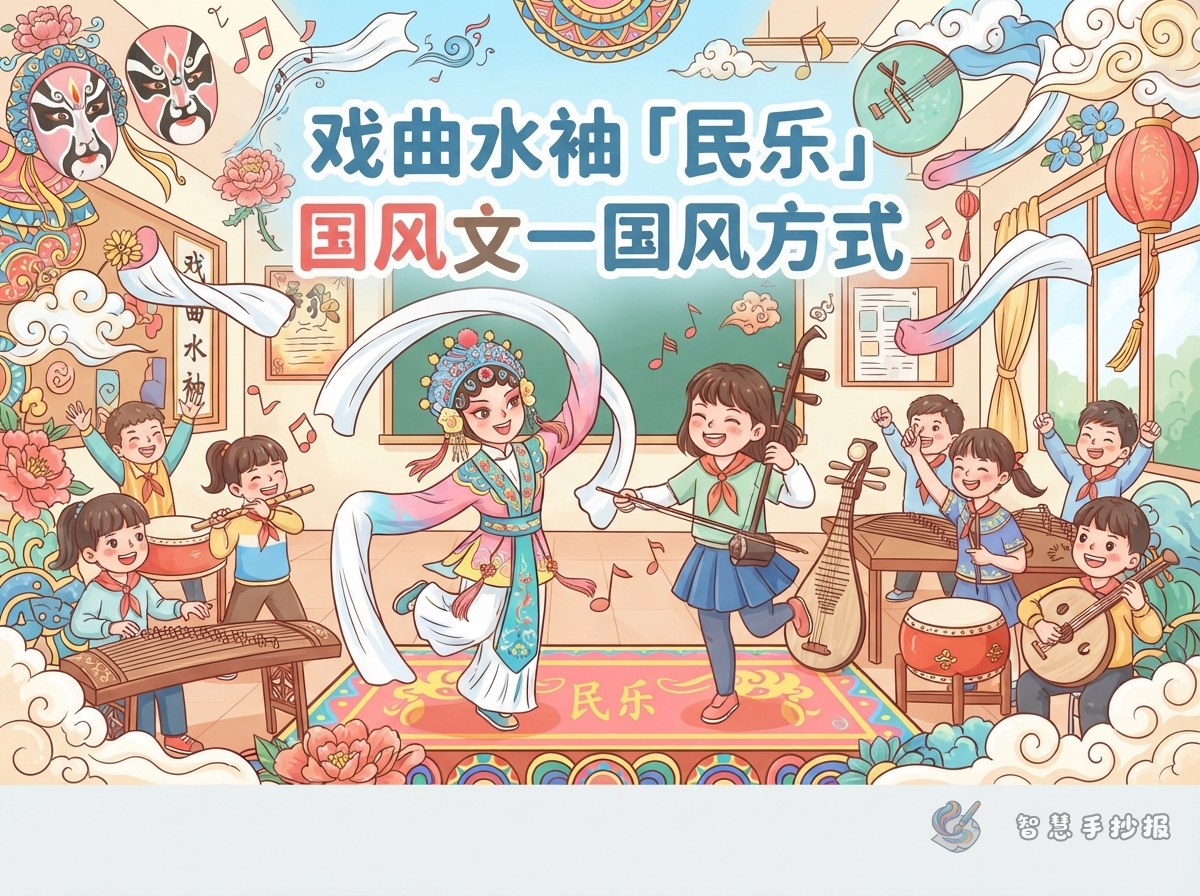
A handwritten newspaper about opera and Chinese folk music does not need to include every instrument or stage detail. Start with one idea that connects the two traditions. A good title is Sleeves and Strings: the flowing sleeve suggests opera movement and emotion, while strings suggest the sound and rhythm of traditional music.
You may add the subtitle Hear the East in Every Gesture. Keep the title area open and easy to read instead of filling it with too many small decorations.
Turn the Sleeve into a Musical Flowing Line
Try a vertical layout. Place the title at the top and draw a long, curving sleeve from left to right through the center. Let this curve guide the reader through the whole page. Put an opera section on the left, a folk music section on the right, and use a stage floor or falling notes along the bottom.
- Use a pencil to draw two gentle sleeve curves that connect the title with the lower sections.
- Draw a small stage, curtain, or folding fan in the upper-left corner beside an opera fact box.
- Place a simple folk instrument silhouette or string pattern in the upper-right corner beside a music section.
- Divide the lower half into two or three sections of different sizes instead of making every box identical.
- Add small notes, cloud patterns, and dots only after the main sleeve shape is finished.
Short Text You Can Copy
Opening paragraph
Opera tells stories through movement, while folk music expresses feeling through sound. A flowing sleeve paired with a gentle melody can make traditional culture lively and friendly on the page.
Opera observation
The sleeve may be thrown, lifted, gathered, or held still to suggest changes in feeling. When drawing it, vary the speed and direction of your lines to create a light and turning movement.
Folk music reflection
Traditional folk music has many different tones and rhythms. Notice whether a melody feels calm or lively, then use lines, colors, or small notes to show what you hear.
Closing sentence
Learning about traditional art can begin with watching one performance or listening to one melody. Drawing what you enjoy is also a personal way to keep cultural beauty alive.
Choose a Few Chinese-Style Details
Use ivory or light warm yellow for the background. Let vermilion, orange-red, or warm yellow highlight the title and sleeves, while dark green, brown, or indigo can frame the text. Three main colors are enough; use extra colors only for small notes and accents.
- Sleeves: Use two or three related colors and leave a thin white highlight along the edge to suggest soft fabric.
- Stage details: Simplify curtains, steps, and fans into clean lines rather than drawing complicated details.
- Music details: Choose one instrument as a small icon, or replace it with abstract strings, flute holes, or drumbeat patterns.
- Text areas: Write with a dark pen and leave space between paragraphs so the page remains easy for children to read.
An Easy Drawing Order
First decide the paper direction and title position. Next draw the main sleeve curve and divide the page into opera, folk music, and personal reflection sections. Then write the title and short texts before adding color to the sleeves, curtains, and instrument. At the end, check for crowded writing and erase the extra pencil marks.
If you are short on time, use fewer illustrations and focus on the flowing sleeve line, a well-layered title, and neat handwriting. To keep arranging the layout and colors, open the 智慧手抄报 WeChat mini program and continue making the handwritten newspaper with a suitable template.