Why stroke order gives the newspaper a clear focus
Many students begin a standard Chinese writing newspaper with a broad slogan such as “write carefully” or “handwriting matters.” The page then feels empty and hard to lay out. Narrowing the theme to stroke order gives you something concrete to show: horizontal before vertical, left-falling before right-falling, top to bottom, left to right, and outside before inside. A “Stroke Order Challenge” theme adds a playful contest feeling while still teaching standard writing.
Set up the masthead and four content zones
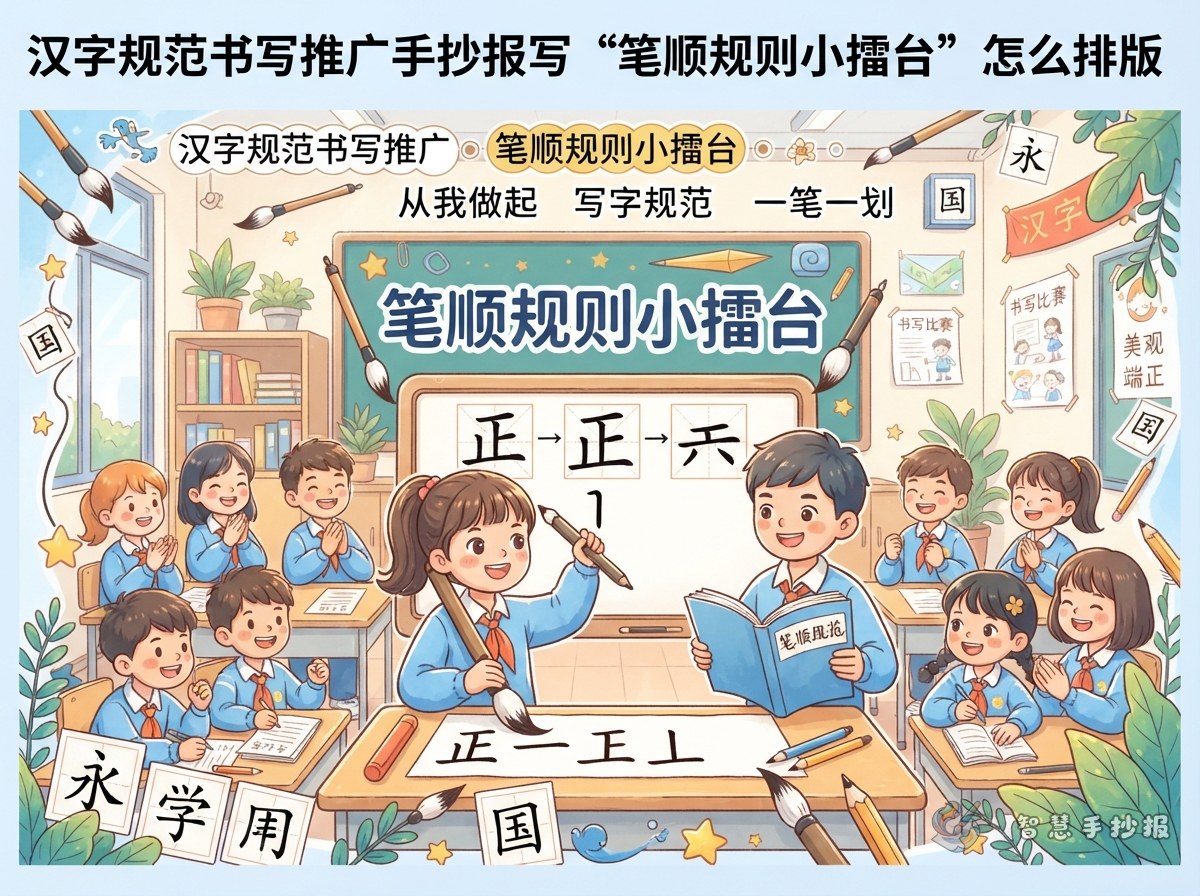
Place the masthead across the top. Use “Stroke Order Challenge” as the main title and “Standard Chinese Writing Newspaper” as the subtitle. Then divide the page into four zones:
- Challenge zone: three to five characters that are often written in the wrong order, such as huo, fang, nai, mu, and qu. Mark each stroke with 1, 2, 3 and a small arrow.
- Rules zone: short sentences that list the basic stroke order rules.
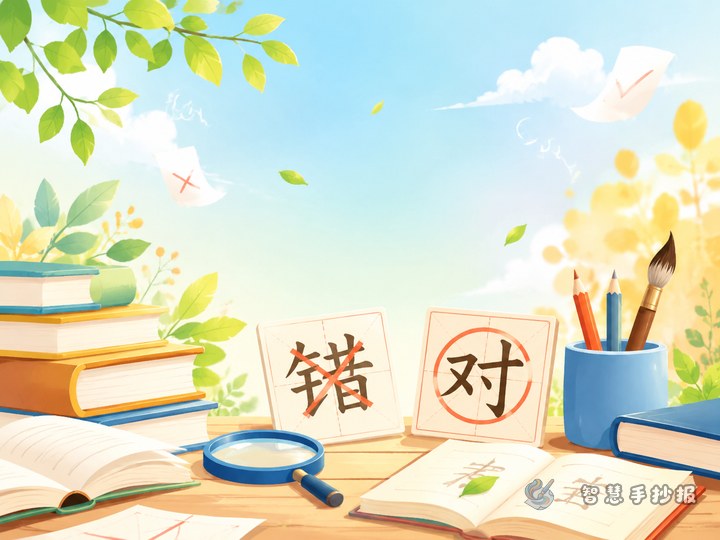
- Quiz zone: two or three true-or-false questions about stroke order.
- Pledge zone: one short slogan, such as “Write the strokes in order, and the character stands steady.”
What to put inside the stroke order challenge
Basic rules as short, memorable lines
- Horizontal before vertical: shi, gan, feng.
- Left-falling before right-falling: ren, ba, da.
- Top to bottom: san, yan, dou.
- Left to right: chuan, zhou, ming.
- Outside before inside, then close the box: yue, tong, guo.
- Middle first, then both sides: xiao, shui, ban.
Turn tricky characters into challenge questions
Pick a few common characters and show a “many people write it this way” version next to the “standard order” version. For example, fang ends with a left-falling stroke; huo begins with a dot and a left-falling stroke; nai begins with a horizontal-turning stroke. Do not overcrowd the page. Give each character one small arrow or number so readers can understand it at a glance.
Add a short stroke order chant
Turn the rules into a chant: “Top to bottom, do not skip; left to right, do not turn back; horizontal first, then vertical; outside first, inside next, close the box last.” Put the chant in the middle or in a corner. It fills blank space and gives readers something easy to remember.
Drawing grids, arrows, and illustrations clearly
The biggest risk in a stroke order newspaper is making the characters too small to see. Draw the examples in grid squares and keep each character about two to three centimeters wide. Use thin arrows for stroke direction and numbers for the order. Keep illustrations simple: a pencil, an open copybook, a few grid squares, or a small challenge-stage border. Use two or three colors for the main title, dark ink for the body text, and a light background for the rules zone.
Ready-to-copy phrases and a closing line
If you do not want to write long paragraphs, copy these short lines:
- Write the strokes in order, and the character looks right.
- Every stroke has a place; good handwriting takes care.
- Horizontal first, vertical next; left to right, top to bottom.
- Slow down, look carefully, then write.
- Standard writing starts with stroke order.
Finish with one slogan at the bottom of the page: “Get the stroke order right, make the character beautiful, and try the Stroke Order Challenge yourself.”
Build order and finishing tips
- Decide the title and the four zone names, then sketch light pencil boxes.
- Write the masthead, then the rules zone, then the challenge questions and slogan.
- Draw the grids and arrows, and check the stroke order for mistakes.
- Add color, keeping the text clear and avoiding paint on the characters.
If you want to save time drawing grids and planning the layout, choose a standard Chinese writing template in the 智慧手抄报 WeChat mini program, replace the title and text, then print or copy it by hand and add your own challenge questions.