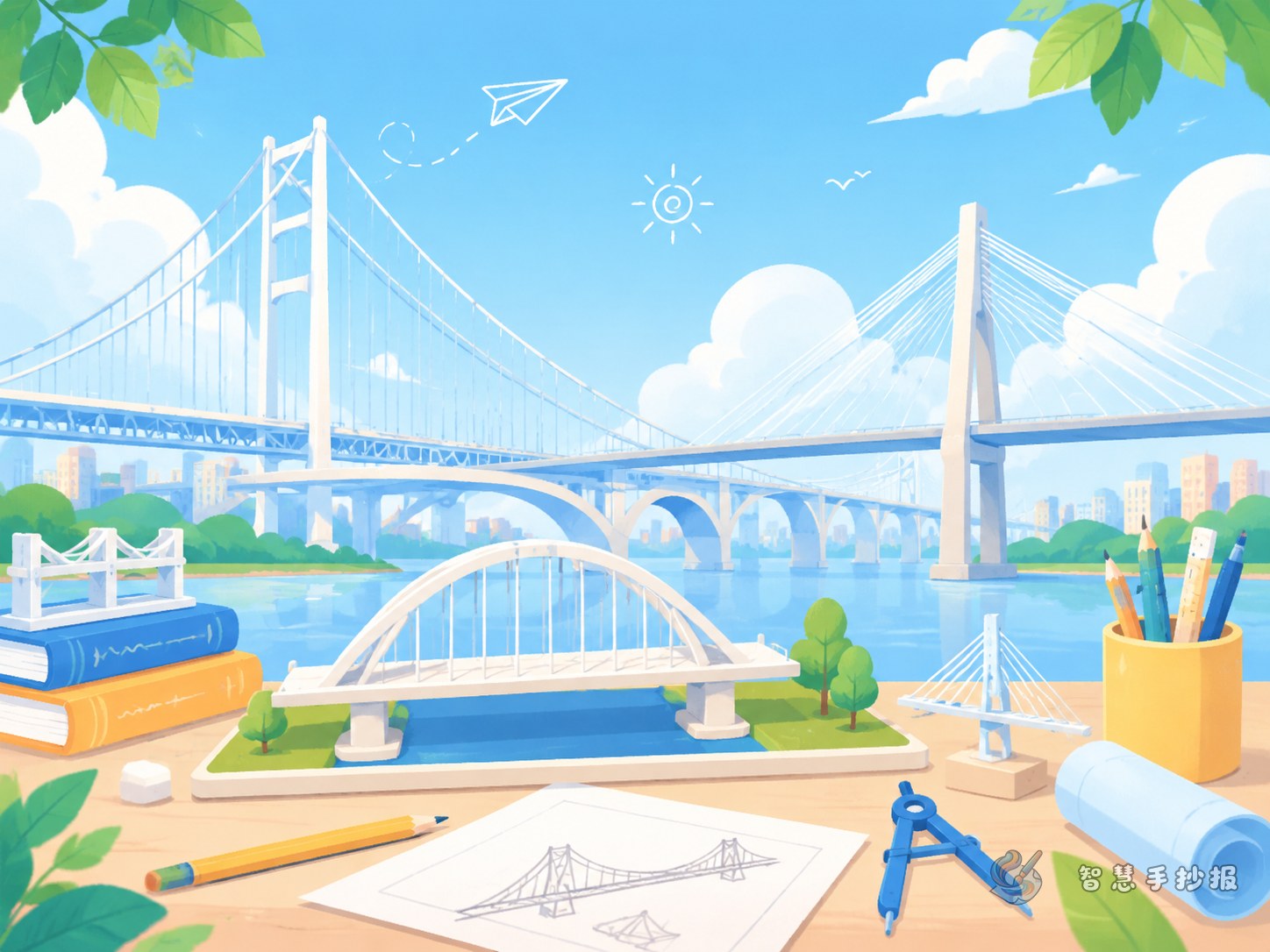
Start with one big idea: why can a bridge help us cross?
For a bridge and engineering themed handwritten newspaper, students do not need to begin with difficult technical words. A better approach is to answer one clear question first: how does a bridge help people cross rivers, roads, or valleys? The whole page can be built around four simple ideas: connection, support, travel, and safety.
Under the main title, students can add a short introduction: bridges are important structures that help people cross obstacles, and different bridge designs show human creativity and engineering thinking. This kind of opening is simple and suitable for a school project.
A clear page plan: divide the content into four small sections
If the layout feels confusing, use four sections to organize the page.
- Bridge Basics: explain what bridges do, such as connecting two sides and making travel easier.
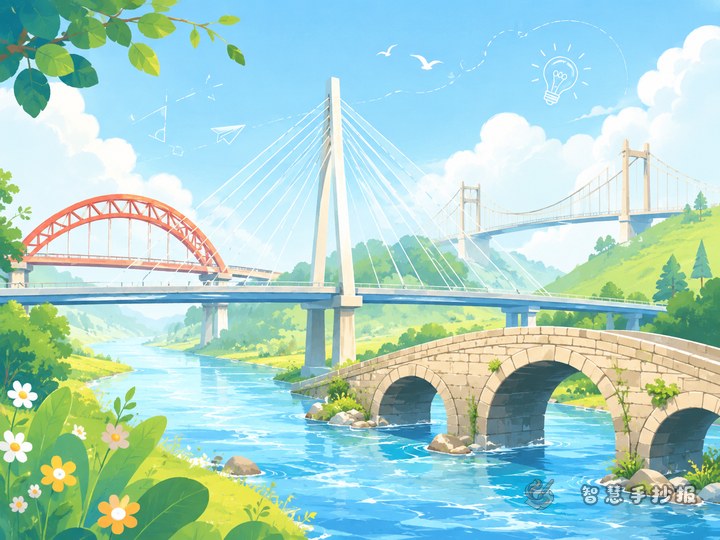
- Types of Bridges: introduce arch bridges, beam bridges, cable-stayed bridges, and suspension bridges with one short sentence each.
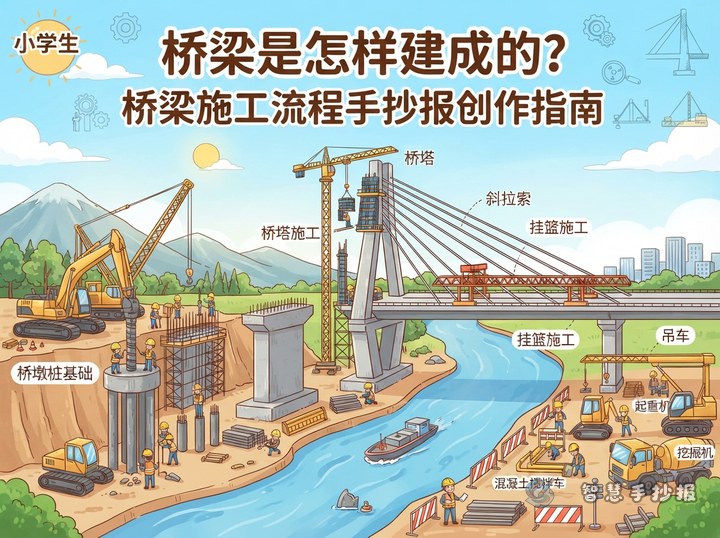
- Engineering Secrets: explain the jobs of the deck, piers, towers, and cables.
- My Future Bridge: add imagination, such as greener, safer, or smarter bridges.
This structure makes the newspaper readable and also leaves room for creative expression.
Ready-to-use writing material
Short notes on bridge types
- Beam bridge: a simple bridge with a straight deck, often seen on roads and city routes.
- Arch bridge: shaped like a curve, spreading force to both sides and often looking elegant.
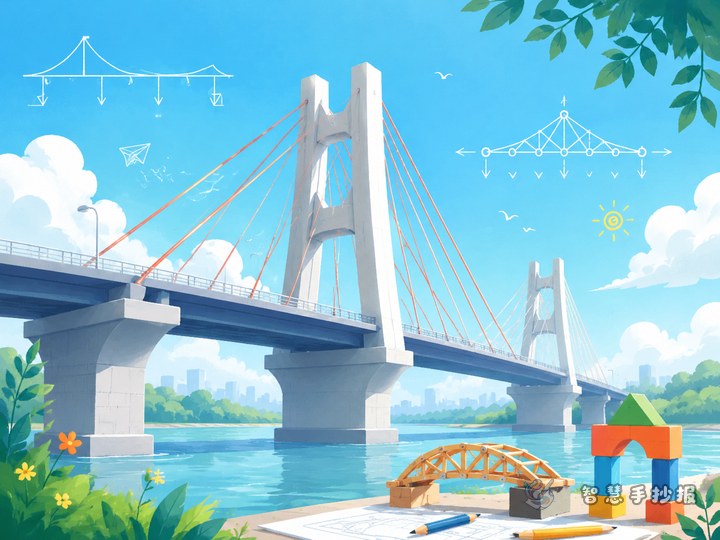
- Cable-stayed bridge: uses cables connected to towers, giving it a light but strong appearance.
- Suspension bridge: the deck hangs from large main cables and is useful for long spans.
Main parts of a bridge
- Deck: the part where people and vehicles travel.
- Pier: supports the bridge and transfers weight to the ground or foundation.
- Tower: helps hold the cables on some modern bridges.
- Cable: shares the load and helps keep the bridge stable.
Useful short lines for side notes
- A bridge is not only a path, but also a result of human wisdom.
- One bridge can connect two sides and also connect daily life with dreams.
- Engineering design makes bridges safer, stronger, and more beautiful.
Try a bridge-shaped layout for the page
This topic works very well with a themed design. Put the title at the top center, draw a simple bridge in the middle, and place the content blocks around it. The page can visually look like a bridge with a deck and supports, which makes the topic easy to recognize.
Good color choices include blue, gray, and light green. These colors can represent water, steel, and environmental awareness. Decorative lines can include waves, stone patterns, or cable-like lines. Make the main title bold, keep the section headings colorful, and write the body text neatly so the page does not feel crowded.
How to make it feel like engineering without being too hard
The key is to use everyday questions instead of formulas. For example: why are some bridges flat while others are curved? Why do many bridges need piers underneath? Why do large river bridges often have tall towers? Questions like these help students think like young engineers.
You can also add a small box called Young Engineer Questions and list two or three observation tasks. This turns the handwritten newspaper into more than a fact page. It becomes a simple engineering exploration activity.
A neat ending for the whole newspaper
The ending can summarize the topic in a few lines: bridges are important examples of architecture and engineering wisdom. From ancient arch bridges to modern long-span bridges, they show how people solve problems through design and creativity. By making this handwritten newspaper, students can learn both bridge knowledge and basic engineering ideas.
If students want to improve the layout, adjust section titles, or continue building the page, they can explore more ideas in the Zhihui Shouchaobao WeChat mini program.