Start with a clear question: How does a bridge cross a river?
This topic works well as a question-and-answer style poster. Use a main title such as “How Does a Bridge Cross a River?” and add a subtitle about bridge parts, types, and simple engineering ideas. It feels educational and is still easy for children to understand.
You can begin with a short introduction: A bridge is an important structure that helps people and vehicles cross rivers, valleys, or roads. Because places are different in distance, ground conditions, and purpose, bridges are designed in different forms. Engineers choose structures and materials based on safety and use.
Interesting sections to include on the poster
- Section 1: Bridge Basics — Introduce the deck, pier, abutment, tower, cable, and arch.
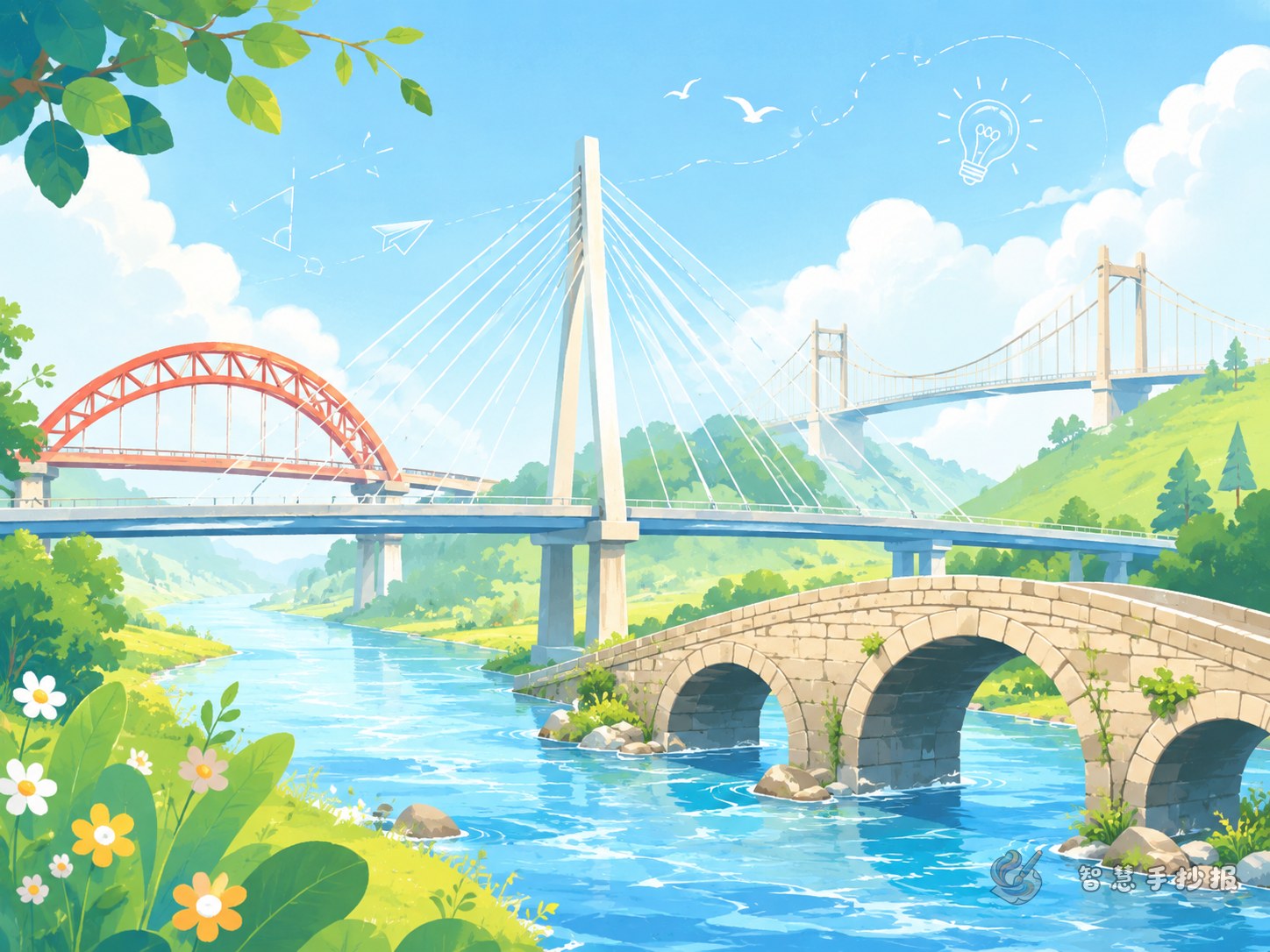
- Section 2: Types of Bridges — Briefly explain beam bridges, arch bridges, suspension bridges, and cable-stayed bridges.
- Section 3: Why a Bridge Stays Strong — Use simple words to talk about support, tension, compression, and weight distribution.
- Section 4: My Bridge Design — Let students imagine a bridge for a park, school, or small river.
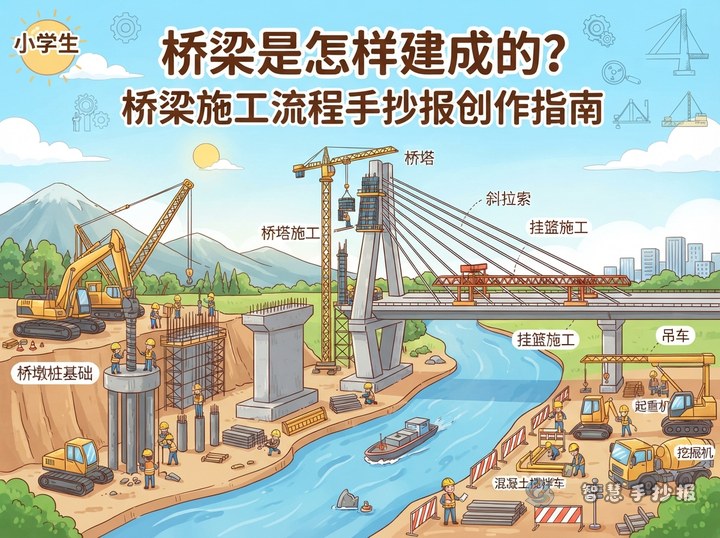
- Section 5: Building Safely — Mention checking the land, choosing materials, and building carefully.
If the page is small, use one center title with four short side sections. If the page is larger, you can divide it into knowledge, design ideas, and a final summary.
Ready-to-use writing material
What is a bridge?
A bridge is a structure that crosses an obstacle and makes travel easier. It connects two sides and helps people move safely. Bridges may look different, but all of them depend on smart design and strong support.
Common bridge types
A beam bridge is simple and straight, and it is very common in daily life. An arch bridge uses a curved shape to push weight to both sides. A suspension bridge hangs the deck from main cables and works well for long distances. A cable-stayed bridge uses many cables connected directly from the tower to the deck, giving it a modern look.
Why doesn’t a bridge easily fall down?
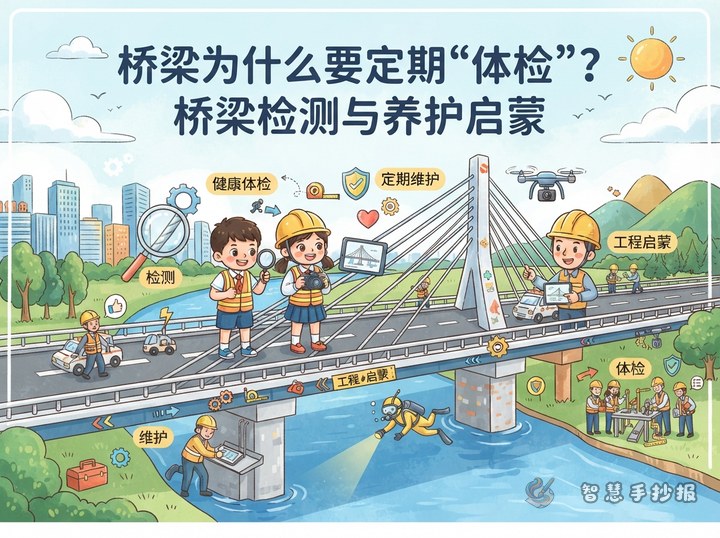
A bridge carries people and vehicles by sending weight into the piers, towers, or ground at both ends. Different parts have different jobs. Some parts take pressure, some hold the deck with pulling force, and some spread the load evenly. With good design and regular care, a bridge can serve for a long time.
One simple engineering idea
A bridge is not just a road in the air. It is a combination of science, math, materials, and careful construction.
How to make the poster look like an engineering theme
Choose colors such as blue, gray, and green to show water, steel, and nature. Draw one main bridge in the center, then add small diagrams of bridge parts, arrows for force, and icons for bridge types around it.
- Make the title bold and strong, using dark blue or black lines.
- Shape section boxes like arches, towers, or riverbanks.
- Add simple decorations such as waves, gears, rulers, helmets, or pencils.
- If detailed drawing feels hard, draw one bridge and label each part with arrows.
Easy tips for elementary students
- Pick one main question first, such as “How does a bridge cross a river?”
- Keep each paragraph short, about two to four lines.
- Separate bridge types from bridge parts so the layout stays clear.
- End with a personal sentence like “I want to design a safe and beautiful bridge one day.”
- If you want to keep adjusting the layout, colors, or sections, you can continue in the Zhihui Shouchaobao WeChat mini program.
A simple ending that feels complete
You can close with a short summary: Bridges make travel easier and show the wisdom of engineering. By learning bridge types, understanding how they stay strong, and trying your own design ideas, this poster can show both knowledge and creativity.