What Makes a Bridge Stay Up
A strong bridge is not just about heavy materials. It works because weight is carried and shared in a planned way. Students can explain that the deck sends force to parts such as piers, towers, cables, or arches, and these parts help the bridge stay balanced.
Three Easy Bridge Types to Introduce
- Beam bridge: simple and straight, good for showing direct support.
- Arch bridge: strong because the arch helps spread pressure to both sides.
- Suspension bridge: uses cables to hold up the bridge deck over long distances.
Useful Sections for the Poster
- How bridges carry weight
- Different shapes, different jobs
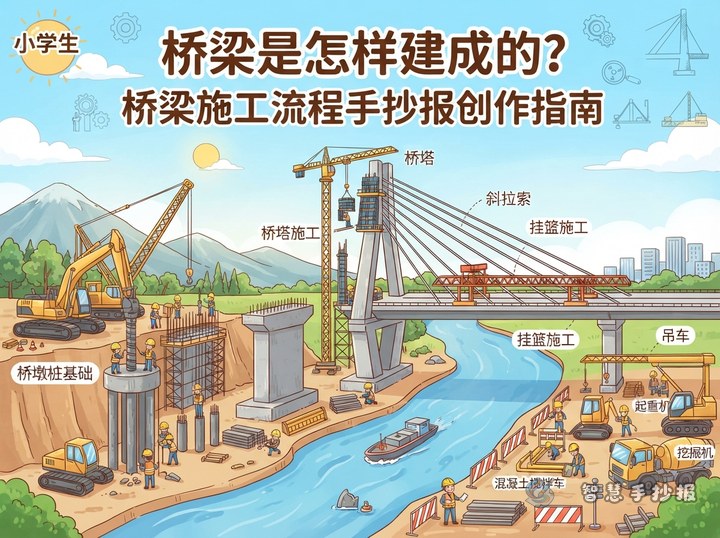
- Parts of a bridge
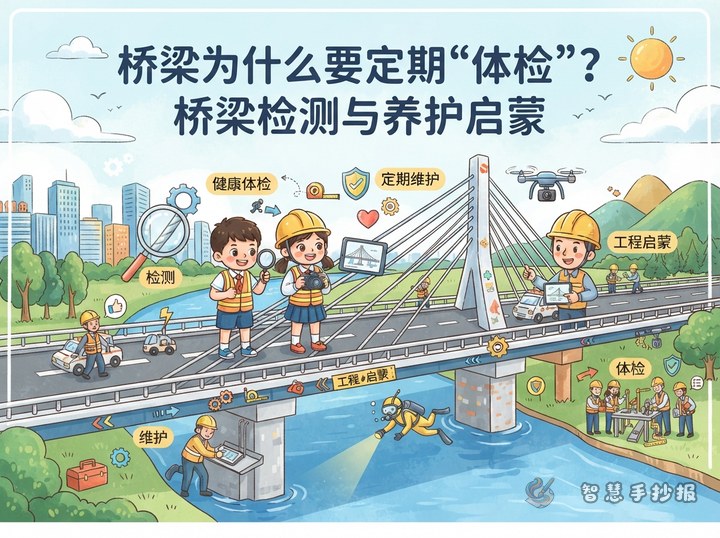
- How engineers keep bridges safe
Short Text Materials Students Can Use
Bridges connect places and make travel easier. Different bridges are built for different needs. Some are short and simple, while others cross rivers, valleys, or the sea. Engineers must think about weight, wind, materials, and safety before building a bridge.
Layout Ideas for a Clear Page
Place a large bridge drawing or structure diagram in the middle. Use side boxes for bridge types, bridge parts, and safety facts. Add arrows to show how force moves through the bridge. This makes the page feel lively and easy to understand.
How to Make the Poster More Engaging
Students can add a small observation task, such as looking for bridges in their neighborhood or comparing pictures of different bridge shapes. If you want to keep refining the layout, title style, and content arrangement, you can continue making the poster in the Smart Handwritten Newspaper WeChat mini program.