Start with one clear goal for the page
A bridge architecture and engineering handwritten newspaper does not need complicated theory. The real goal is to help readers quickly understand what bridges do, how they stay strong, and why engineering matters. For children, a topic such as “Getting to Know Bridges” or “Engineering Secrets of Bridges” works especially well.
If the main idea is clear, the full page becomes easier to organize. Try building the page around transportation, support, materials, and safety.
Six sections that are easy to use
1. What is the job of a bridge?
Write that bridges help people and vehicles cross rivers, valleys, roads, or rail lines, making travel easier and faster.
2. Common types of bridges
- Arch bridge: shaped like a curved arch and often very graceful.
- Beam bridge: simple and common in everyday life.
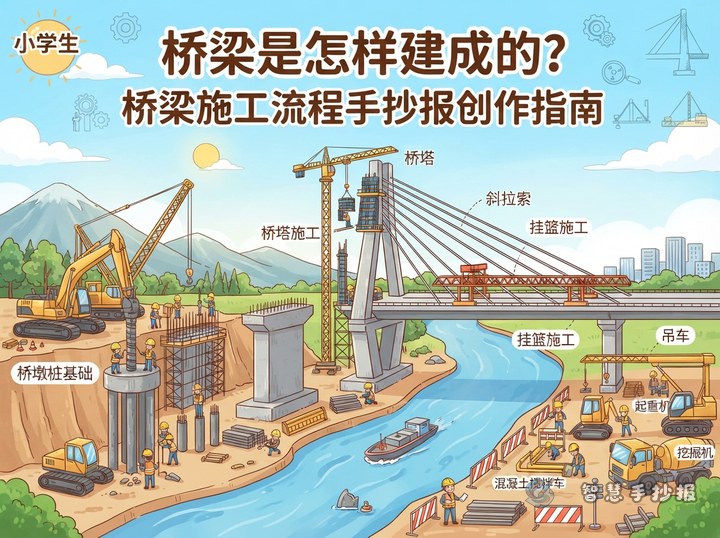
- Cable-stayed bridge: uses cables connected to towers.
- Suspension bridge: hangs the roadway from main cables and is good for long spans.
3. Main parts of a bridge
Children can introduce the deck, pier, abutment, arch, tower, or cables. Keep the explanation simple, such as “piers are like the legs that help hold up the bridge.”
4. Materials used to build bridges
Steel is strong, and concrete is durable. Different bridges use different materials depending on size, location, and purpose.
5. Bridges I have seen
This can include a footbridge, a small stone bridge, or a city bridge near home. Personal observation makes the newspaper feel more real.
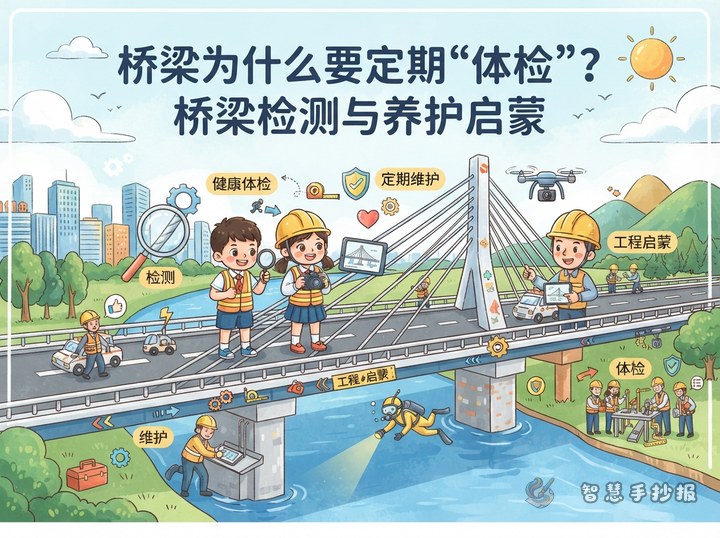
6. Safety and engineering care
Bridges need careful design, testing, and maintenance. They should not be overloaded or damaged.
How to keep the writing short but useful
The text should stay brief. Two to four sentences for each section are usually enough. These kinds of lines work well:
- A bridge connects places that are separated by water, land, or traffic routes.
- Different bridge types are used in different environments.
- The deck, piers, and supports help the bridge stay stable.
- Engineers think about safety, weight, and long-term use.
- Bridges show both practical value and human creativity.
If the page feels too empty, add a mini question box such as “Why do some bridges have many cables?” or “Why must bridge piers be strong?”
A layout idea that feels more like engineering
One creative layout is to place a bridge diagram in the center and arrange the knowledge points around it like notes on a design page. This makes the newspaper feel focused and visually interesting.
- Put the main title at the top in bold, neat lettering.
- Draw a simple bridge in the middle as the visual center.
- Use the left and right sides for bridge types, structure, and materials.
- Place personal observations and safety notes at the bottom.
For decoration, use clean geometric borders, ruler-like lines, or small dots instead of overfilling the page.
Small details that make the project more engaging
Question-style subheadings can make the page more lively, such as “Why doesn’t a bridge fall easily?” or “Why are different bridges built in different places?” These questions invite reading and suit classroom display.
You can also add a “What I noticed” section to describe bridge rails, towers, lights, or space under the bridge. This connects engineering ideas with everyday observation.
Final checklist before finishing
- Is the title clear and easy to notice?
- Are the sections separated clearly?
- Is the text short enough for children to read comfortably?
- Do the drawings match the written content?
- Are the colors clean and consistent?
If you already have your topic and section ideas but want to keep improving the layout or complete the final version faster, you can continue in the Wisdom Handwritten Newspaper WeChat mini program.