Make the Bloom the Center of the Story
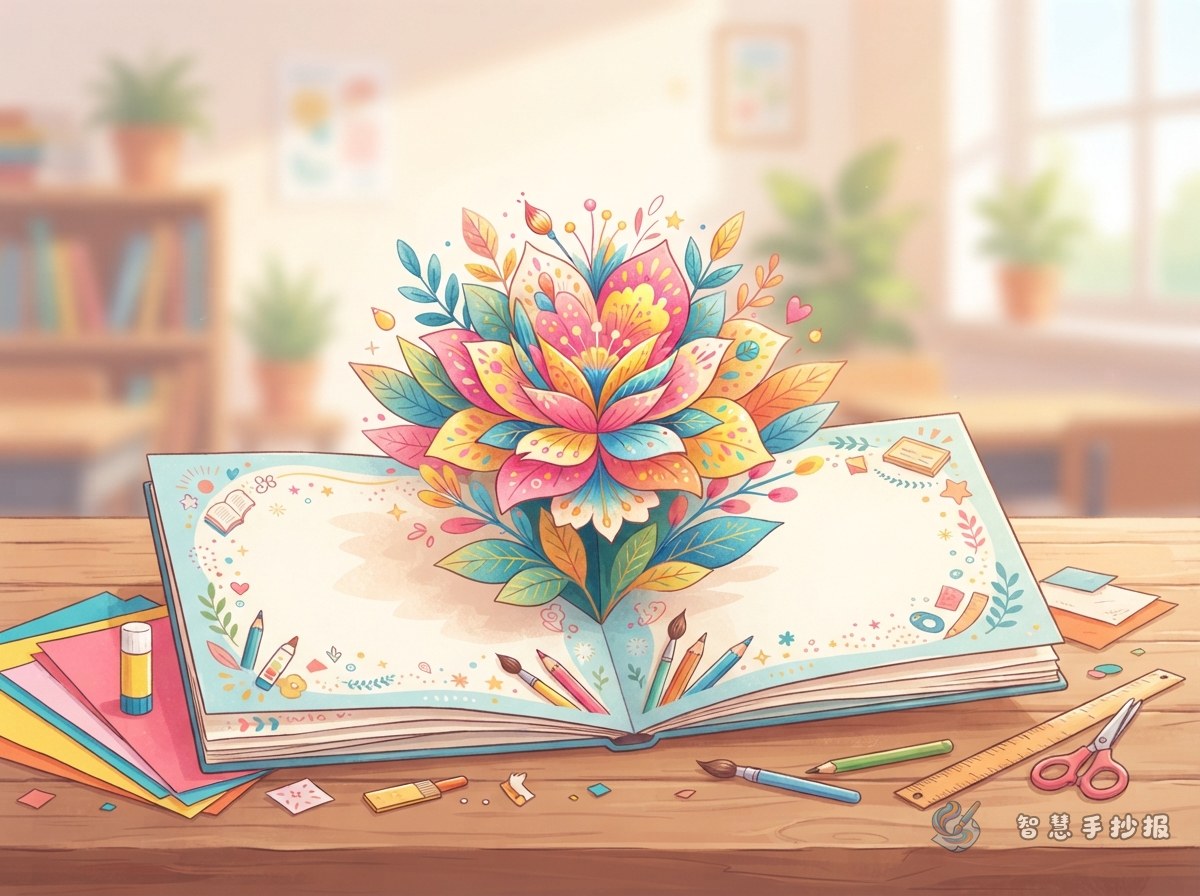
The goal is not simply to attach paper flowers to a poster. The flower should reveal useful information and support the chosen theme. Growth, spring, reading, environmental care, hard work, and cultural traditions all work well. When closed, the flower keeps the page tidy; when opened, its petals reveal keywords, facts, or action ideas.
Place a short title above the flower, such as “Small Steps Help Dreams Bloom” or “Protect Green Spaces and Share the Flowers.” Leave enough clear space around the title for the petals to move freely.
What to Write Inside the Petals
Use five to eight petals and give each one a single idea. Short phrases are easier to read and keep the mechanism light.
- Personal growth: goals, persistence, reading, exercise, gratitude, and teamwork.
- Environmental care: saving water, sorting waste, low-carbon travel, and protecting plants.
- Spring: seasonal observations, plant changes, outdoor safety, and short poems.
- Culture: festival customs, traditional patterns, good manners, and heritage.
The flower center can hold a concluding line such as “Every careful effort helps us grow.” Supporting sections around it may include a fact corner, an action checklist, and a space for personal reflections.
Build a Flower That Opens Smoothly
- Cut similar-sized petals from lightweight cardstock and score a fold near the base of each petal.
- Glue the narrow base of every petal behind a circular flower center. Keep the larger area free so it can move.
- Overlap and fold the petals inward in the same direction. Test the motion before adding text.
- Attach the center to the poster board. A small foam adhesive pad under the center can add depth without making the mechanism bulky.
- Open and close the flower several times. Trim any corners that catch and round sharp edges for durability.
For transportation, hold the closed petals with a removable narrow paper band, then remove it when the poster is displayed.
Balance the Moving Feature with Clear Information
Let the central flower occupy about one third of the poster. Place background information at the upper left, key facts at the upper right, and an action list or reflection section along the bottom. Small leaves, seeds, books, or water drops can connect the decorations to the theme without covering the writing.
Choose one main color, two supporting colors, and one limited accent color. Dark, consistent body text and matching section headings will make the poster look more polished than an excess of decorative materials.
Final Contest Check
- Confirm that the petals open repeatedly without tearing or catching.
- Make sure the closed flower does not cover the main title or essential text.
- Check that every revealed phrase faces the reader in a consistent direction.
- Include facts, practical actions, and the student’s own viewpoint.
- View the poster from a distance to check its focal point and spacing.
After choosing a theme, students and parents can continue in the Smart Handwritten Poster WeChat Mini Program to arrange sections and prepare the poster content, then add the folded flower mechanism to the printed layout.