Turn the poster into a stage that appears when it opens
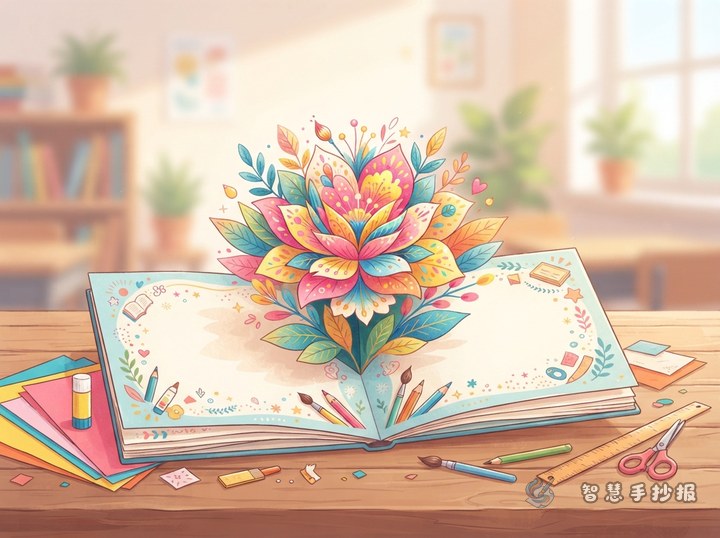
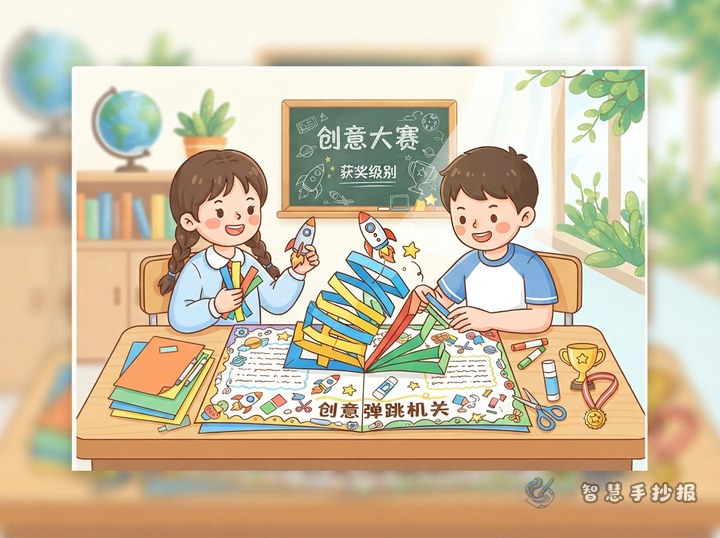
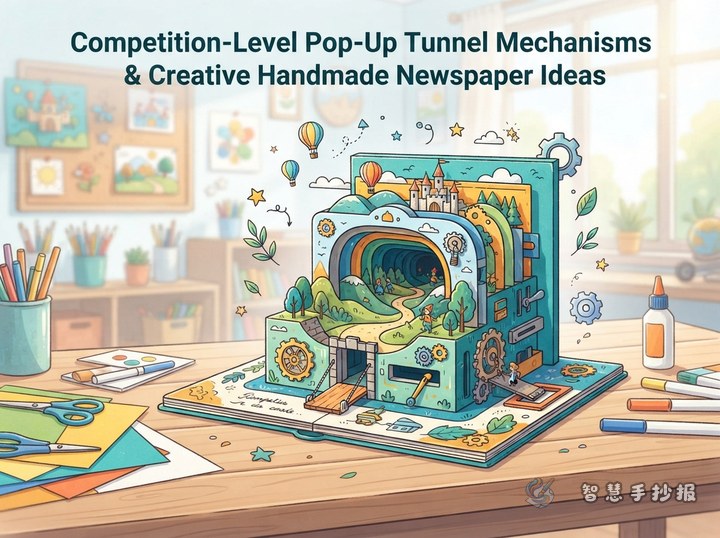
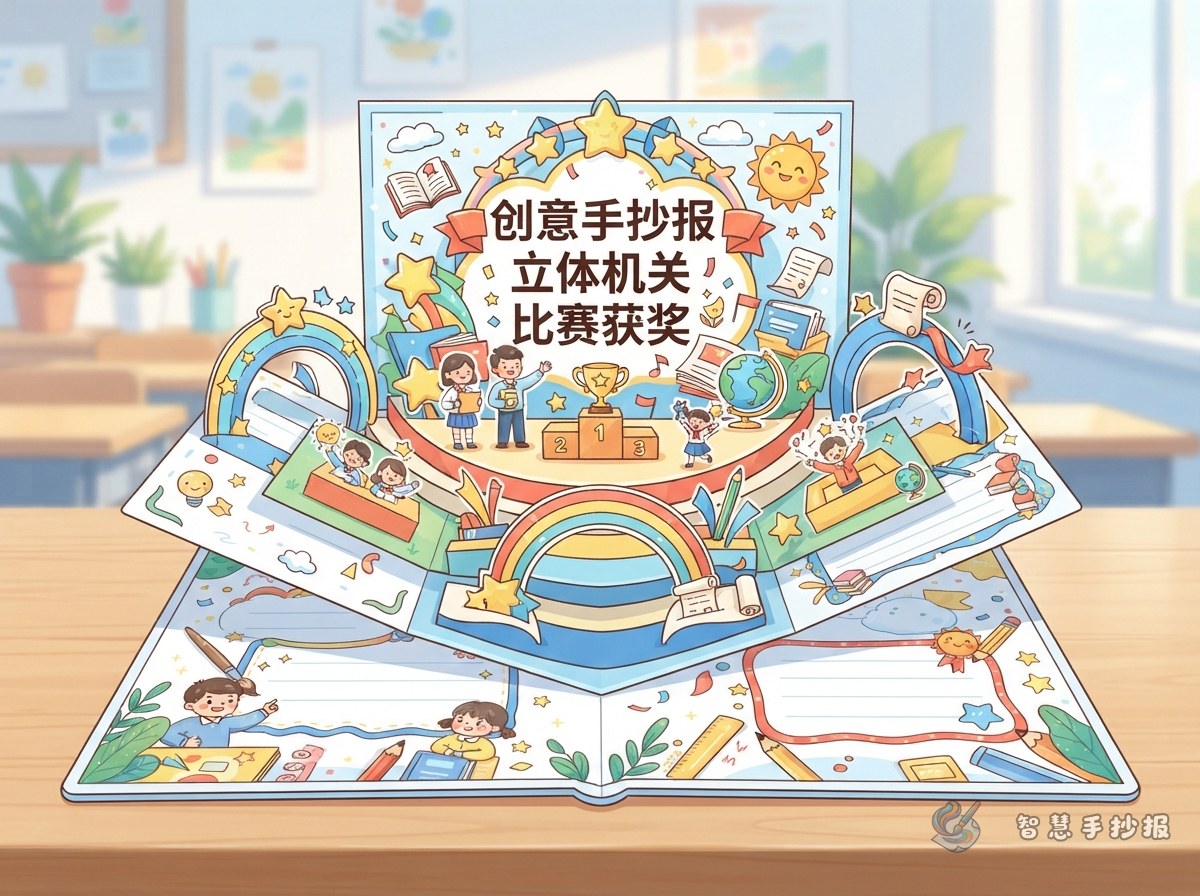
For a competition-level 3D handwritten poster, try a fold-out layered stage mechanism. When closed, it looks like a neat themed booklet. When opened, the background, main illustration, and knowledge sections rise in layers. Unlike simply stacking paper, this design creates a clear viewing sequence through the opening motion. It works well for environmental protection, reading, science exploration, and traditional festival themes.
For example, a poster about “A Day in a Low-Carbon City” can show the title and a short slogan on the cover. After opening, the first layer can show a morning street, the second can present green transportation and waste sorting tips, and the innermost layer can display a future city. The mechanism supports the message instead of becoming decoration alone.
Build the structure with folds and supports
- Use thick paper for the main base and prepare two narrow strips for the side folds and several short strips for the connecting supports.
- Measure equal sections on both sides of the center line and press clear fold lines. A blunt pen can make a crease without cutting the paper.
- Prepare three background layers, with each layer slightly narrower than the one behind it. Attach them to the base with short support strips, fixing only the ends so the middle can open.
- Test the mechanism with blank paper first. Add illustrations and text only after confirming that the layers do not collide. Lightweight decorations make the opening smoother and more reliable.
Set the layers at different heights to create a front-to-back stage effect. Avoid covering every part of the paper with illustrations, because open space helps the depth remain visible.
Match the sections to the 3D scene
Center layer: state the message clearly
Place the title, main illustration, and a slogan of fewer than twenty words on the center layer. A bold, readable title should remain visible when the poster opens.
Side layers: add information that can be scanned quickly
- Quick facts: Explain one key idea in three or four short sentences, such as recycling, saving water, or reading habits.
- Action list: Include three specific actions that a child can take. Keep each sentence short.
- Mini Q&A: Add one question and answer so the mechanism supports interaction as well as decoration.
Bottom layer: show one thoughtful detail
The bottom strip can contain a personal promise, an observation note, or a short poem. Avoid turning it into a long composition. Keep each section concise and use color blocks, frames, or small symbols to separate ideas.
Competition quality comes from the details
Choose one main color, one supporting color, and one accent color. Gradually changing the colors from front to back can make the depth easier to see. Keep outline weights consistent and make sure the text contrasts with its background. Exposed support strips can be shaped like clouds, branches, or book pages, but do not add decorations only to hide the structure.
Check the poster from the front, left, and right after finishing it. Make sure the title is complete, no text is blocked, the support strips stay flat, and the folds open smoothly. A small piece of matching card can reinforce a joint before repeated demonstrations. To organize the layout more quickly, use the Wisdom Handwritten Poster WeChat Mini Program to combine a theme, sections, and decorative elements, then adjust everything to the actual paper size.
A practical layout to adapt
Put the title and main illustration outline on the cover. On the opened poster, place “Where does the problem come from?” on the left, “What can I do?” on the right, the conclusion and main illustration on the highest center layer, and a mini Q&A or action promise on the narrow bottom layer. This sequence moves from introduction to understanding and then action, allowing the viewer to read the message naturally while opening the mechanism.