Choose one main rhyme and let it hold the page together
If an anti-drug and anti-scam poster is just a pile of copied warnings, it can feel scattered. A simpler approach is to choose one short rhyme that covers the whole theme and let everything else support it.
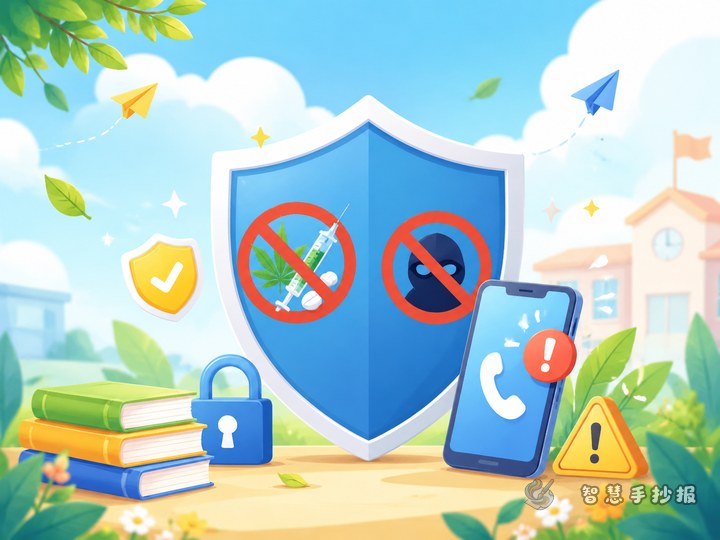
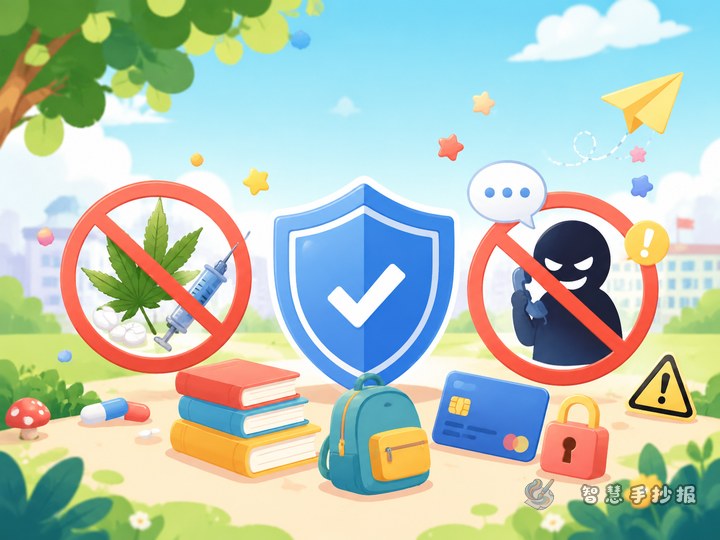
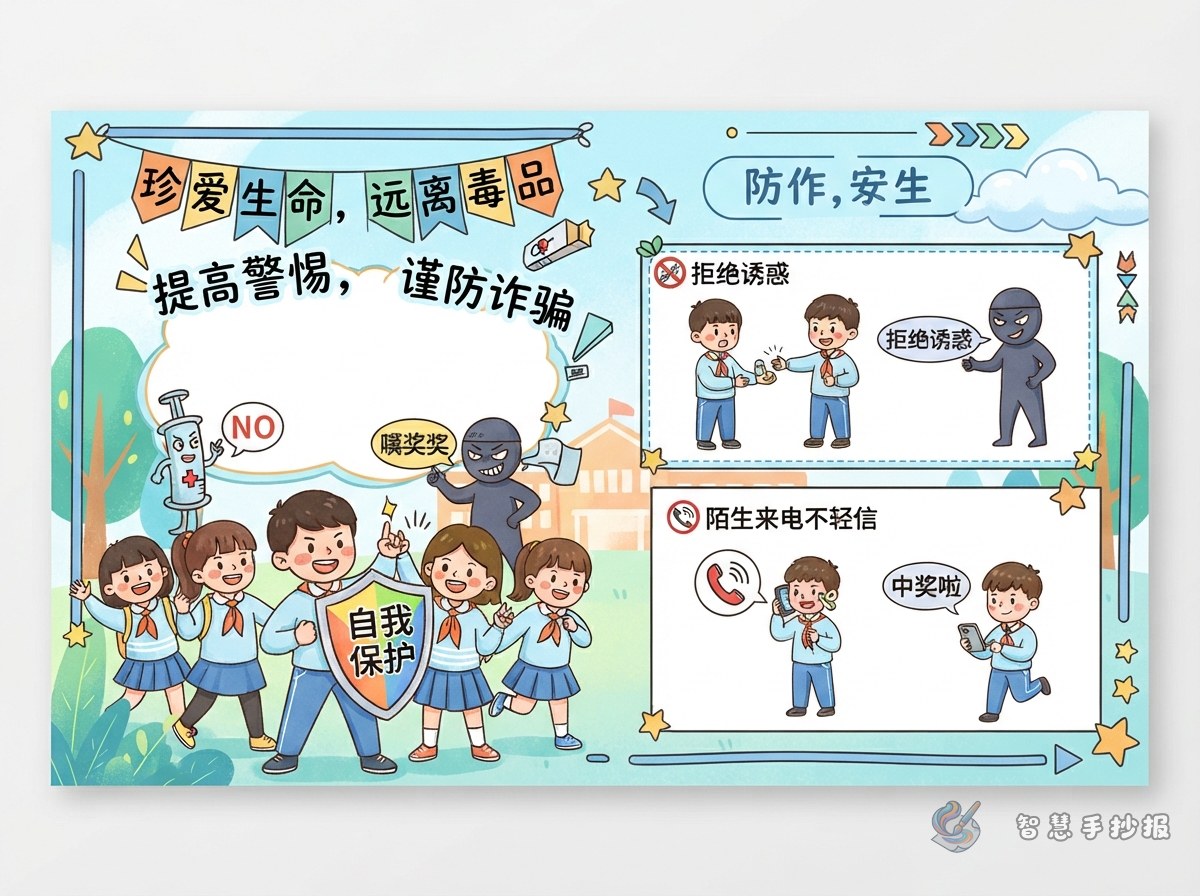
The rhyme should be brief and easy to remember, for example: “No stranger's candy, no strange links, find an adult when something feels wrong.” It touches on drugs, scams and self protection at the same time, so writing it in the most visible spot tells readers instantly what the poster is about.
Before you settle on a rhyme, test it: can it be split into three pictures? If the sentence mentions what to avoid, what not to do, and who to turn to, the panels will be easy to plan.
Split the rhyme into three small panels
Three panels mean less drawing and a clearer message. Each panel only needs one action or one object, with a short caption underneath.
Panel one: staying away from drugs
- Picture: an open hand holding a brightly wrapped “candy” from a stranger.
- Caption: Do not take or taste what strangers offer.
- Extra line: One curious bite can lead to big trouble.
Panel two: spotting scams
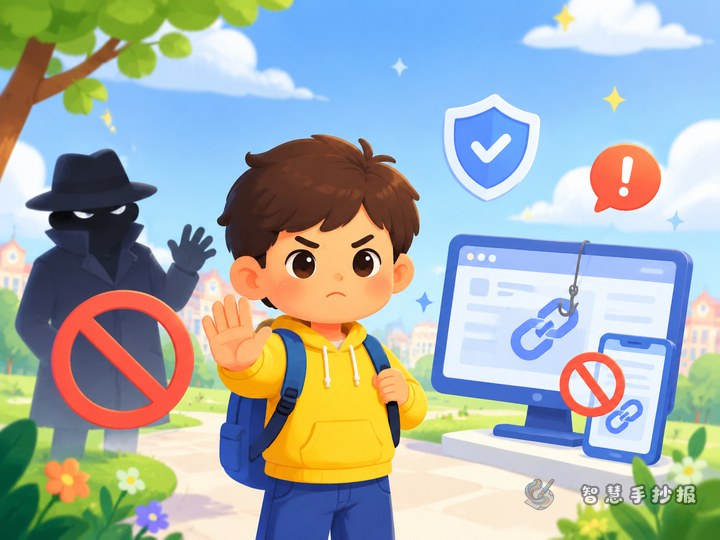
- Picture: a phone screen with a link and a question mark, crossed out.
- Caption: No strange links, no verification codes.
- Extra line: Big prizes, quick refunds and free gifts are usually traps.
Panel three: protecting yourself
- Picture: a small figure holding an adult's hand, or making a phone call.
- Caption: If something feels wrong, step away and tell a parent or teacher.
- Extra line: Nobody may touch your body, and you never have to keep a stranger's secret.
What to write beside each panel
Keep captions to one or two short lines so the pictures stay visible. Here are ready-to-use options you can copy or adapt:
- Drugs: Refuse sweets, drinks and snacks from people you do not know; when someone says “just try a little,” walk away.
- Scams: Do not scan codes from unknown sources; do not hand your parent's phone to a stranger; if someone urges a transfer, stop and ask an adult first.
- Self protection: Memorize your parents' phone numbers and the emergency number; never leave with a stranger; avoid lonely places; always speak up about things that bother you.
If there is still space, add a small tips box with three lines: do not accept things from strangers, do not click unknown links, and find an adult when you need help.
Layout idea: rhyme in the center, panels around it
Many students get stuck on placement. Follow this order and the page will stay organized:
- Draw a light vertical guide line down the middle with a pencil, and write the big title at the top with enough room around it.
- Place the main rhyme slightly above the center, in larger letters, using two colors for the two halves of the sentence.
- Put the three panels at the upper left, lower right and lower left, keeping them roughly the same size and a finger-width apart.
- Save a small corner for a safety tips box or a closing line such as “Stay away from drugs, stay away from scams, take care of yourself.”
- Erase the pencil lines, then outline and color. Write the final text last so it stays clean.
Coloring and title decoration tips
This theme works best with a bright, tidy look. Dark, heavy colors can make the page feel gloomy. You could try:
- Use deep blue or deep green for the title and add a light outline so the words stand out.
- Fill the panels with pale yellow, blue or pink, and outline figures and objects with a darker line.
- Add red only for one or two “do not” icons, otherwise the page feels tense.
- Keep the border simple with straight lines, small squares or diamonds. Empty space can look good too.
If time is short, finish the rhyme, the three panels and the three tips first, then decorate. When the draft is ready, you can open the WeChat mini program Smart Handwritten Newspaper, pick a layout that fits, and drop your rhyme and panels into it before copying or printing.