Start With a Warm Theme: Returning Daylight and Family Togetherness
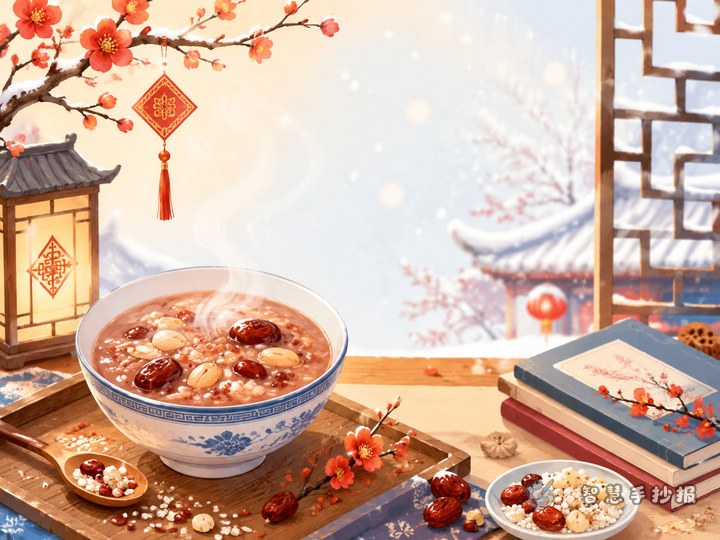
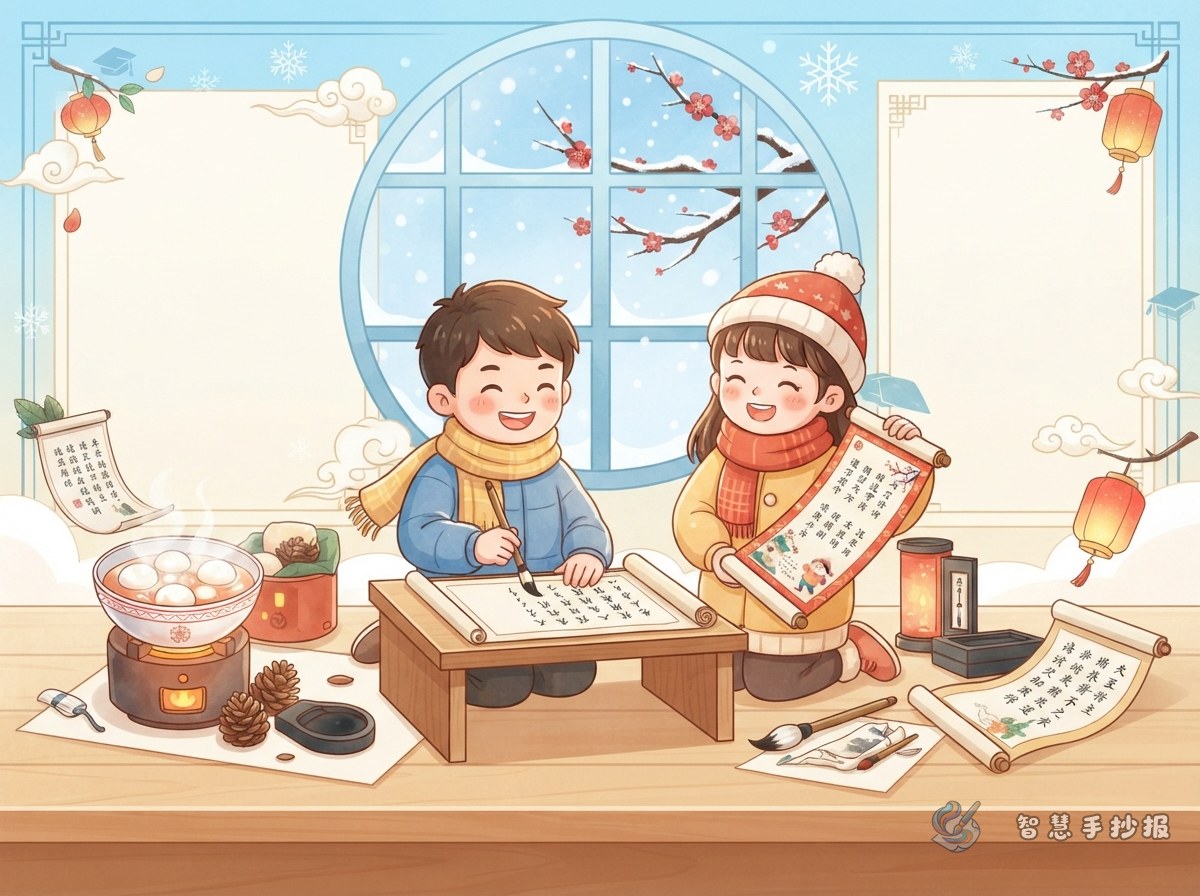
The Winter Solstice is one of the most important days in the Chinese solar calendar, and an old saying calls it as big as New Year. You do not need to squeeze in every fact. Pick two feelings and build the page around them: the days growing longer again, and a family sitting down together to eat dumplings or tangyuan.
- Warmth angle: dumplings, tangyuan, hot soup, lamps, people gathered
- Season angle: counting the nine cold periods, plum blossoms, the shortest day
- Poetic angle: missing home, waiting for spring, the passing of time
Poems Worth Copying Out
One poem for the main block
Du Fu, "Small Solstice": time and human affairs hurry each other along; at the Winter Solstice the sun returns and spring comes again.
Add your own sentence after it: the days start to grow longer after the solstice, so spring is already on its way.
One or two shorter ones for side boxes
- Bai Juyi, "Thinking of Home at Winter Solstice in Handan": staying alone at an inn on the solstice night, thinking of family sitting up late at home. It is a quiet poem about missing home.
- Lu You, "Winter Solstice": the sun reaches its southern point today, and my gate is still and quiet. Short lines, easy to copy.
- Su Shi, "Visiting a Temple Alone on the Winter Solstice": fine rain and dry grass in the cold. Works well as a small decorative verse.
What to Write Besides Poems
Fill the remaining blocks with short facts and customs so the page has layers.
- Solar term facts: the Winter Solstice has the shortest day and longest night in the northern hemisphere; afterwards the days slowly lengthen.
- Customs: dumplings in the north, tangyuan in the south, ancestor remembrance, and drawing the nine-nine cold-counting chart.
- Counting the cold: nine periods of nine days begin at the solstice, and the coldest days fall inside them.
- Sayings: a clear solstice means rain in the first month; a mild solstice means a mild summer.
A Four-Block Layout That Always Works
Divide the paper into four areas: the largest block for poems at the top left or centre, a vertical strip for solar-term facts on the right, a horizontal band for customs along the bottom, and one corner for the cold-counting chart.
- Use warm reds, oranges and deep blues: warm colours for the background, cool colours for borders.
- Draw a steaming bowl of dumplings, a plum branch, or a few snowflakes. Simple lines are enough.
- Turn the cold-counting chart into a nine-square grid, one character or blossom per square.
- Make the title large and bold, keep body text two or three sizes smaller, and separate blocks with double or wavy lines.
Copying and Finishing Tips
- Sketch the grid and boxes lightly in pencil before writing anything.
- Copy the main poem first, then the smaller blocks, then the title and decorations.
- Write larger than you think you need, keep a finger-width of space between lines, and avoid very thin pens.
- Colour from light to dark, and go over borders and the title twice for a cleaner look.
- If time is short, use colour blocks and small icons instead of large painted areas.
If you want to save time finding material and planning the layout, open the Smart Handwritten Newspaper WeChat mini program, pick a Winter Solstice template, swap in your own poems and text, then print and trace it before adding a few hand-drawn touches.