Choose a focused angle before you start
This kind of handwritten newspaper works better when the topic is specific. Instead of using broad slogans, center the page on three clear ideas: spot danger, refuse temptation, and ask for help in time. A practical title helps students write more clearly and makes the layout easier to organize.
A useful angle for this theme is “Be alert to suspicious temptations and learn to spot online scams”. It naturally connects anti-drug awareness, anti-scam safety, and self-protection.
Four sections that fit well on the page
1. Danger signs to notice
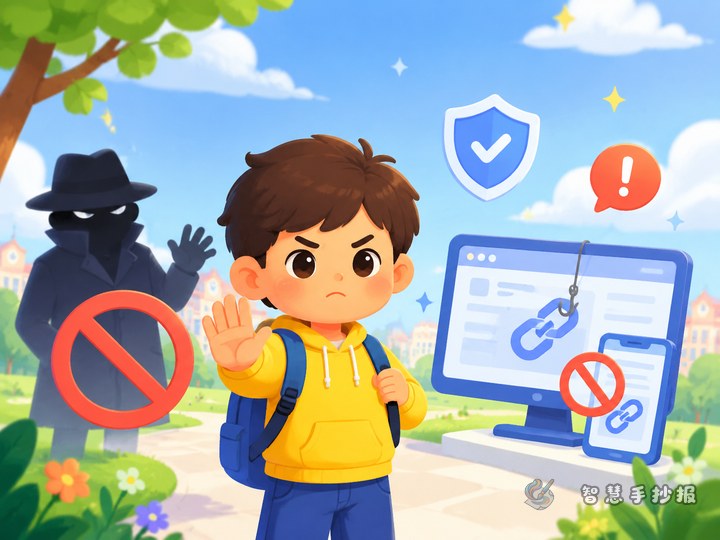
- Be careful when a stranger offers gifts, snacks, drinks, or other temptations.
- If someone online asks for a password, verification code, bank details, or family information, it is risky.
- Do not trust messages such as “free gift,” “big reward,” or “scan to win.”
- Stay away from unknown pills, powders, or vape-like items from unclear sources.
2. How I protect myself
- Never take food or items from strangers.
- Do not add strangers online or share your address, school, or phone number.
- Tell parents or teachers first when you receive a suspicious call or message.
- If a situation feels unsafe, leave quickly and find a trusted adult.
3. Short warning lines
- Drugs are never a game of curiosity.
- Scams often hide behind kindness, rewards, and urgency.
- Real self-protection starts with not believing easily, not being greedy, and not sharing private information.
4. A school safety pledge
Students can end the page with short lines such as: cherish life and stay away from drugs; stay alert and guard against scams; verify first when something feels strange; ask for help quickly when danger appears.
Short text materials you can copy into the poster
Keep the writing simple and easy to read. These short lines work well for elementary school handwritten newspapers.
- Drugs can harm the body, the brain, the family, and the future, so we should not try them, touch them, or get curious about them.
- Scammers may use phone calls, text messages, games, shopping chats, or fake rewards to trick children.
- Self-protection does not mean being fearful. It means learning to recognize risk, refuse temptation, and ask for help.
- When you are not sure whether something is safe, ask parents, teachers, or the police right away.
A layout that looks clear and student-friendly
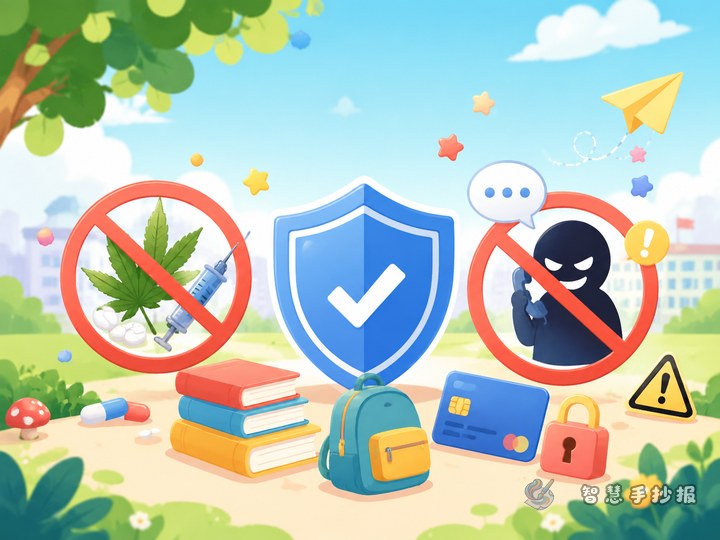
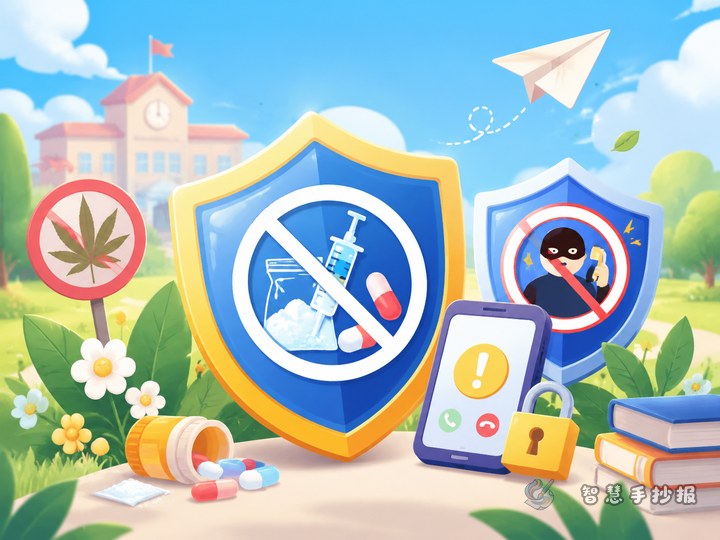
A strong design choice is a big title in the center, two side sections, and a short action summary at the bottom. Put anti-drug reminders on one side and anti-scam tips on the other, then finish with a simple three-step self-protection box.
- Use green and blue as the main colors, with a small amount of red for warning points.
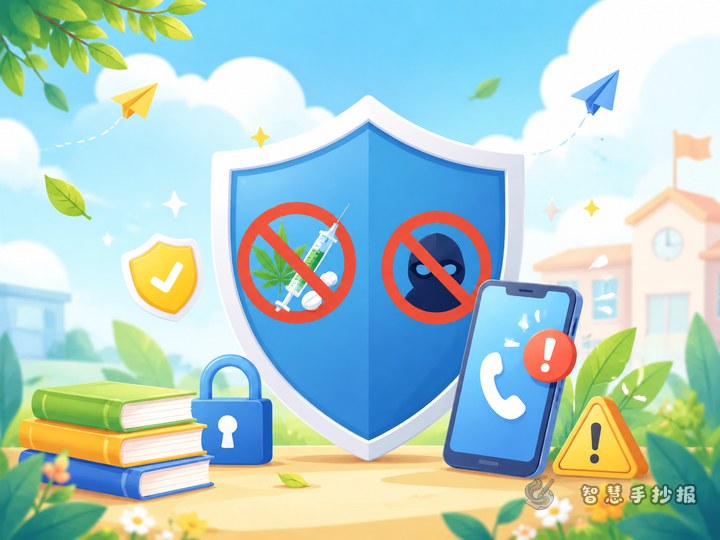
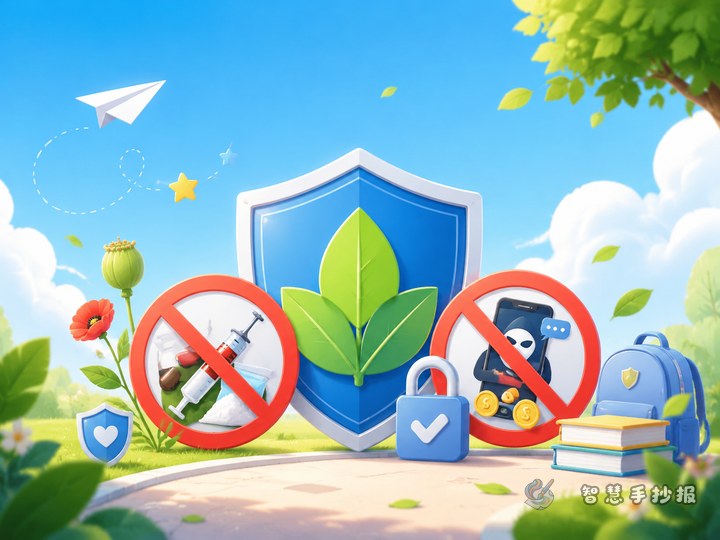
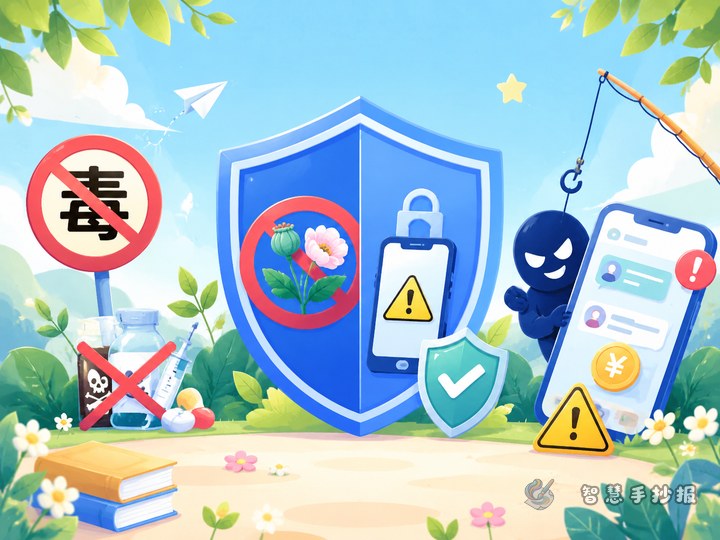
- Add simple drawings such as a shield, phone, magnifying glass, stop sign, backpack, or school gate.
- Keep each text block short so the page does not feel crowded.
- Make words like “refuse,” “check,” “report,” and “ask for help” stand out.
End with action, not only slogans
A better ending is a small student promise: I will not accept suspicious temptations, I will not trust strange online messages, I will not share personal information, and I will ask for help when something feels wrong. This kind of closing is simple, useful, and meaningful for a school poster.
If you want to keep improving the title style, section arrangement, or page layout, you can continue making your handwritten newspaper in the Zhihui Shouchaobao WeChat mini program.