Choose One Idea That Deserves to Pop
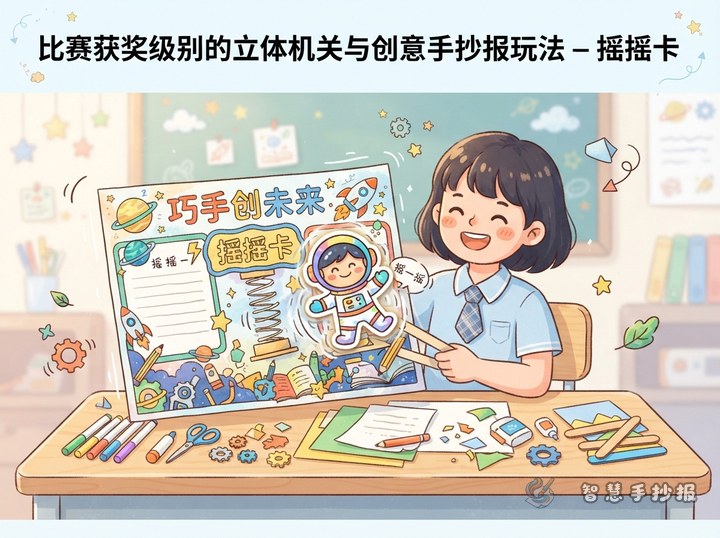
A paper spring should lift the most important symbol on the poster rather than fill every empty space. An environmental poster might feature a gently moving Earth or treetop. A reading poster could raise an open book, while a space theme could use a rocket. Lanterns, fans, or zodiac animals work well for traditional culture topics.
Begin with one clear message, such as Small choices can protect our planet or Reading helps imagination grow. Select one image from that message as the moving centerpiece so the design stays focused.
Build a Spring That Compresses Neatly
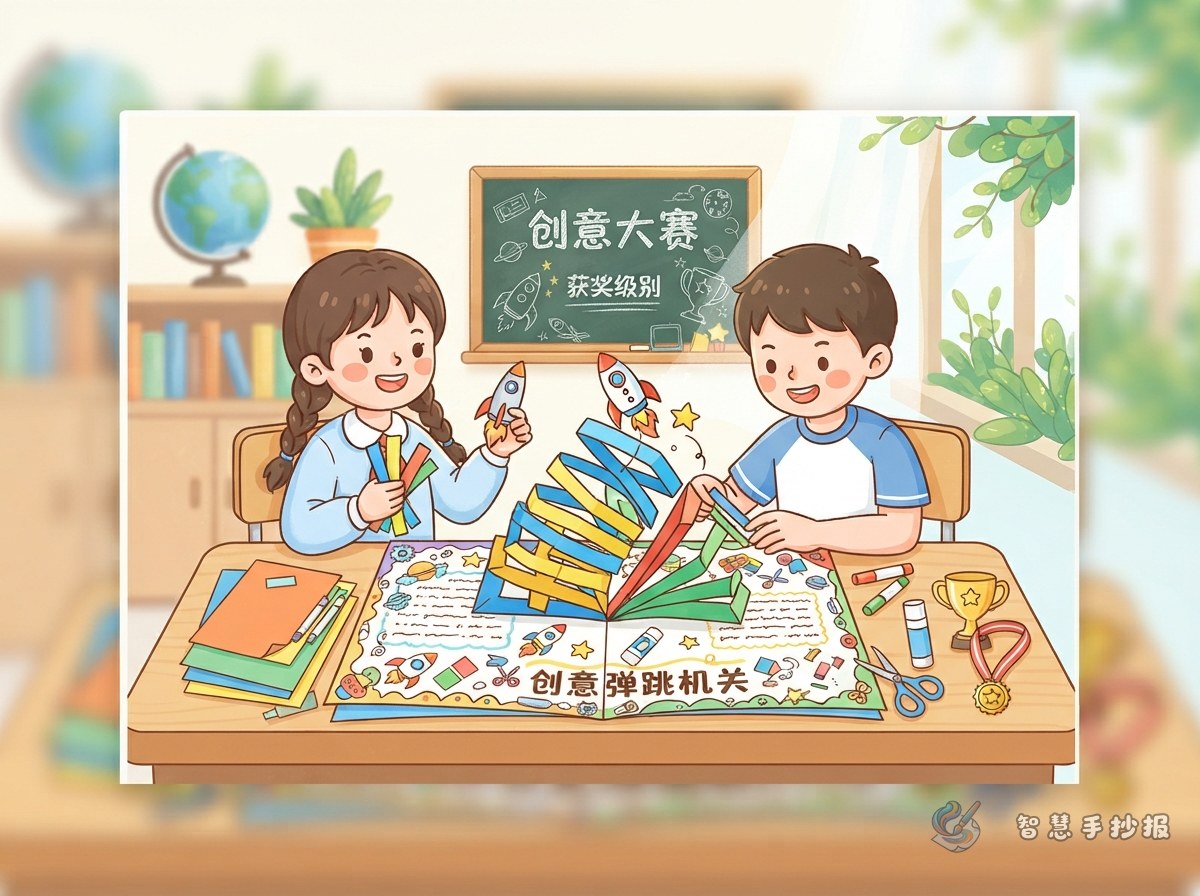
- Cut two colored paper strips of equal width and similar length.
- Glue their ends together at a right angle.
- Fold the lower strip over the center, then alternate with the other strip to form a tidy square column.
- Secure the final ends and press the spring several times to test its movement.
- Add a small card platform on top before attaching the illustrated cutout.
The spring does not need to be very tall. It only needs to compress flat enough for handling and rise enough to create a visible layer. Leave a broad attachment area on the cutout so narrow details do not tear when it moves.
Arrange the Page Like a Small Stage
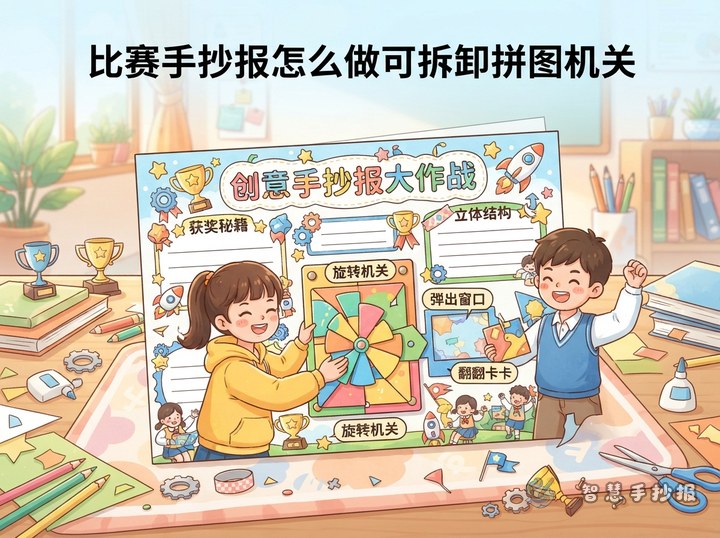
Divide the poster into a central display area, two reading areas, and a lower action panel. Place the headline across the top and position the spring slightly above the center. Short information blocks can sit on both sides, while a checklist or concluding message fits along the bottom.
- Center: the main symbol, a keyword, and one memorable sentence.
- Left panel: background facts, observations, or a simple explanation.
- Right panel: practical actions, helpful tips, or a short story.
- Lower panel: three actions readers can try or a brief call to action.
Leave open space around the moving piece so its outline remains visible. Limit the palette to about three main colors, and repeat one accent color in the headline, centerpiece, and key terms.
Short Text You Can Adapt
For an Environmental Theme
Small actions matter. Turning off unused lights, saving paper, and carrying a reusable bottle are simple choices we can make each day. When these habits continue, they help reduce waste.
My green promise. I will care for plants, sort waste carefully, avoid littering, and invite my family to use resources responsibly.
For a Reading Theme
Why reading matters. Books introduce us to a wider world, build vocabulary, and improve expression. Stories can also teach us about courage, friendship, and responsibility.
My reading plan. Set aside a regular time to read each day, record favorite sentences, and write a few lines about each new discovery after finishing a book.
Test the Poster Before Submission
- Movement test: press the spring several times and check that the cutout does not touch or cover any writing.
- Reading test: make sure the title is clear from a distance and every section follows an easy reading order.
- Strength test: reinforce the base, fragile cutout details, and corners, then remove pencil marks and visible glue residue.
After sketching the concept, students and parents can use the 智慧手抄报 WeChat Mini Program to organize the headline, sections, and layout before building the final poster by hand at the required competition size.