Start with the main idea
This topic works very well for a weather science handwritten newspaper because children notice it in daily life. The most important point is simple: the sun warms the ground during the day, and at night the ground releases heat, so the air becomes cooler.
If you want the title to feel lively, you can use a main heading such as “Why Is It Cold in the Morning but Warm at Noon?” and then add a smaller line to show it is a weather science project.
Sections you can place directly on the page
Weather phenomenon
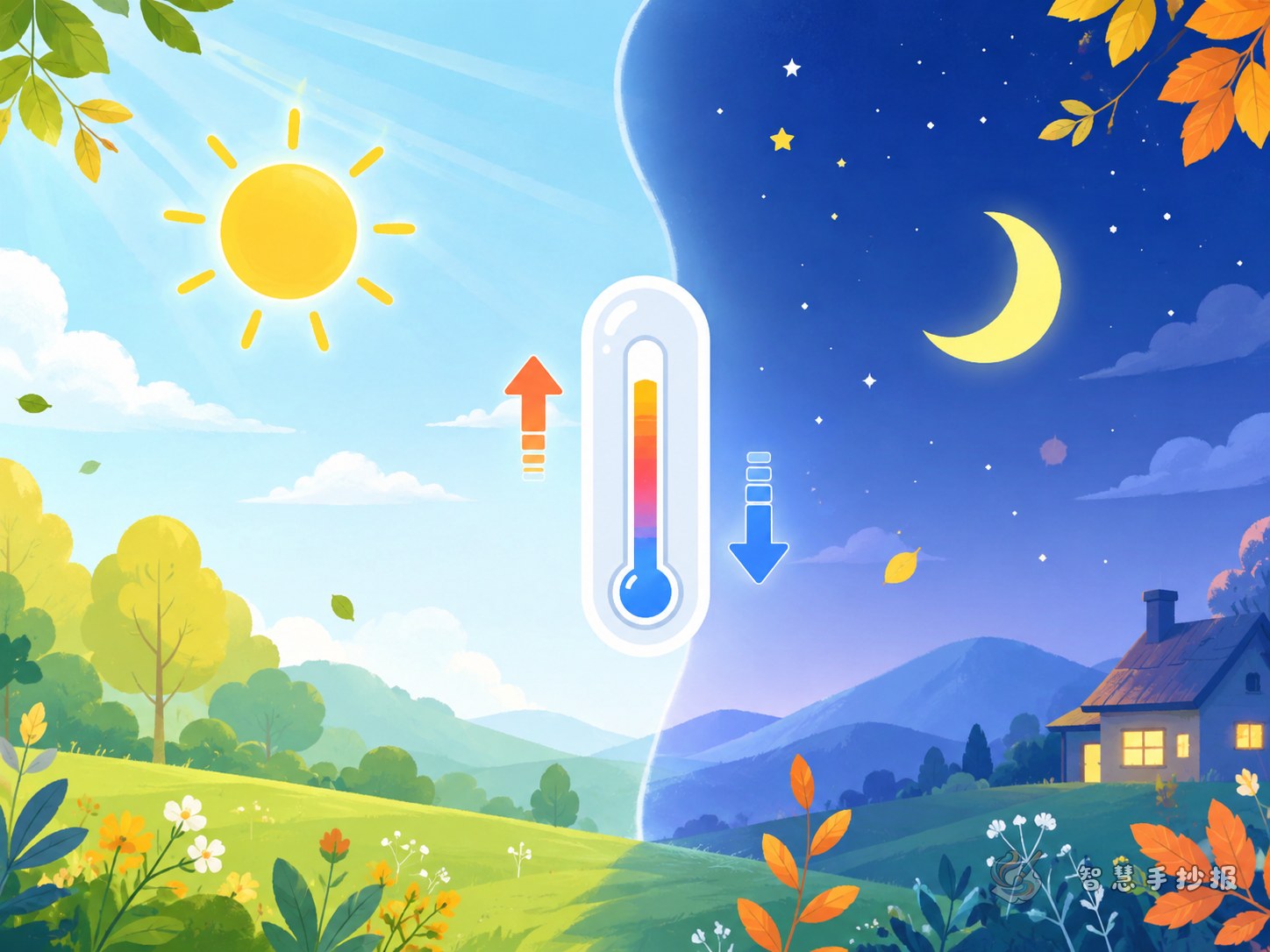
Many people feel chilly in the morning, warmer at noon, and cooler again after sunset. This is a common example of a day-night temperature difference.
Science corner
- During the day, sunlight heats the ground.
- The warm ground then heats the air above it.
- At night, without sunlight, the ground slowly loses heat.
- With fewer clouds, heat escapes more easily, so the temperature difference can become larger.
When is it more obvious
- It is often more noticeable on clear autumn days.
- Dry places and highland areas may have stronger temperature changes.
- Cloudy weather usually reduces the difference between day and night.
Add richer but simple writing material
You can explain the idea with an easy picture in words: the sun works like a heater in the daytime, while at night the ground cools down like a stone losing warmth. Because heating and cooling are not the same throughout the day, the temperature changes.
Short contrast lines also work well in a student project:
- More sunlight means more warming.
- No sunlight means more cooling.
- Clouds can act like a blanket and help keep warmth in.
This kind of writing is easy to copy neatly into a handwritten newspaper.
A layout idea that looks clear
This theme looks great as a contrast page. Use light orange on one side for daytime and light blue on the other side for nighttime. Put the title in the middle so readers can see the difference at once.
- Top area: title with small sun, moon, and cloud decorations.
- Left area: why the day gets warmer.
- Right area: why the night gets cooler.
- Bottom area: daily life tips and a simple temperature observation box.
You can also draw a thermometer and mark morning, noon, and evening temperatures with different colors.
Include useful daily reminders
A good weather handwritten newspaper should connect science with life. You may add these simple reminders:
- Wear extra clothing in the morning and evening during spring and autumn.
- Check the weather before going out.
- Large temperature differences can mean a greater need to stay warm.
- Choose suitable clothes for morning exercise or evening activities.
These practical notes make the whole page feel more complete and helpful.
A strong ending for the newspaper
You may end with a short summary: Large temperature differences between day and night are common weather phenomena. By understanding them, we learn more about sunlight, clouds, air, and the ground, and we can also better plan daily life. After finishing the draft, students can continue improving the page design in the Zhihui Shouchaobao WeChat mini program.