Decide the main message first
A handwritten newspaper about rainbows works well because it combines weather science with bright and friendly visuals. The key idea should be easy to understand: a rainbow appears when sunlight meets tiny water droplets in the air.
For younger students, keep the content short and clear so every section can be read quickly and remembered easily.
Ready-to-use science text
How a rainbow forms
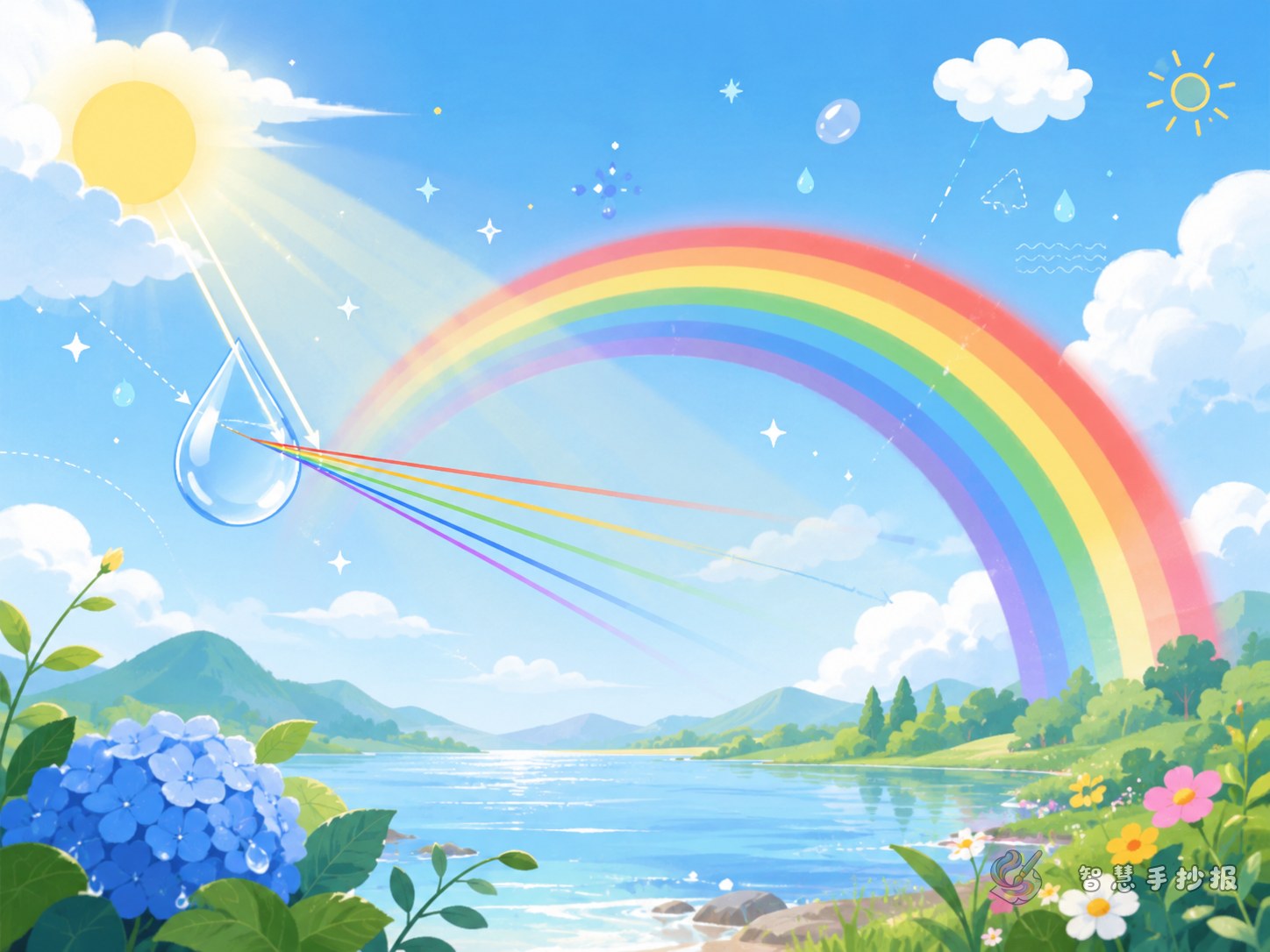
A rainbow forms when sunlight shines into tiny water droplets in the air. The light bends as it enters the droplet, reflects inside it, and then separates into different colors. When many droplets do this at the same time, we can see a rainbow in the sky.
When rainbows are easier to see
Rainbows often appear after rain when the sun comes out again. If the sun is behind you and there are still tiny droplets in front of you, you have a better chance of seeing one.
The colors of a rainbow
Children usually learn seven rainbow colors: red, orange, yellow, green, cyan, blue, and purple. In the real sky, these colors often blend gently instead of appearing as sharply separated bands.
A short science sentence
A rainbow is not a ribbon in the sky. It is a beautiful light phenomenon made by sunlight and tiny water droplets.
Section ideas for the page
- Rainbow Question Box: Why does a rainbow appear?
- Sky Observation Corner: Rainy weather followed by sunshine is a good time to look.
- Seven-Color Notes: List the colors with short explanations.
- Fun Discoveries: Small rainbows can also appear in mist, fountains, or sprayed water.
- My Weather Thoughts: Add one or two personal sentences about observing nature.
Let the rainbow shape guide the layout
This theme looks great with a curved design. Put the title at the top, draw a large rainbow across the center, and place the text blocks under or around it. This creates a lively and organized page.
- Top: title and a small sun.
- Middle: a large rainbow as the visual focus.
- Left side: formation and best viewing conditions.
- Right side: colors and fun observations.
- Bottom: a short conclusion or personal reflection.
Simple decorations such as clouds, raindrops, and small weather icons are enough. Bright colors work best, but do not overcrowd the page.
Helpful making tips for students
Use short paragraphs instead of long blocks of text. Each section can stay within three to five lines so the page remains tidy and easy to read. Make the title larger and colorful, and write the main text in a darker pen for clarity.
If you want to keep improving the design, try more title styles, or find extra materials for the same topic, you can continue in the Zhihui Shouchaobao WeChat mini program.
A simple ending paragraph
Rainbows remind us that weather changes can create beautiful science in the sky. By watching sunlight, rain, and clouds carefully, students can discover how nature turns ordinary moments into something colorful and amazing.