Decide What the Pull Tab Should Reveal
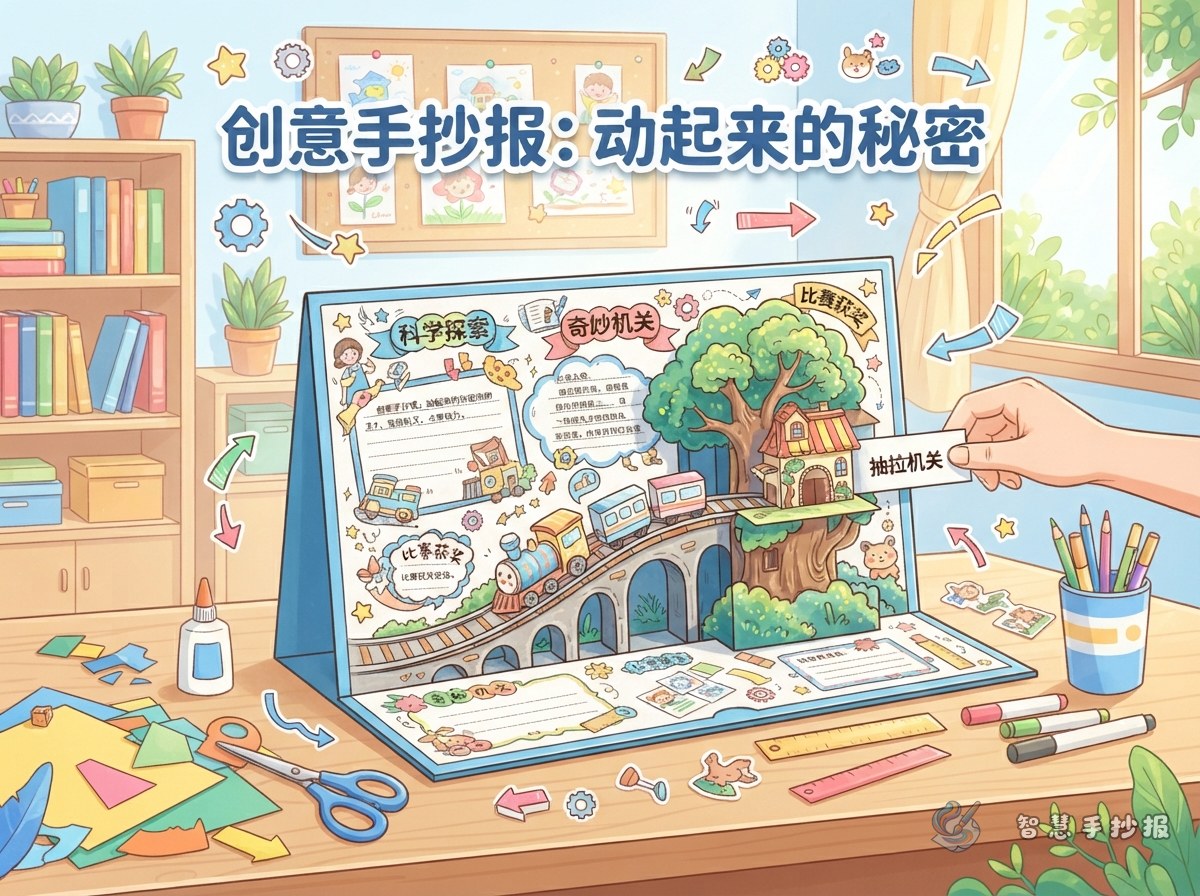
A strong pull-tab mechanism does more than make the page move. Its action should explain the theme. An environmental poster can change a gray city into a green neighborhood, a space poster can launch a rocket, and a reading poster can reveal a hidden knowledge card. Use one main mechanism and keep the rest of the page mostly flat so the interactive feature remains the focus.
Three Pull-Tab Designs That Work Well
Single-Track Movement
Cut a straight slot in the base sheet and attach the featured illustration to the end of a card-stock strip. When the strip is pulled, a rocket, train, animal, or character travels along the track. This reliable structure is a good choice for a first mechanism poster.
Before-and-After Window
Draw two different scenes on a sliding strip and place a viewing window above it. Pulling the strip switches the visible scene. This design suits water conservation, waste sorting, good manners, and other topics that show a clear change.
Linked Moving Part
Connect the strip to an arm, wing, or pointer with a paper fastener or thread. Pulling the tab then creates a waving, flapping, or pointing action. Leave enough room around each joint and cover the internal links with a backing layer for a clean finish.
Build the Sections Around a Short Story
Arrange the poster as a simple sequence: starting point, action, change, and final message. This turns the mechanism into a meaningful transition instead of a separate toy.
- Theme opener: Introduce the situation or ask the main question in two or three sentences.
- Knowledge stop: Add three to five short facts, with one idea in each item.
- Pull to see the change: Place a clear instruction and directional arrow beside the tab.
- My action list: Suggest practical steps a student can take today.
- Closing message: End with one bold and memorable sentence.
Short Text You Can Adapt
Opening: One small action can begin a chain of positive changes. Let us start with everyday choices and turn what we know into what we do.
Transition: Pull the tab gently and watch the picture change. It reminds us that progress often begins with one thoughtful decision.
Ending: When every discovery leads to action and every good habit continues, we can create a better tomorrow together.
Assemble and Test for a Polished Finish
- Sketch the scene before and after movement to confirm that the action communicates the theme.
- Position the title, mechanism, and text sections, leaving open space around the moving feature.
- Make the pull strip from firm card stock and widen its handle so it cannot disappear into the channel.
- Create a sliding channel with two paper layers, applying glue only along the outer edges.
- Test the movement repeatedly before adding borders, arrows, and a few final highlights.
Before submitting the poster, check that the tab moves smoothly, the writing stays visible, and the back lies flat. To continue planning colors, sections, and page layouts, open the Smart Hand-Copied Poster WeChat Mini Program.