Begin with a Peace Tree That Can Grow
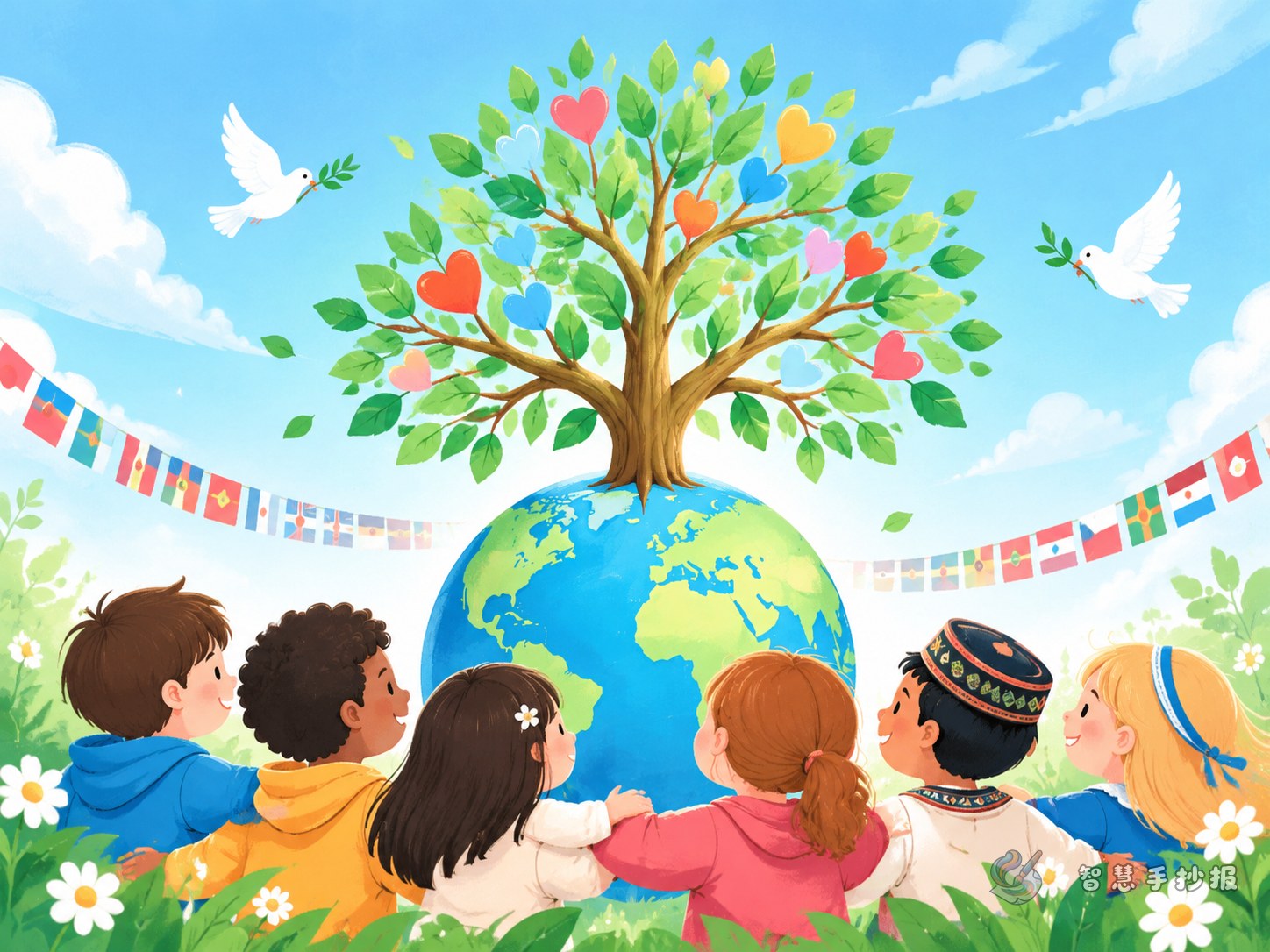
Instead of filling the page with complicated maps or detailed figures, use a tree that grows upward to tell a story about international friendship. The roots can represent shared hopes, the branches can show the qualities friendship needs, the leaves can carry children’s wishes for peace, and the fruit can stand for small actions anyone can take.
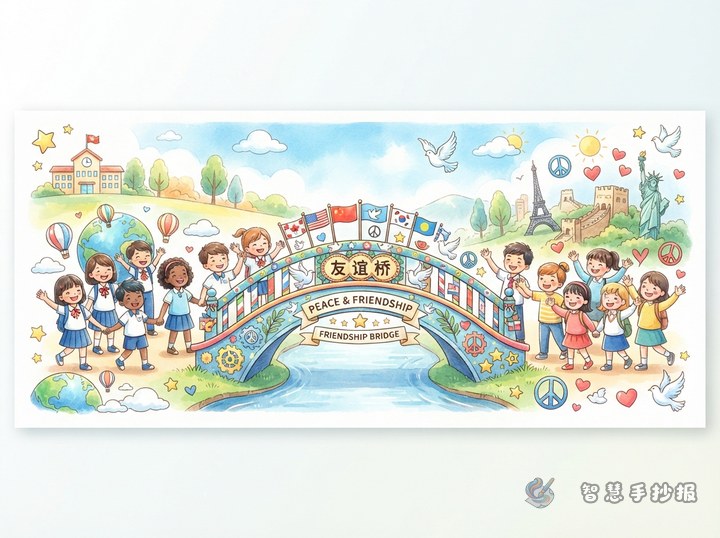
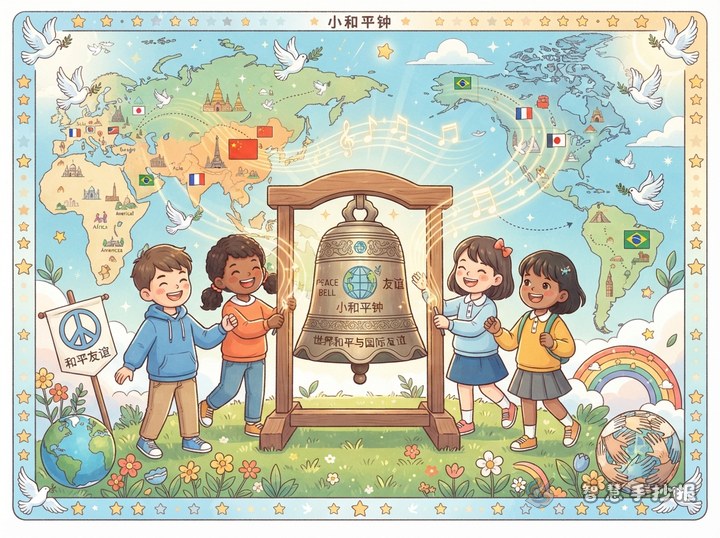
Place the Peace Tree in the center so its crown becomes the visual focus. Add a few small flags, stars, books, or silhouettes of children holding hands beside it to suggest children from different places learning and growing together. Keep the decorations limited so the writing remains easy to read.
Four Sections to Give the Theme a Clear Message
Roots: What We All Cherish
Near the roots, write words such as “peace, respect, understanding, equality, and cooperation.” Add a short sentence like “Every child deserves to be treated with kindness, no matter where they come from.” Use slightly heavier lettering here so readers can quickly understand the main idea.
Branches: What Connects Friendship
Beside the branches, write short reminders such as “Listen before you speak,” “Understand before you judge,” and “Plan and finish things together.” You can also explain that people may have different habits and lifestyles, but sincere communication and mutual respect can help them become friends who grow together.
Wish Leaves: Blessings for the World
Draw small green, yellow, and blue leaves like note cards. Write one brief wish on each leaf, such as “May every child study in peace,” “May we grow happily under the same sky,” or “May friendly greetings reach every school.” Keep each message short so the leaves are easy to arrange.
Peaceful Actions: Start Close to Home
Use the fruit section to make the idea of peace practical. You can write: listen carefully to a classmate’s opinion, take turns sharing supplies, discuss disagreements calmly, welcome a new student, and stop an argument from getting worse. These examples are more meaningful to primary school students than repeating slogans alone.
Arrange the Page Like a Little Garden
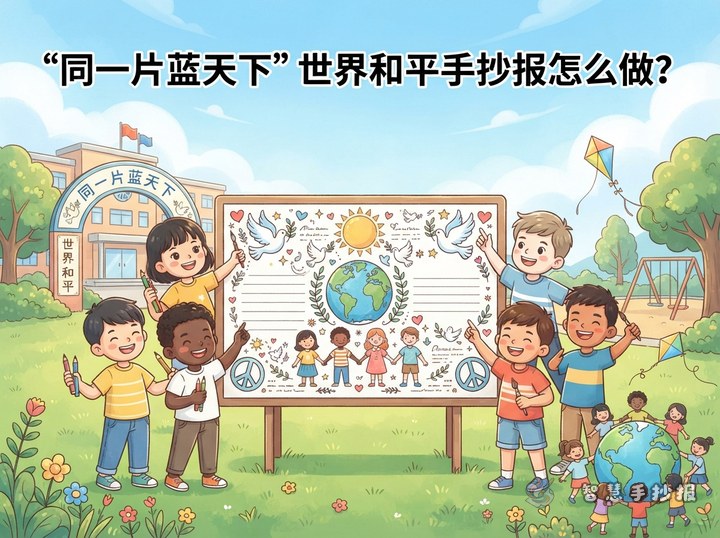
- Top: Put the main title above or inside the tree crown. Add a subtitle such as “Let Friendship Grow Through Understanding.”
- Center: Draw a trunk with branches of different thicknesses and leave clear writing spaces for the roots, leaves, and fruit.
- Left and right: Place friendship keywords on one side and peaceful actions on the other. Use a winding path, ribbon, or trail of stars to connect them to the tree.
- Bottom: Reserve a small conclusion box for a sentence such as “Start with one greeting, one moment of listening, and one act of cooperation.”
Use sky blue, leaf green, and sunshine yellow as the main colors, with orange or red for the title. Repeating the same color family in each section will make the page feel more unified. Lightly mark the layout in pencil, outline it in black, and color it afterward to avoid crowding and unnecessary corrections.
A Complete Design Does Not Require Difficult Drawings
If drawing people is difficult, replace them with round faces, simple hand-in-hand silhouettes, colorful handprints, flags, stars, or leaves. If the page is small, keep only three main sections: roots, wish leaves, and peaceful actions. A strong handwritten poster needs a clear theme, readable words, and a connection between pictures and text—not a large number of decorations.
After making the draft, you can continue organizing the title, sections, and color plan in the 智慧手抄报 WeChat mini program, then adjust the amount of content to fit your paper. This keeps the warmth of your own drawings while making the international friendship and world peace poster more orderly.