Why a “Peace Calendar” Fits This Poster
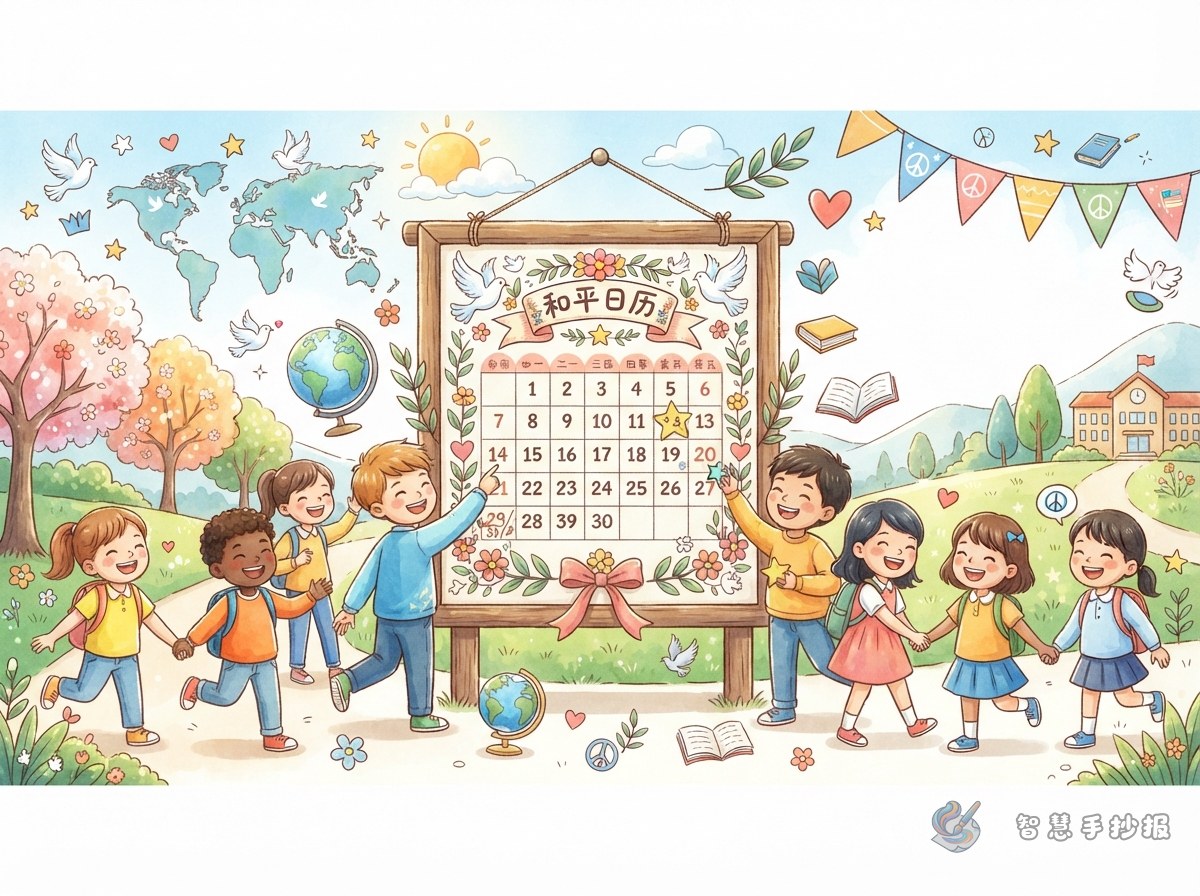
The hard part of an international friendship and world peace poster is usually the scattering of ideas: friendship here, peace there, a globe and a dove somewhere else, until the page feels crowded. A “peace calendar” pulls everything onto one timeline, using dates to connect friendship and peace, so the writing has an order and the reader has something to follow.
- It comes with structure: one timeline is one reading path, so you do not need to invent big blocks.
- Text is easy to fill: each date gets a short explanation and a wish, so no space looks empty.
- Drawings stay simple: small icons inside boxes are far easier than large figures.
Dates and Lines You Can Put in the Boxes
Four to six entries are enough. Leave the extra boxes blank or fill them with small patterns. These international days are often used for this theme.
- 30 July, International Day of Friendship: “Friends have no borders.” “Reach out, and a friend is already near.”
- 21 September, International Day of Peace: “May the guns fall silent and children go to school in safety.”
- 24 October, United Nations Day: “Sitting down to talk is better than arguing.”
- 21 May, World Day for Cultural Diversity for Dialogue and Development: “Different languages, different clothes, still friends.”
- 10 December, Human Rights Day: “Everyone deserves respect.”
If the dates are hard to remember, turn each box into a “friendship moment” instead, such as “I helped the new classmate on duty today” or “I said hello in English.” A calendar can record actions, not only dates.
Layout: One Calendar plus Three Small Sections
Sketch the layout in pencil first, and only add colour when everything fits.
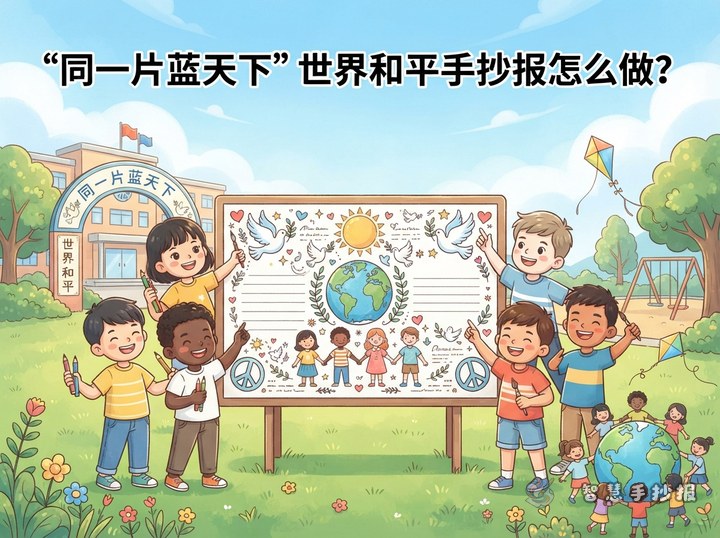
- Main section, taking more than half the page, for the peace calendar timeline. A vertical timeline suits A3 portrait; a horizontal one suits landscape. Draw each stop as a small square or a round date tag.
- Friendship wishes corner with three or four short wishes, such as “May my friends live all over the world.”
- Peace promise signature strip, left empty so classmates, parents or teachers can sign and add one line.
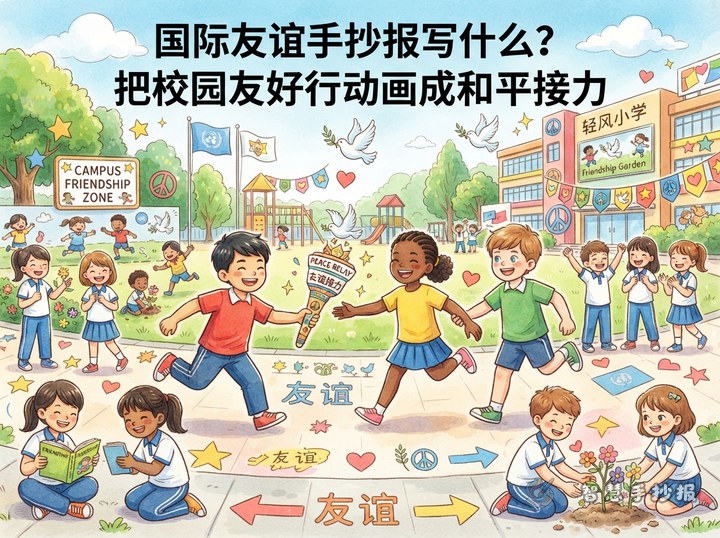
- Title area at the top or top left, in the largest lettering, with a dot between “International Friendship” and “World Peace” for rhythm.
Words, Colours and Easy Drawings
Keep the lines short, one per line.
- “The world is wide; a kind hello is small, but it is enough.”
- “Different coloured hands, held together, are still one hand.”
- “Peace is not far away; it starts with not teasing the person beside you.”
Use sky blue, lake blue, grass green, warm yellow and white as your base, and save red for small details such as hearts or tiny flags. A pale blue wave pattern or light clouds work well as a background; avoid large dark areas or the writing becomes hard to read.
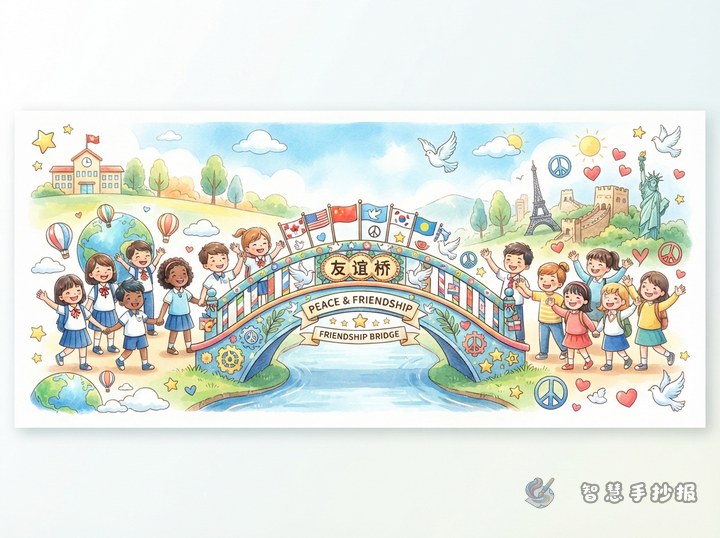
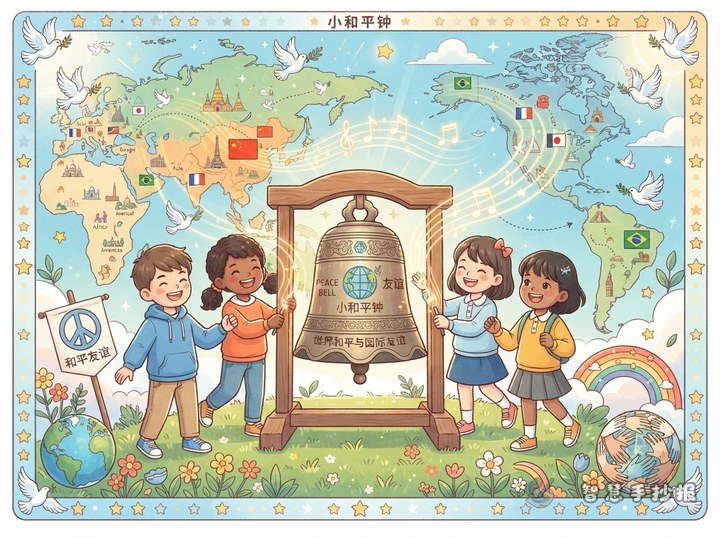
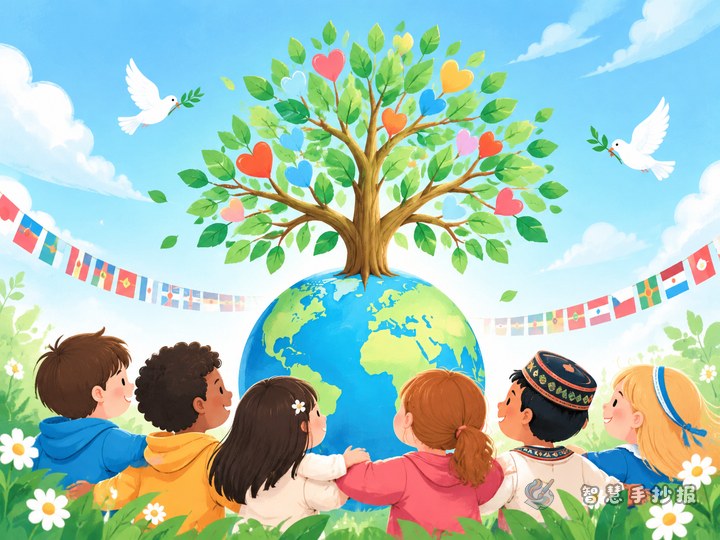
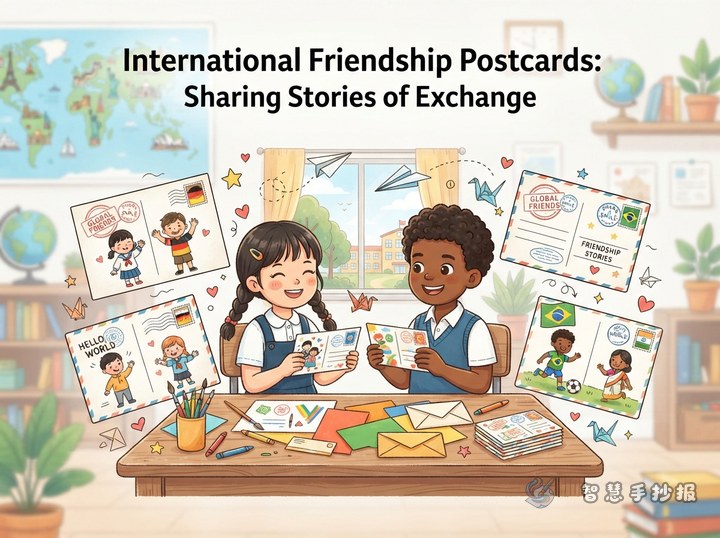
Doves, handshakes, globes, rainbows, paper planes, small flags and children’s silhouettes all fit. If drawing is tricky, break each picture into shapes: circles and curves for doves and globes, rectangles and triangles for flags.
From Pencil Sketch to Finished Page
- Leave a margin of 1 to 1.5 cm around the paper.
- Place the title first, then decide whether the timeline runs vertically or horizontally.
- Use a ruler for the calendar boxes and section frames, keeping all boxes the same size.
- Write the text first, then outline the borders and add the drawings in colour.
- Check spelling and empty space at the end, and deliberately leave the signature strip blank for others to fill in.
If time is short, keep only the peace calendar and the wishes corner, and write larger. To try a different grid or set of patterns, open the “智慧手抄报” WeChat mini program, pick an international friendship and world peace template, and keep going from there.