Start with One Bottle’s School Day
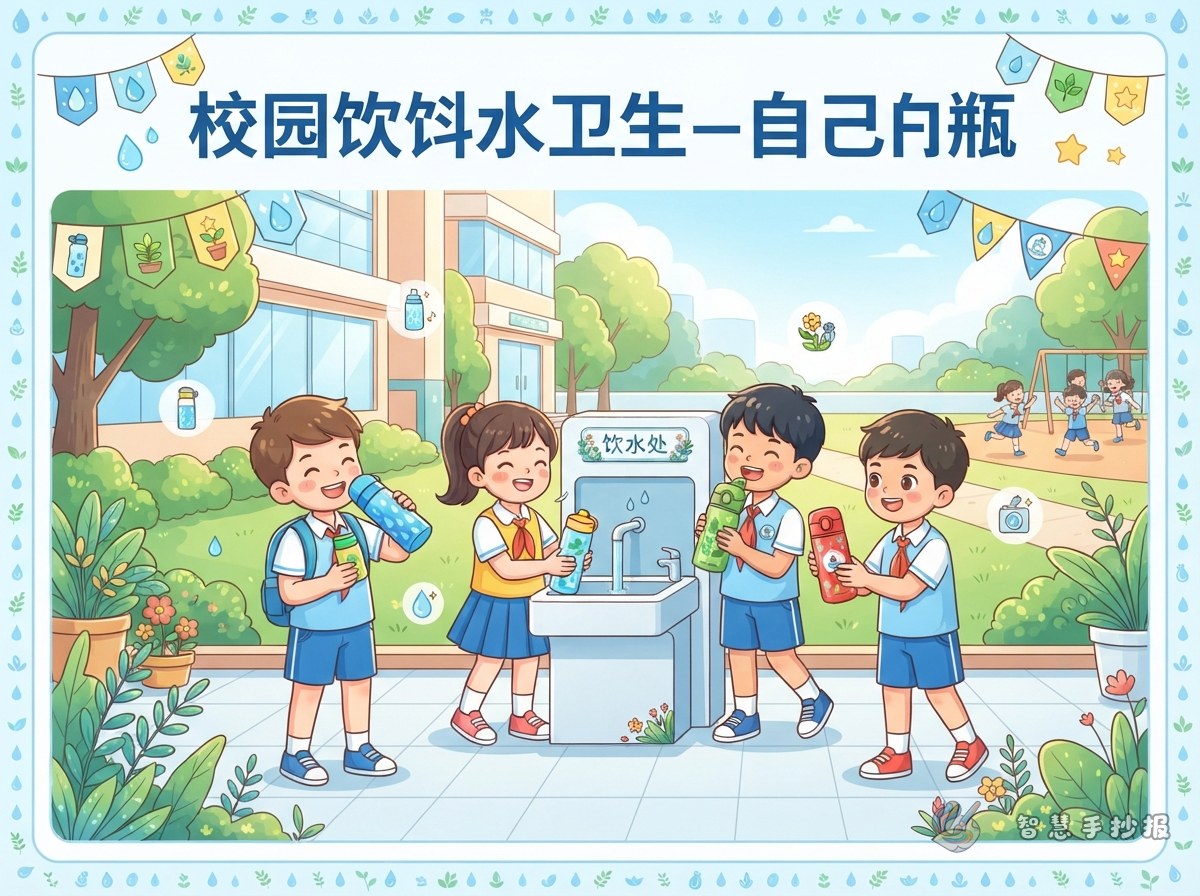
Drinking water hygiene can easily turn into a list of scattered reminders. A clearer poster idea is to follow one water bottle through the day: filling it at home, refilling between classes, drinking after exercise, rinsing after lunch, and checking it before going home. This gives the layout a natural order and helps students decide where drawings should go.
Headline ideas for the top of the poster
- My Little Bottle, My Healthy Habit
- Drink Smart, Clean Your Bottle, Feel Fresh at School
- Healthy Water Habits Start with One Cup
Choose one short headline and one subtitle. A simple bottle, water drop, or water dispenser outline can sit beside the title without crowding the page.
Five Everyday Habits Students Can Write About
Use short text boxes for this part. For each habit, tell readers what to do and why it matters.
1. Bring a labeled bottle and keep it clean
Students can write: write your name on the bottle, take it home every day, and do not share it with classmates. Add a reminder to close the lid tightly and keep the bottle away from loose stationery or tissues in the school bag.
2. Line up and keep the bottle mouth away from the dispenser
Refill in order, avoid pushing, and do not let the bottle mouth touch the water outlet. Step away after filling so others can use the dispenser, and wipe up spills if a teacher or staff member asks for help.
3. Drink small amounts often
A simple timetable can include arrival time, morning break, lunch, afternoon break, and after exercise. Remind readers not to wait until they feel very thirsty and not to gulp a large amount at once. After intense exercise, rest briefly and then take small sips.
4. Wash the bottle every day
Write a four-step routine: pour out leftover water, rinse with clean water, clean the rim and lid carefully, and let the bottle air-dry with the lid open. Younger students can show this with four small pictures or short phrases.
5. Keep the water station tidy
Ask students not to leave snack crumbs or tissues near the dispenser, not to touch the water outlet with their hands, and to tell a teacher if the floor is wet. This can be written as a class agreement with the student on duty.
Friendly Column Names for the Poster
Short column titles work best. They should sound like part of a poster, not like a long instruction sheet.
- Bottle Check: bring it, label it, close the lid.
- Refill Manners: line up, keep the bottle mouth clear, avoid spills.
- Drinking Times: breaks, lunch, and after exercise.
- Wash and Dry: rinse, clean the rim, air-dry, store.
- Water Station Agreement: keep the floor dry and remind others politely.
If the page is small, combine them into three columns: Bring and Refill, Drink and Move, and Wash and Tidy. The names do not need to match perfectly; clear grouping matters more.
Layout Ideas: Let Water Drops and Arrows Guide the Eye
Divide the page into top, middle, and bottom sections instead of four equal boxes. Put the headline at the top. In the middle, draw one large bottle at a slight angle as the visual center, with one text box on each side. At the bottom, place a drinking timetable or a washing routine. The bottle can be a simple outline with a short message written inside.
Easy layout tricks
- Use large water-drop shapes as text boxes, with the pointed ends facing the center.
- Connect refill, drink, and wash with arrows so the poster reads like a simple process.
- Draw the drinking timetable around a clock face and add short notes at several times.
- Use blue and light green together, and leave white space instead of coloring every area.
Leave small gaps between text boxes. Column titles can be one size larger than the body text. Use bold or color for only a few key sentences, or the page will look busy from a distance.
Adjust the Poster for Different Grades
Younger students can focus on three actions: bring a bottle, line up to refill, and wash the bottle at home. Keep sentences short and drawings large. Middle-grade students can add a drinking timetable and a four-step washing routine. Older students can explain why the bottle mouth should not touch the dispenser and why gulping water after exercise is not a good idea, but they should use their own words.
Before starting, check three things: the theme is clearly school drinking water hygiene, there are at least three habits readers can follow, and the columns do not repeat the same message. If you want to adjust the title shapes, column text, and layout sketch to fit a class page, open 智慧手抄报 in the WeChat mini program and continue there before copying the final version onto paper.