Start with one clear focus
This type of poster should not scatter information everywhere. A better idea is to keep one simple focus: how people in ancient times addressed others and showed respect. When the content follows these two lines, the whole poster becomes easier to read and easier for children to explain.
You may title the work with a natural classroom-style topic such as “How People Were Addressed in Ancient Times” or “Traditional Courtesy in Ancient Titles.” That gives the page a clear direction from the beginning.
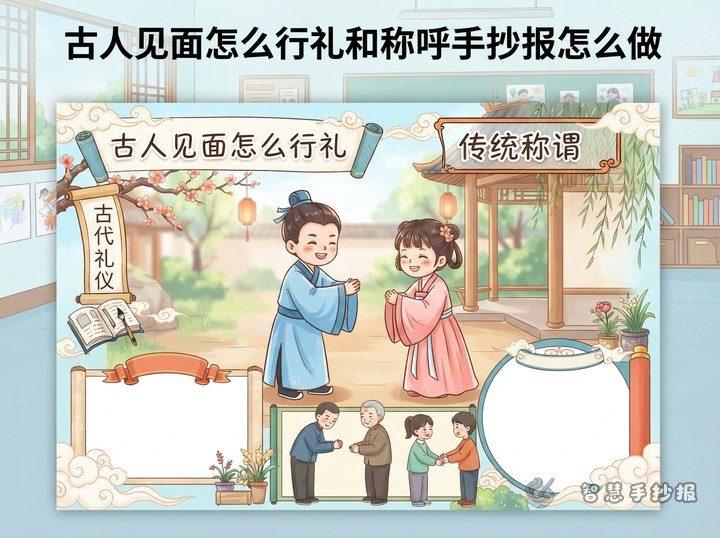
Section ideas that make the page easy to read
Instead of writing one long block of text, divide the poster into small sections. This structure is very useful:
- Family titles: father, mother, elder brother, grandparents
- Titles for teachers and elders: respectful ways to address seniors
- Honorific and humble expressions: how to respect others and speak modestly about oneself
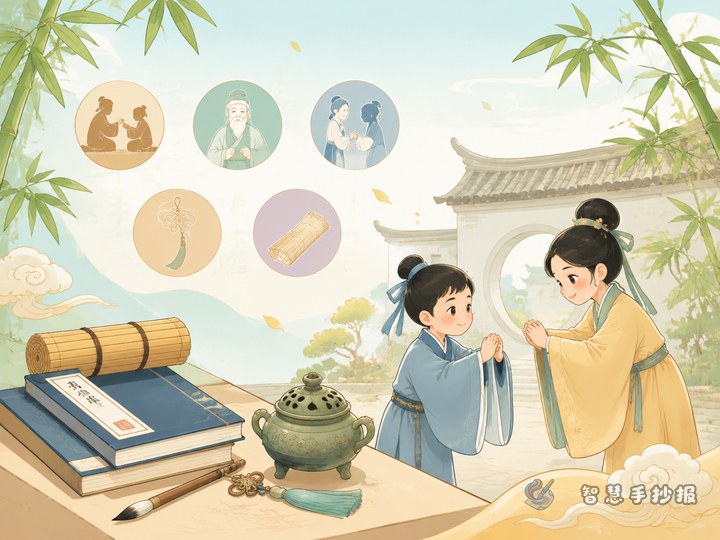
- Etiquette actions: greeting, yielding, polite posture, respectful speech
- What I learned: a short personal reflection
With this design, each part becomes a small knowledge box, which is easier to copy neatly onto a handwritten page.
Ready-to-use text materials
Family and kinship titles
- Father: often expressed in respectful forms to show reverence.
- Mother: language often reflected warmth, gratitude, and respect.
- Elder brother: a more formal and respectful title than a casual family term.
- Younger siblings: could be addressed according to age or family order.
Polite titles in social situations
- Teacher or master: used for learned or respected people.
- Honored sir: a formal and respectful way to address someone.
- Worthy elder brother: a polite form used between friends or peers.
- Junior: a humble self-reference used before elders.
Short etiquette lines
- Proper titles show respect for others.
- Courtesy can be seen in the smallest details of speech.
- Traditional forms of address reflect both language and values.
- Respectful words help create respectful relationships.
Make etiquette more vivid with small scenes
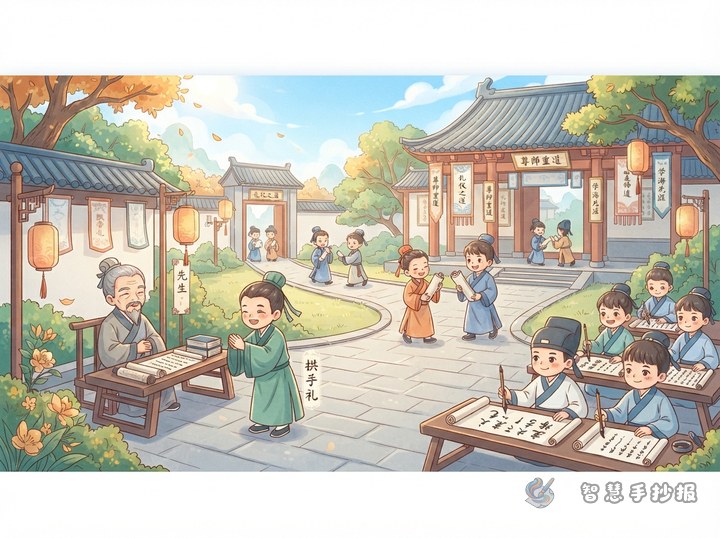
A poster becomes dull if it only lists terms. A better method is to match each title with a simple scene.
- When meeting a teacher, greet first and use a respectful title.
- When visiting an elder, speak gently and stand properly.
- When meeting a friend, use polite language without being careless.
These little scenes help the poster feel lively and meaningful rather than just a vocabulary page.
Layout and decoration tips
A center title with four surrounding sections is a strong layout choice. Put the main title in the middle, family titles on one side, honorific expressions on the other, and etiquette notes at the bottom. This gives the page a natural reading order.
- Use soft traditional colors such as beige, red, or light green.
- Add borders inspired by scrolls, window patterns, or cloud designs.
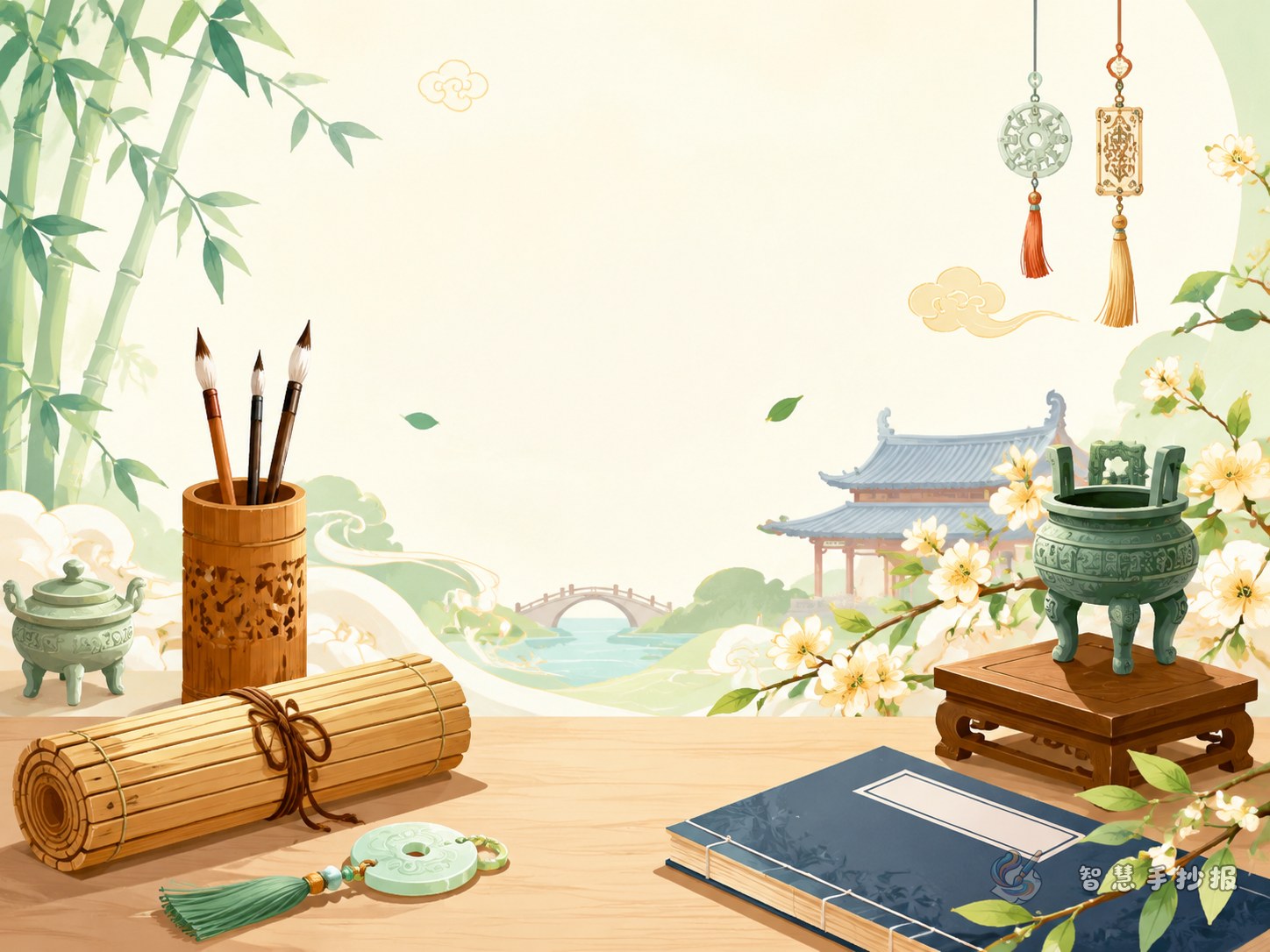
- Small decorations like books, brushes, bamboo slips, or seals fit the theme well.
- Do not overfill the page; white space helps the poster look clean.
If the layout feels uneven, decide the word count of each section first and keep subtitle sizes consistent.
A simple ending that works
The ending can be short and thoughtful. For example, you can write that traditional forms of address show how people respected family members, teachers, elders, and friends, and learning them also teaches us the meaning of courtesy today.
After the text is ready, students can continue improving spacing, titles, and decorations in a WeChat mini program to complete a more polished poster.