Why Jump Rope Works Well as a Poster Theme
Jump rope is one of the easiest sports for primary school students to keep up. It needs only a rope and a small piece of ground, so it can happen during a break, after school, or at the weekend. It also comes with clear actions and numbers to write about, and it connects naturally to both sport and healthy living, which makes the poster far easier to fill.
Before starting, decide on one goal: the poster is not a history of skipping, it is an invitation for classmates to pick up a rope. Collecting material around that goal keeps the writing focused.
- A horizontal thread: jump rope, then health, then daily habits such as sleeping early, drinking water, and eating fewer snacks.
- A vertical thread: warm up, jump, count, cool down, telling the story of one complete skipping session.
Facts You Can Copy Straight onto the Poster
What skipping does for your body
- It makes the heart and lungs stronger, so stairs feel easier.
- Hands and feet must work together, which improves coordination.
- Soft, springy landings help bones and muscles grow stronger.
- A little sweat lifts the mood and makes homework easier to focus on.
- You can skip alone or in a group, so it is an easy way to make friends.
Popular jump styles and a one-minute fact
- Two-foot jumps suit beginners: steady rhythm, gentle landing.
- Alternating feet works like running and feels faster.
- Crossovers bring the arms across the chest for a fancier look.
- Partner jumps need one person to turn the rope and both to count out loud.
- In a one-minute test, speed is not everything. Find a steady rhythm and let the breathing follow the feet, and fewer pauses usually mean a higher score.
Four Panels Fill a Whole Sheet
- Benefits panel: three short sentences on body, mood, and habits, each with a small icon in front.
- Styles panel: list four jump styles down the page, each with a stick figure and one key tip.
- Tips panel: what to do before and after skipping, such as circling the ankles first and walking slowly afterwards.
- Pledge panel: one closing line, for example "Three hundred jumps a day, and health comes home with me."
Leave a finger-wide margin instead of packing the page, so the writing stays readable. If space remains, add a small "My Jumping Record" table with a date and a number in each row.
Lettering, Borders, and Simple Figures
Keep the title short, like "My Jumping Days" or "One Rope, Lots of Fun." Enlarge the key word, set the other words smaller and slightly offset, then draw a curved rope line beneath. It looks livelier than a single row of large letters.
- Borders: bend a jump rope into a rectangle and add a few knots as decoration.
- Figures: draw a round head and a stick body, then add one curved line for the rope. Clumsy poses often look the friendliest.
- Colours: use pale blue or light green for the background and orange or bright yellow for the title and key words.
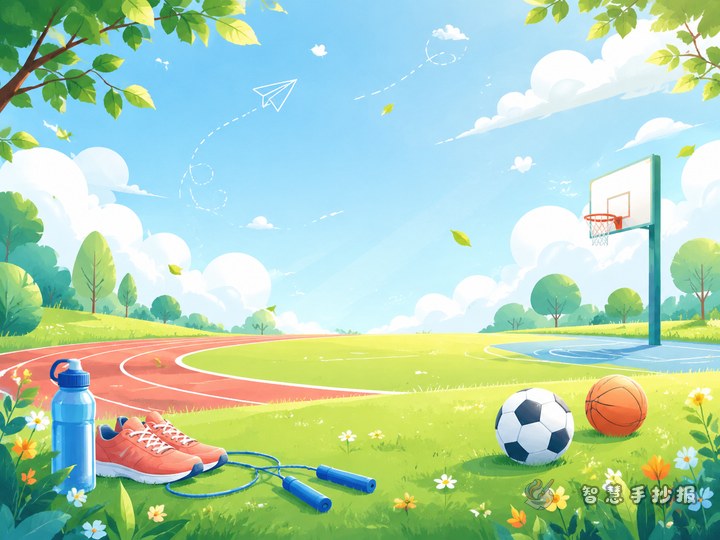
- Details: ropes, sports shoes, a water bottle, sweat drops, and a sun are all easy to draw and fit the theme.
Save a Corner for a Fitness Pledge
At the end, let the student write one promise, such as "I will jump two hundred times every day this week" or "My desk mate and I will skip for ten days." That corner turns the poster from a description of a sport into a personal reminder to move.
If layout planning takes too long, open the WeChat mini program Smart Handwritten Poster, choose a sports and healthy living template, fill the panels with the material above, print it out, and colour it in. A finished poster in your own class style can be ready in a short time.