Choose a Theme: I Can Stay Calm in Small Emergencies
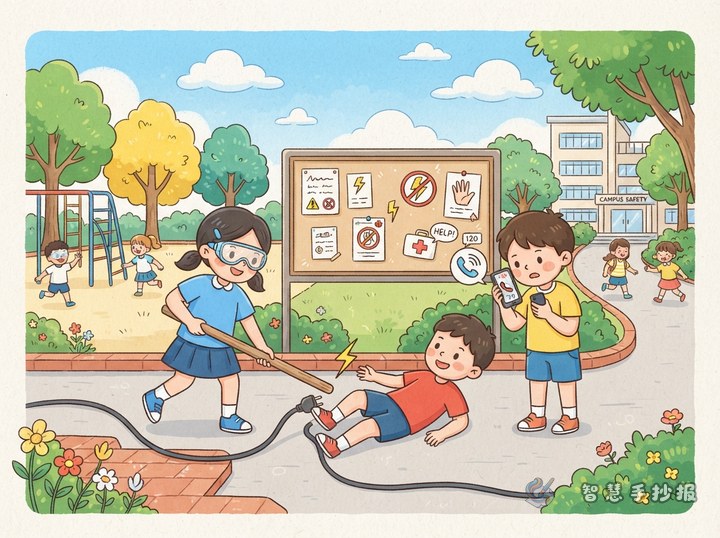
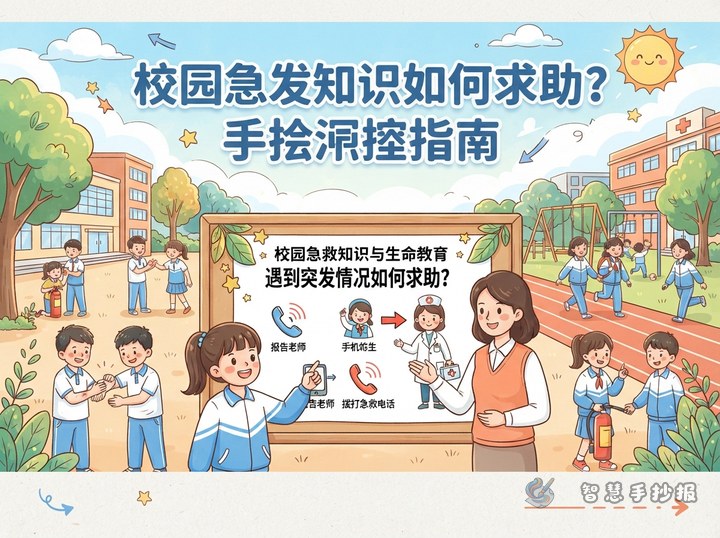
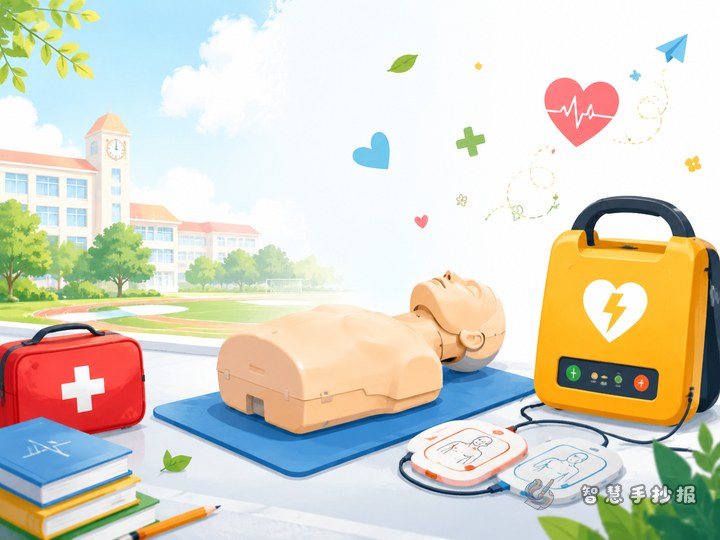
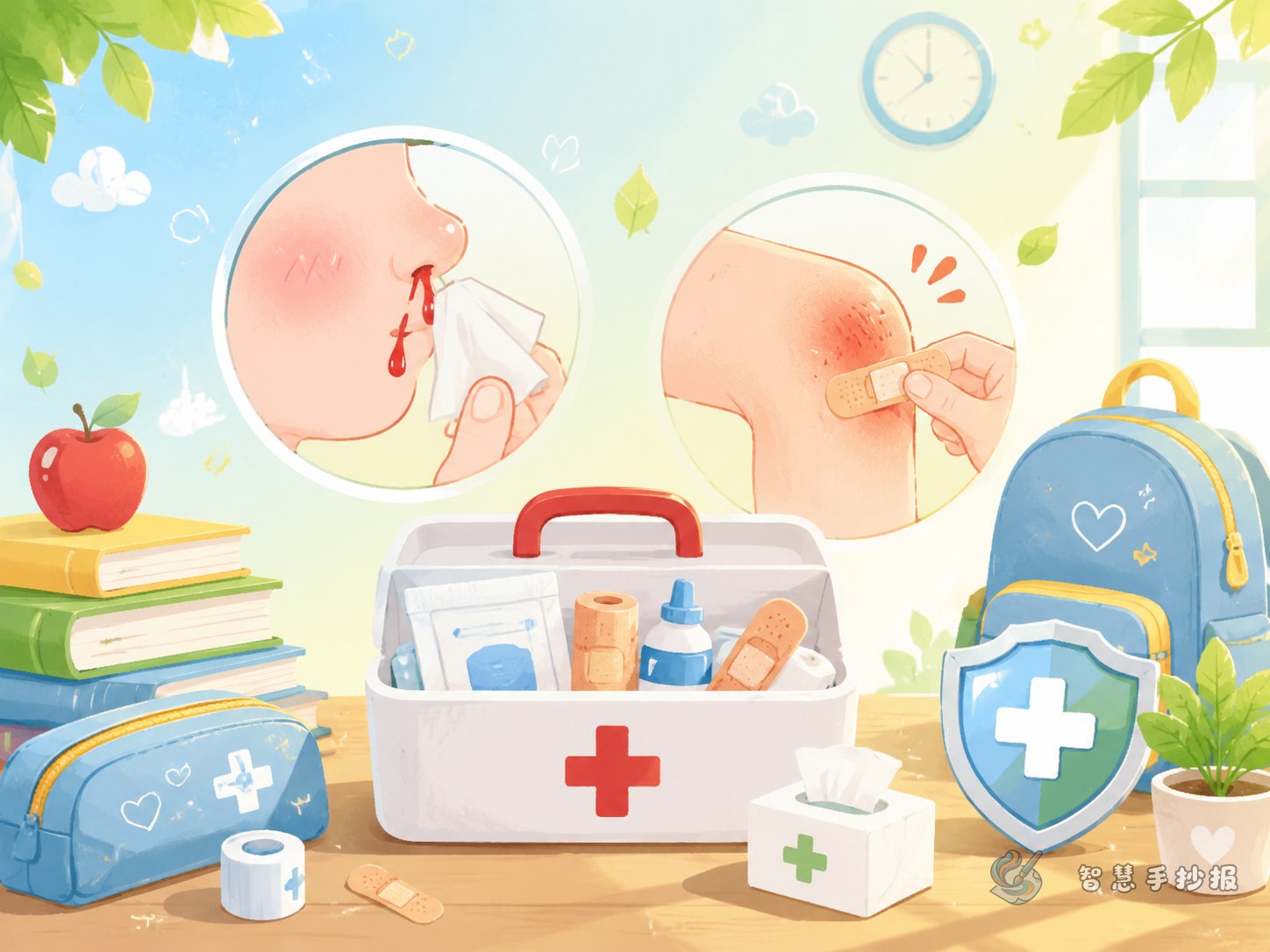
This poster can focus on common school accidents such as scraped knees, nosebleeds, sprains, minor burns, or dust getting into the eye. The title may be friendly and easy to understand, such as “Stay Calm in Three Steps” or “I Know How to Ask for Help.” The key message is simple: protect yourself first, then ask a teacher or school nurse for help.
A short opening paragraph may say: Small accidents can happen during school life. Learning basic first-aid ideas is not about handling everything alone. It helps us make safer choices while waiting for adults or medical staff to help.
Short First-Aid Notes for the Poster
What to Do with a Scrape
- Stop the activity and do not touch the wound with dirty hands.
- Use clean tissue or gauze to press gently if there is bleeding.
- Tell a teacher and go to the school clinic for cleaning and care.
- If the wound is deep or bleeding does not stop, ask for adult help immediately.
Nosebleed: Do Not Tilt Your Head Back
- Sit still and lean slightly forward.
- Pinch the soft part of the nose and breathe through the mouth.
- A cool towel may be placed near the nose, but do not push tissue too deeply inside.
- If bleeding lasts long or happens often, the teacher should contact parents for medical advice.
Sprain: Stop and Rest First
- Stop running or jumping right away.
- Raise the injured part if possible.
- Do not rub, heat, or force the injured area to move.
- If it hurts badly or the student cannot stand, ask a teacher for help.
Life Education: Being Brave Is Not Hiding Pain
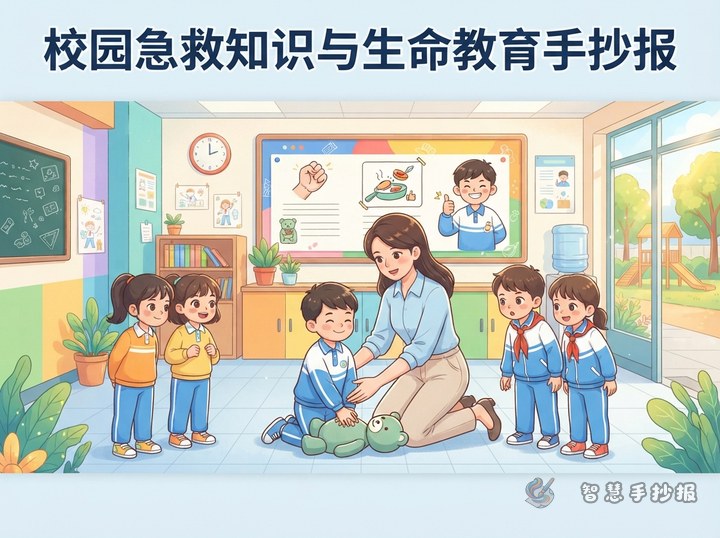
A warm life-education section can remind students that pain, dizziness, nausea, or trouble breathing should be taken seriously. Real courage is not pretending everything is fine. It means asking for help in time, explaining what happened clearly, and protecting yourself and your classmates.
Useful slogans: “Do not crowd around an injured classmate.” “Tell a teacher when someone feels unwell.” “Knowing how to ask for help is an important life skill.”
Design the Layout Like a School First-Aid Map
Divide the page into three parts: common accidents on the left, correct steps in the center, and how to ask for help on the right. In the middle, use arrows to connect “Stop the activity—Check the situation—Tell a teacher—Wait for help,” so readers can follow the action path easily.
- Main colors: light blue, green, and orange for a clean and reassuring look.
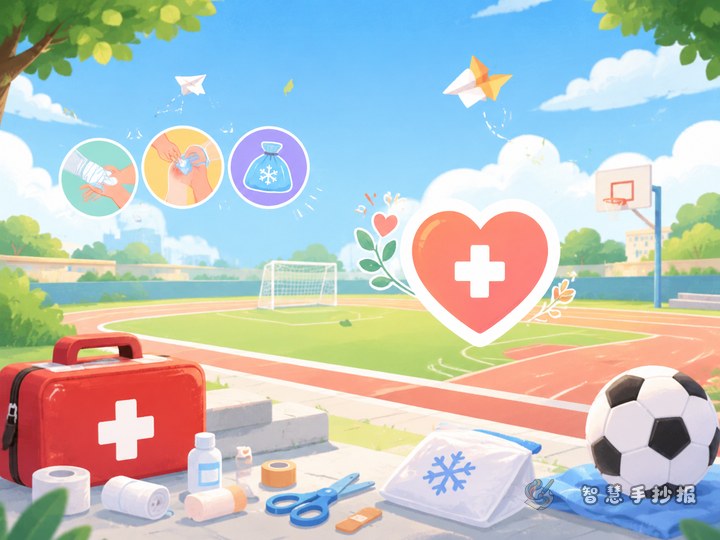
- Small drawings: bandages, a first-aid kit, a student raising a hand, a playground, and a sink.
- Borders: use small hearts, shields, or medical kit icons, but keep them simple.
- Key reminders: “Ask adults for serious problems,” “Do not use medicine by yourself,” and “Do not crowd around.”
Make It Suitable for Classroom Display
For younger students, use more icons and short sentences. Older students may add a small quiz corner, such as “Should you tilt your head back during a nosebleed?” or “Can you keep running after a sprain?” This makes the poster more interactive and memorable.
Parents and teachers can guide children to list common school accidents first, then choose three or four important reminders for the poster. To build the layout more quickly, users can open the Zhihui Shouchaobao WeChat mini program, choose a campus first-aid and life education theme, and continue creating titles, column text, and clean layout ideas for handwriting and display.