Build the page around the key idea of climbing higher
On the Stork Tower is a short poem, but it is excellent for a handwritten newspaper because it has clear imagery and a memorable message. The line “To see a thousand miles farther, climb one more story” can become the visual and thematic center of the whole page.
For younger students, it is better to focus on two simple ideas: the poet is looking far from a high place, and the poem teaches us to keep improving if we want to see a wider world.
Choose a few useful sections instead of too many
The poem text
Place the full poem in a clear and central area so readers can recognize the topic immediately.
A short poet card
Write a brief note such as: Wang Zhihuan was a poet of the Tang Dynasty, and this poem is famous for its simple words and broad, powerful imagery.
Line-by-line meaning
- The sun sets behind the mountains.
- The Yellow River rushes toward the sea.
- If you want to see farther,
- you should climb one more level of the tower.
Appreciation section
You can explain that the first two lines describe the scene, while the last two lines express thought and inspiration. The poem turns a natural view into a message about growth and vision.
My reflection
Students can add a short sentence such as: This poem reminds me that if I want to make progress, I need to keep moving upward step by step.
Ready-to-use appreciation text
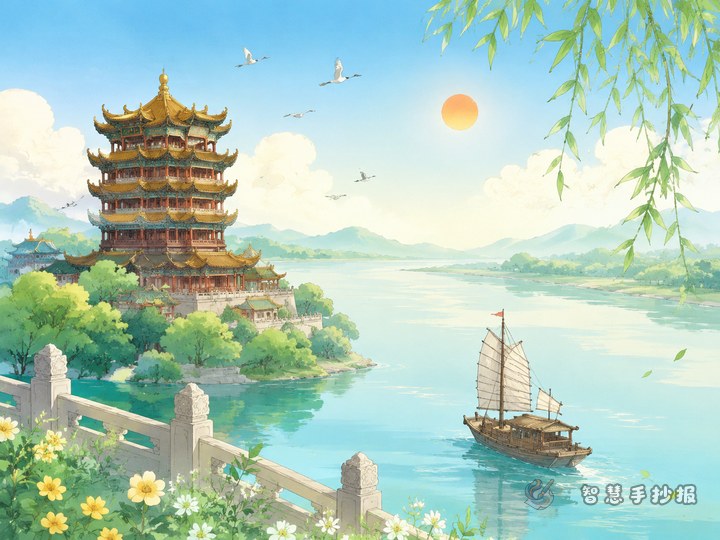
This poem shows the grand view seen from a high tower: sunset, mountains, the Yellow River, and the distant sea. The scene feels wide and powerful. The final two lines are especially famous because they express not only the act of looking farther, but also the idea of aiming higher in study and life.
The language is short and simple, yet the meaning is deep. That is one reason the poem is often chosen for school handwritten newspapers.
Try a vertical layout that matches the poem’s feeling
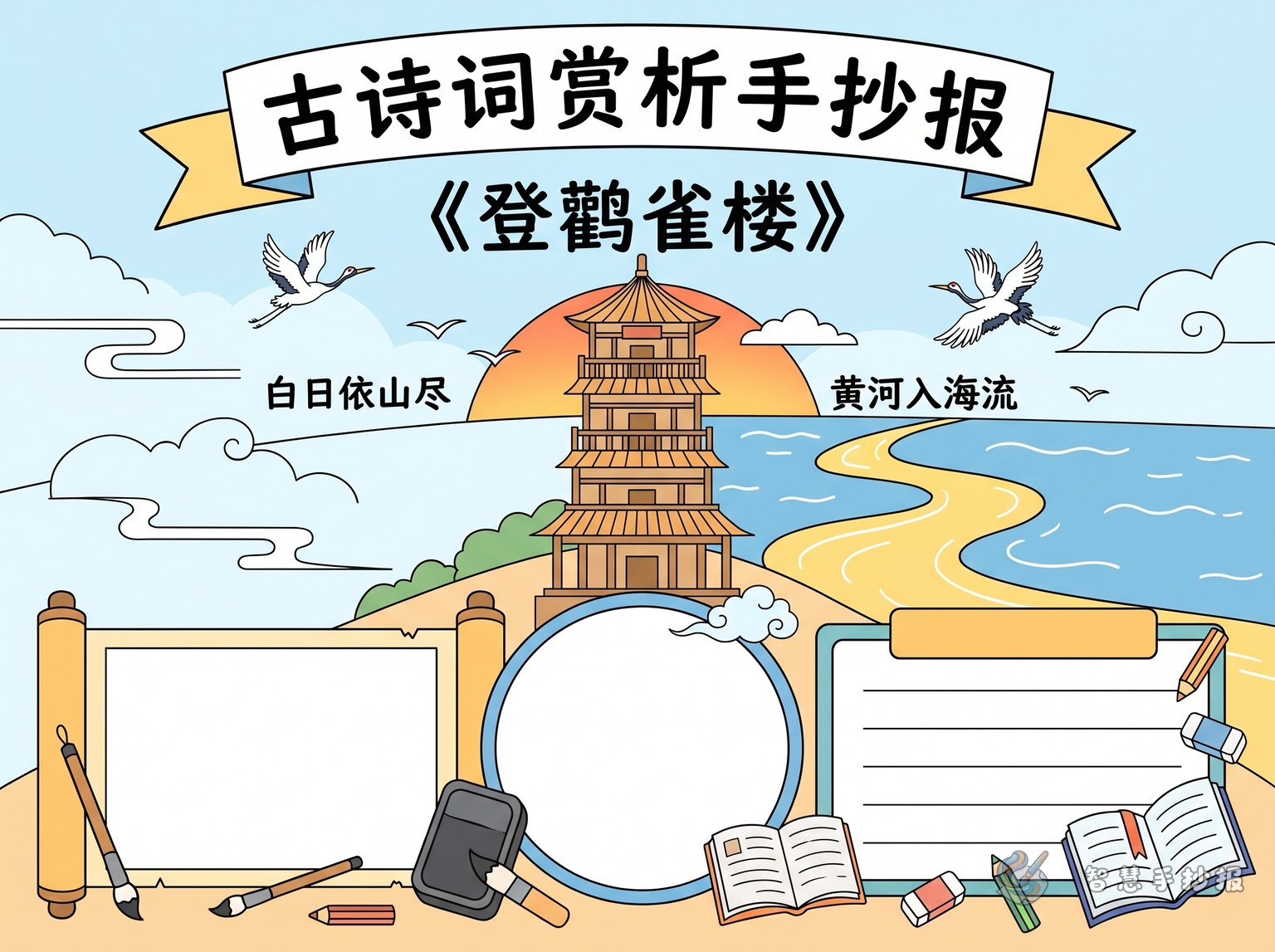
Instead of dividing the page into equal boxes, design it from bottom to top. Put the river, rocks, or tower near the lower part, and place the title, sun, and clouds higher up. This makes the page feel like a real upward view.
- Put the main title at the top center.
- Place the poem in the middle as the core text.
- Set the poet note and explanations on one side.
- Use the lower area for appreciation and reflection.
If there is extra space, add a small box for “Famous line to remember” or “What I learned from this poem.”
Colors and decorations that fit the poem
Warm orange, pale yellow, soft blue, and muted green work well for this topic. These colors help create the feeling of sunset, mountains, and flowing water. Leave some blank space so the words stay easy to read.
- Sunset at the top for the opening line.
- Layered mountains to show distance.
- A winding river for movement.
- A tower near the title as the main decorative element.
- Birds and clouds to fill empty corners lightly.
If the page still feels empty
You can add a short section called “Message of the poem” and write that learning is also like climbing higher—each step helps us see more and understand more.
After drafting the content, parents and teachers can help students check spacing and handwriting order. If you want to continue arranging sections, colors, and handwritten newspaper ideas more quickly, you can also explore the Zhihui Shouchaobao WeChat mini program for further creation.