Start with the main idea of the poster
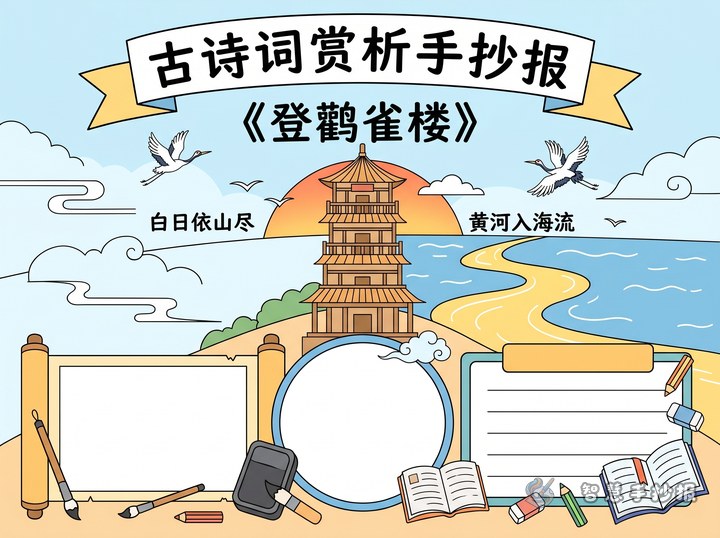
For a handwritten poster about Seeing Meng Haoran Off at Yellow Crane Tower, it is better to build the page around farewell, friendship, the river view, and poetic imagery instead of only copying the poem. Put the poem title and poet in the center, then add a short line explaining that the poem shows a warm but reluctant goodbye between close friends.
For elementary students, the goal can stay simple: understand the lines, explain the feelings, and make the layout look clear and beautiful. A good poster should help readers see the riverside farewell scene at a glance.
Text materials you can place on the poster
The poem
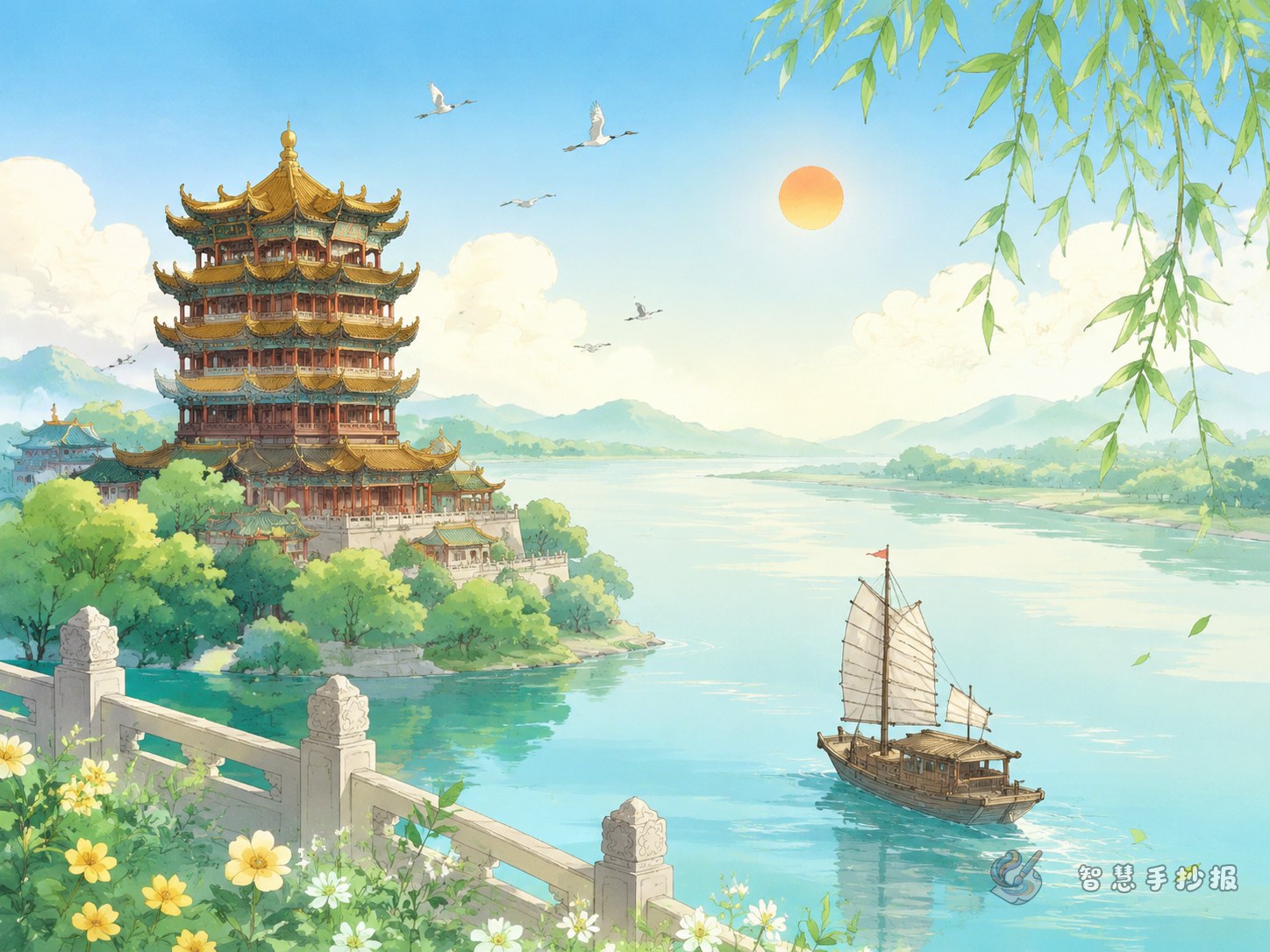
Old friend leaves the Yellow Crane Tower in the west; in blooming spring he goes down to Yangzhou. The lonely sail fades into the blue sky, and only the Yangtze River is seen flowing toward the horizon.
Short appreciation
This poem describes a friend leaving in spring by boat. The poet watches from the riverside until the sail disappears. What remains is the endless river, which quietly expresses deep friendship and the sadness of parting.
Key word notes
- Old friend: a close longtime friend, here referring to Meng Haoran.
- Leaves in the west: departs from Yellow Crane Tower, which lies west of the destination route.
- Blooming spring: lively and beautiful spring scenery.
- Fades into the blue sky: the boat disappears into the distance where water and sky seem to meet.
- Flows toward the horizon: the Yangtze stretches far away to the edge of sight.
Useful mini sections
- Poet: Li Bai
- Poem type: farewell poem
- Images in the poem: tower, lone sail, great river, spring scene
- Feelings: reluctance, blessing, sincere friendship
Section ideas that make the poster lively
Instead of using only a poet profile, try a layout with picture-like sections:
- Poem display: write the full poem neatly and decorate it with clouds and river lines.
- Meaning in simple words: explain the poem in two or three easy sentences.
- What the poet saw: list Yellow Crane Tower, spring river, distant sail, and endless water.
- Feeling corner: use words like friendship, farewell, blessing, and reluctance.
- My favorite line: focus on the last two lines and explain why they are moving.
If there is more space, you can add a small corner for other farewell poems to make the poster richer.
How to arrange the page beautifully
This poem works especially well with a wide river-style layout. Place the title near the upper center, draw the outline of Yellow Crane Tower on one side, and a small boat sailing away on the other side. Connect sections with soft wave lines to create the feeling of watching a friend leave.
- Main colors: light blue, soft green, and cream.
- Decorations: willow branches, clouds, water ripples, small sails.
- Lettering: the title may look slightly calligraphic, but the body text should stay neat and easy to read.
- Use of blank space: leave some open space around the river and sky so the sense of distance feels stronger.
The key to a stronger appreciation
The best lines to analyze are: the lone sail fades into the blue sky, and only the Yangtze flows toward the horizon. These lines never directly say “I do not want my friend to go,” yet the emotion is deeply felt through the disappearing boat and endless river.
Students can write from two angles: the visible scene and the invisible feeling. The scene is wide and bright, but the poet’s heart is full of care and reluctance. That quiet expression is one of the beauties of classical poetry.
A simple ending for the poster
To complete the poster, add a short personal reflection. For example: This poem shows that true friendship is not always spoken aloud. Sometimes it appears in silent watching, warm blessing, and lasting remembrance. Though the poem has only four lines, it lets us see both spring scenery and deep friendship.
If you want to keep improving the layout, colors, and section arrangement, you can continue designing your work in the Zhihui Shouchaobao WeChat mini program.