Follow the Growing Line of the Pattern
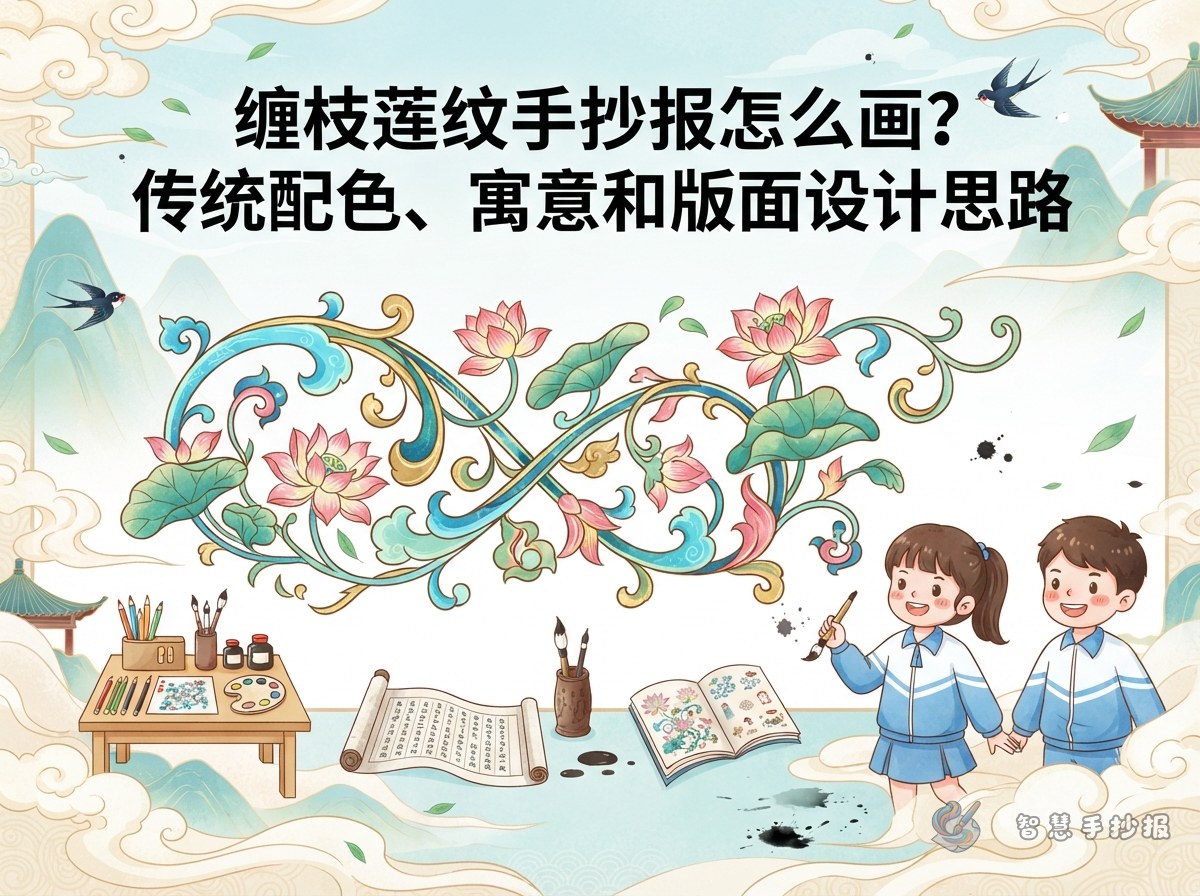
A lotus scroll motif combines curving vines, lotus blossoms, leaves, and buds. The vine links all the elements and creates a sense of continuous growth. For a school handwritten newspaper, students only need to capture three features: a connected vine, alternating flowers and leaves, and a balanced rhythm.
A suitable theme line could be “Traditional Beauty on a Growing Vine.” Place one large lotus beside the title and extend a simplified scroll toward the page edges. This makes the subject clear without crowding the writing area.
Turn the Cultural Theme into Four Short Columns
Look Closely at the Motif
Write that the lotus scroll joins flowers, leaves, and curved stems into a repeating design. Readers can look for changes in flower direction, vine curves, and repeated leaf shapes.
Good Wishes in the Design
The lotus can suggest grace and beauty, while the continuously extending vine creates an impression of vitality and ongoing growth. A short introduction might say, “Flowers and leaves connect, carrying good wishes through the pattern.”
A Traditional Color Card
Select three or four colors, such as mineral blue, mineral green, vermilion, and warm yellow. Explain the job of each color: green for leaves, vermilion for petals, yellow for flower centers, and blue for headings or borders.
Patterns Around Us
Invite students to observe floral designs on ceramics, textiles, architectural details, or stationery. They can note whether a motif appears alone, in mirror symmetry, or as a continuous border.
Let One Vine Connect the Page
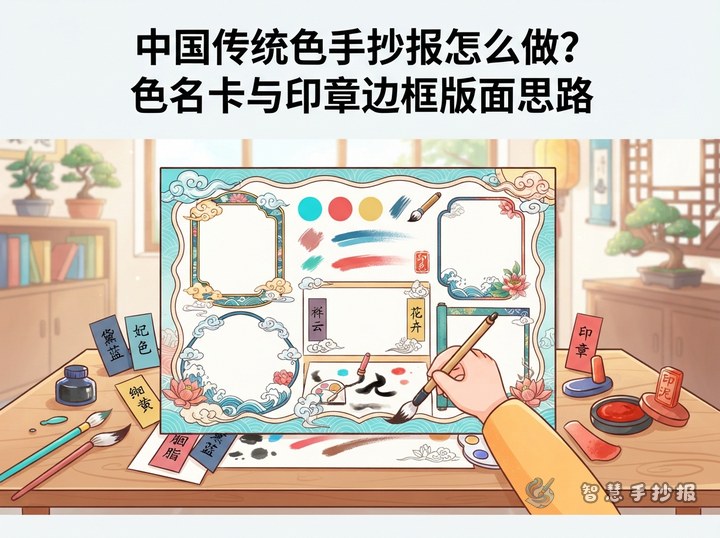
- Set the title area: Place the heading at the top center inside a petal-shaped or rounded frame.
- Sketch the main vine: Draw a gentle curve from the lower left toward the upper right, passing through gaps between columns.
- Arrange the text boxes: Use one large feature column and three smaller information boxes with clear spacing.
- Add repeated elements: Put flowers at major bends and add leaves or buds along longer sections.
- Check readability: Keep decorative lines away from the text and preserve a clear left-to-right reading order.
If a full border feels too busy, decorate only the lower-left and upper-right corners and connect them with a thin vine. This diagonal composition adds movement while leaving plenty of room for writing.
Give Traditional Colors a Clear Hierarchy
Choose one dominant color, one supporting color, and one small accent. For example, use mineral blue as the main tone, green as support, and vermilion on selected petals. Keep the background cream or the natural color of the paper so the page stays bright.
- Use related shades for the same type of leaf to create unity.
- Make the main title darkest, section headings slightly lighter, and body text black or dark gray.
- Sketch lightly in pencil, complete the writing, and then outline and color the design.
- Leave small white spaces inside petals instead of filling every shape completely.
After preparing the text, students and parents can continue in the Smart Handwritten Newspaper WeChat Mini Program to select a layout, adjust the columns, and develop a version that is easy to copy onto paper.