Begin With One Small Question
A chemistry poster does not need complicated facts. One everyday event, explained clearly, works better. Sugar and salt seem to vanish the moment they are stirred into water, and that small surprise is a perfect starting point. A title such as The Invisible Sugar and Salt or Where Did the Sugar Go? keeps the topic narrow and friendly.
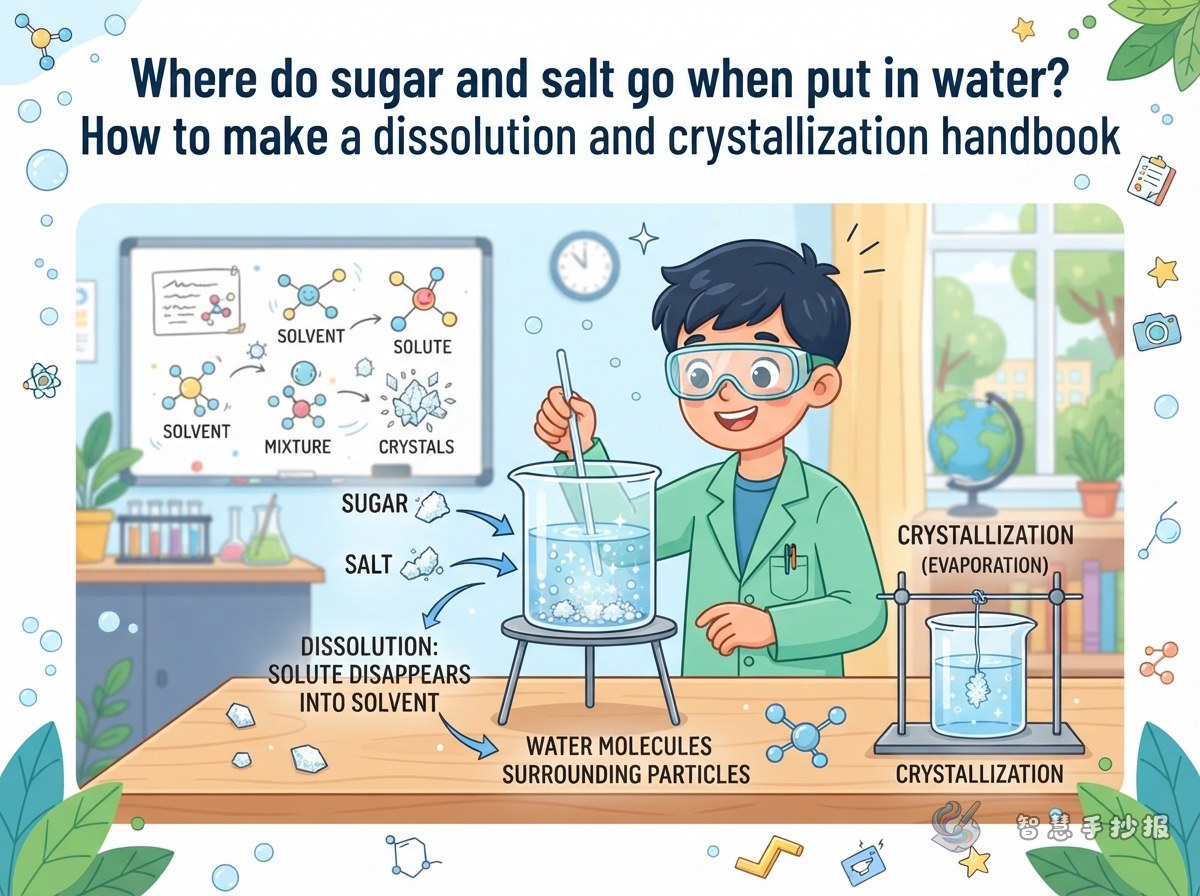
Three words carry the whole theme: dissolving, saturated and crystallization. They form one story, because sugar and salt first dissolve, then stop dissolving when the water is full, and finally return as crystals as the water dries away.
Four Boxes That Shape the Whole Page
Box 1: Our Guess
Ask children to write one honest idea first, such as the sugar will melt like snow, or the salt will sit at the bottom and never move. A guess does not have to be right; it only has to be theirs.
Box 2: Let Us Try It
List the materials and steps: two clear cups, warm water, salt, sugar and a spoon. Stir one spoon of sugar into water and time how long it takes to become invisible, then do the same with salt and compare.
Box 3: What We Noticed
Draw a small table with two cups and use colour blocks to show which one dissolved faster. If the cups are left near a window, record what happens to the water over the next few days.
Box 4: Tiny Science Facts
Three sentences are enough: invisible does not mean gone; when water can hold no more it is saturated; when water slowly leaves, sugar and salt turn back into crystals.
Sentences Children Can Copy
- Sugar and salt did not vanish. They became tiny pieces too small to see and hid in the water.
- Warm water can hold sugar and salt more easily than cold water.
- Stirring helps the water spread the sugar and salt around faster.
- When the sun dries the water away, salt becomes small crystals again.
- Dissolving and crystallization are two faces of the same everyday magic.
Arranging the Page
A simple three-part layout works well: one large block on the left for the experiment steps, one block on the right for facts and records, and a strip along the bottom for the title or a final sentence such as Invisible, but still there.
- Put the title at the top left or centre and make it the largest text on the page.
- Separate the blocks with dashed lines or pale strips instead of heavy borders.
- Keep a small corner free for a question, for example: would juice dissolve sugar in the same way?
- If time is short, finish all the writing before adding drawings, so no fact is left out.
Colours, Drawings and a Final Check
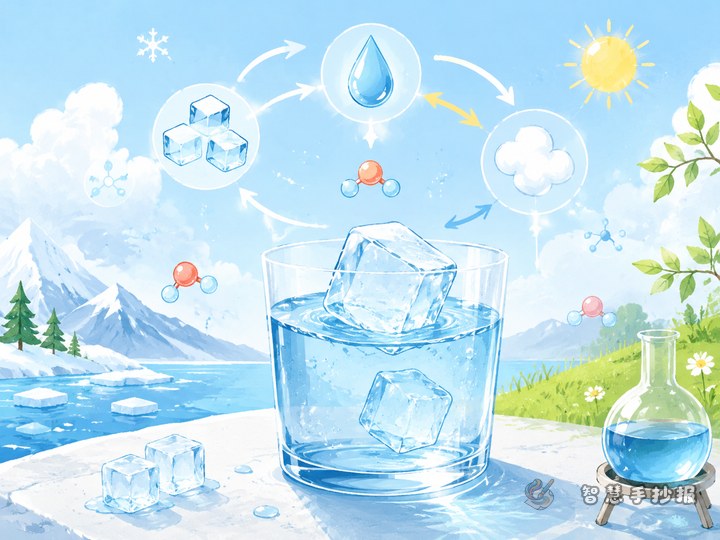
Use light blue and white for water, pale yellow for sugar and soft grey-blue for salt. Three clear colours keep the page calm. Simple line drawings of a glass, a magnifier, water drops and crystal cubes look better than fussy detail.
For a stronger title, draw hollow letters and fill them with tiny ripples or dots. Before finishing, check that the event, the steps, the science and the conclusion all appear on the page. Anyone who wants a quicker layout can bring the finished text into the WeChat mini program, Smart Handwritten Newspaper, and continue with a ready-made design there.