Turn the topic into a material detective project
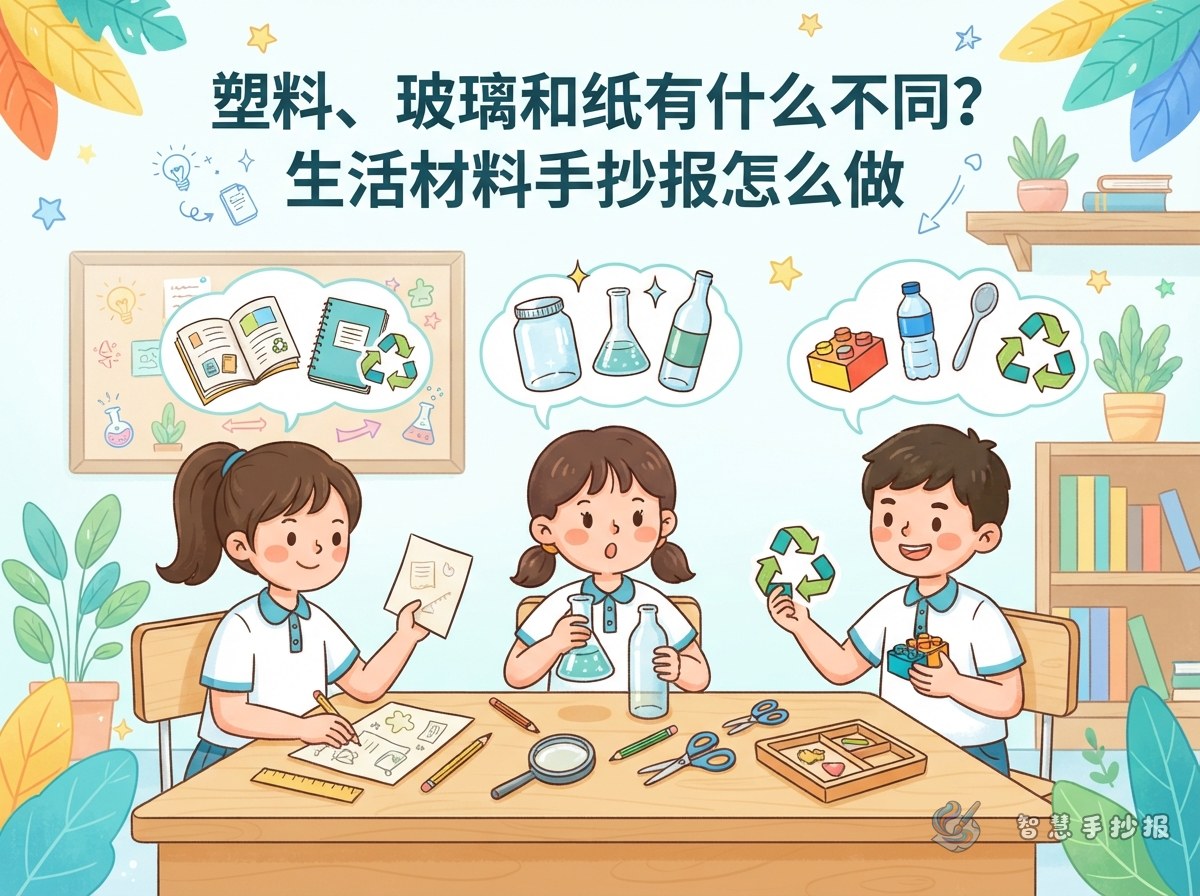
This handwritten newspaper can begin with a simple question: why do paper, glass, and plastic look, feel, and work so differently? Use Everyday Materials Investigation as the main idea. Place drawings of the three materials around the title, then introduce their sources, features, uses, and environmentally responsible choices.
- Paper: Usually made from plant fibers, paper is light, easy to write on, and simple to fold. Books, paper boxes, and packages are common examples.
- Glass: Glass has a smooth surface and may be clear or translucent. It is often used for bottles, cups, and windows, but it can break if dropped.
- Plastic: Plastic is light and can be shaped into many forms. Bottles, storage boxes, and household items are common examples, and used plastic should be sorted for recycling when possible.
Build a small profile card for each material
Instead of copying a long encyclopedia paragraph, make three Material Identity Cards. Keep each card short and add a small drawing of an object made from that material.
Paper keywords
Light, thin, writable, foldable, and recyclable. Add a short message explaining that paper comes from plant fibers and that using paper carefully helps reduce waste.
Glass keywords
Transparent, smooth, and easy to break. Glass cups, windows, and bottles can be used as examples. Remind readers to handle broken glass carefully.
Plastic keywords
Lightweight, water-resistant, easy to shape, and available in many types. Show a bottle, raincoat, or toy, then encourage readers to reuse plastic items and reduce single-use products.
Add a fun material challenge
Create a small section called Which Material Would You Choose? Use everyday situations to help readers connect material features with real uses.
- Why might someone choose a glass bottle for juice while another person chooses a plastic bottle?
- Why is paper more convenient than glass for writing and drawing?
- Why are raincoats often made from light materials that do not absorb much water?
You can also draw a book, window, bottle, paper box, and storage container. Ask readers to match each object with its main material.
Use colors to show different textures
Try a central-title layout with three branches. Place paper on the left, glass on the right, and plastic at the bottom. Give each section a different border and color.
- Use cream or pale yellow for paper, with book, envelope, and box drawings.
- Use pale blue for glass, with bottles, windows, and small sparkle marks.
- Use light green or orange for plastic, with bottles, storage boxes, and recycling symbols.
- Leave some open space for keywords such as writable, transparent, and lightweight.
End with responsible material choices
Do not show only the advantages of each material. Add three short suggestions: use both sides of a sheet of paper, handle glass carefully, and reuse plastic items before sorting them for recycling. Before finishing, check that the title stands out, the text is not crowded, and every section has enough margin. For help arranging sections and decorations, you can continue designing in the 智慧手抄报 WeChat mini program.