Choose a clear idea: Earth is a colorful layered sphere
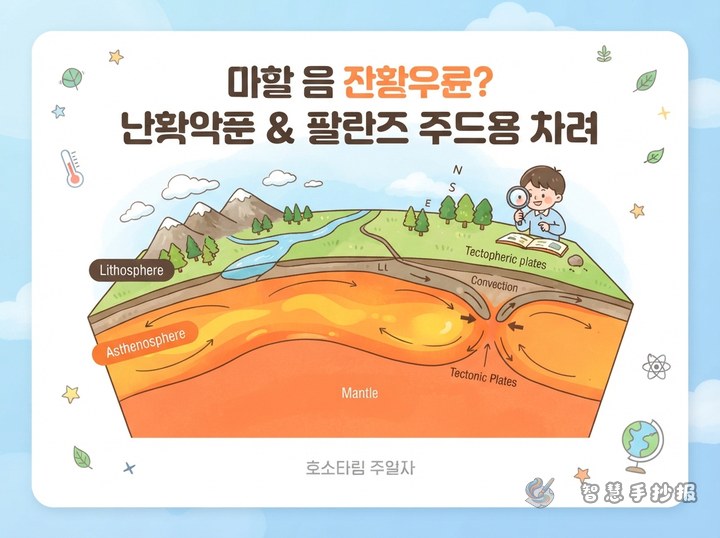
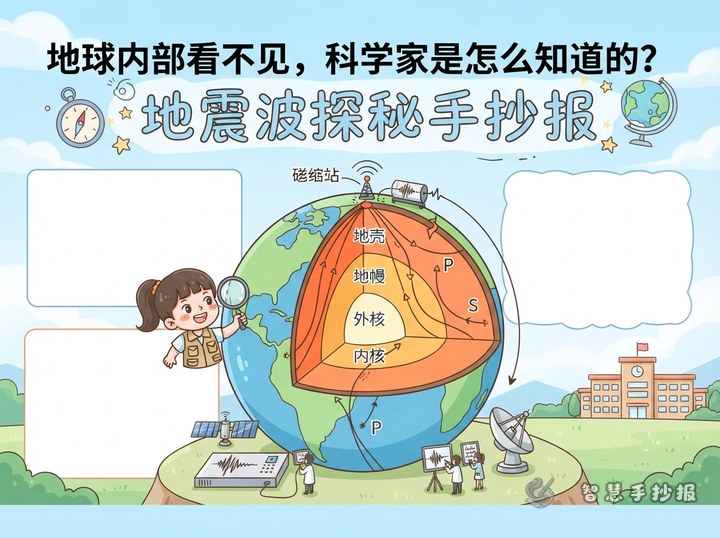
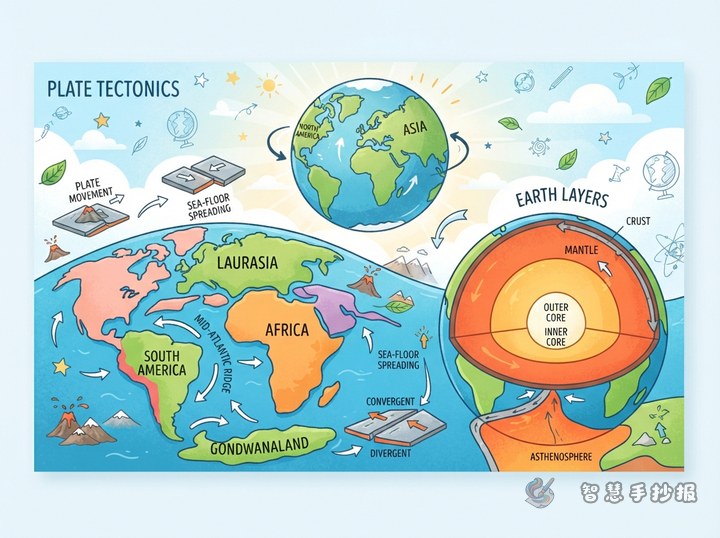
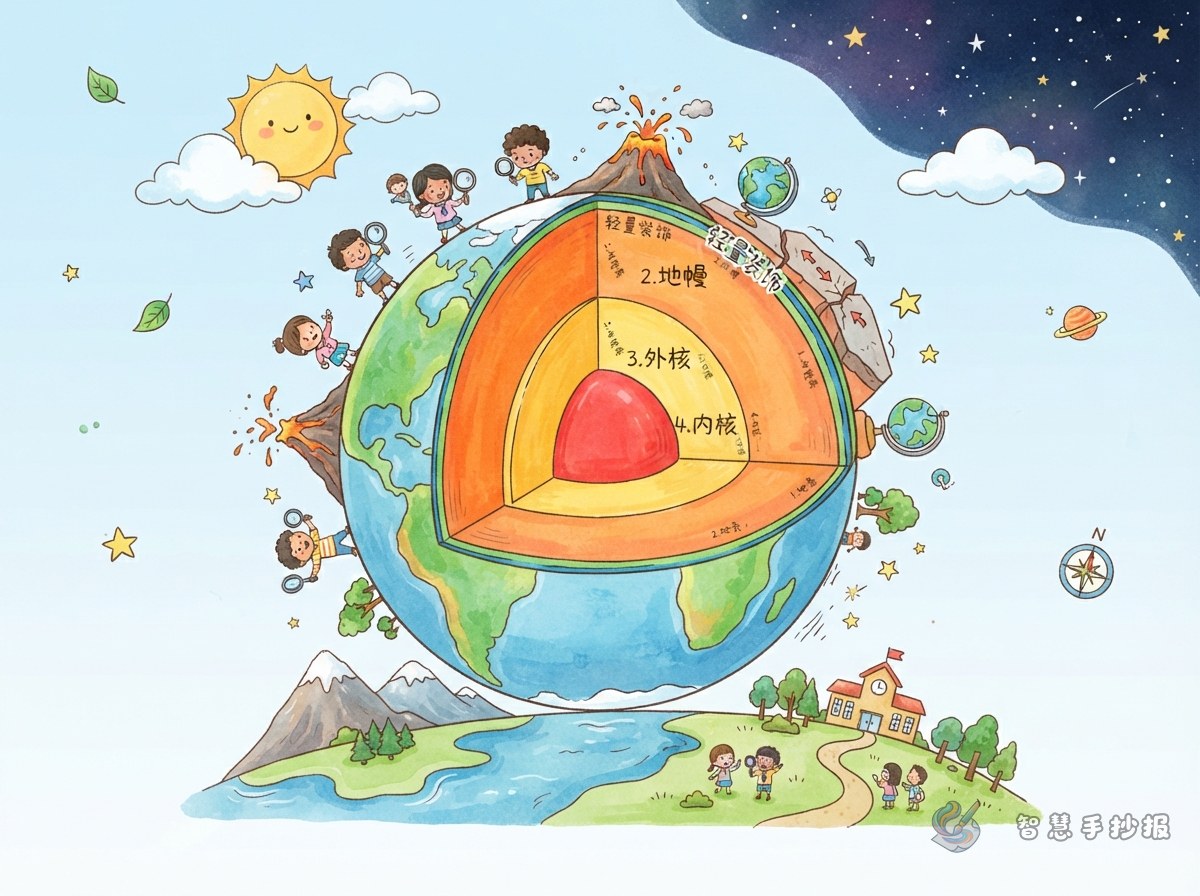
This handwritten newspaper can focus on the connection between Earth’s internal structure and plate movement. Draw a cutaway Earth in the center, use different colors for the crust, mantle, and core, and add arrows to show that plates move slowly across the surface. The combination of diagrams and short facts makes the topic easy to understand.
Possible titles include “What Is Inside Earth?” and “The Moving Puzzle of Earth.” A subtitle such as “Discover Earth’s layers and the secrets of plate movement” can make the theme clear at a glance.
How to introduce Earth’s three main layers
- Crust: The thin outer layer of Earth, where continents and oceans are found.
- Mantle: The very large layer beneath the crust, where hot materials move slowly.
- Core: The hottest and deepest part of Earth, including the outer core and inner core.
There is no need to include complicated measurements. Use three memory words—“outer and thin, middle and thick, inner and hot”—and label the three colored bands on the cutaway diagram.
Plate movement: draw Earth like a puzzle
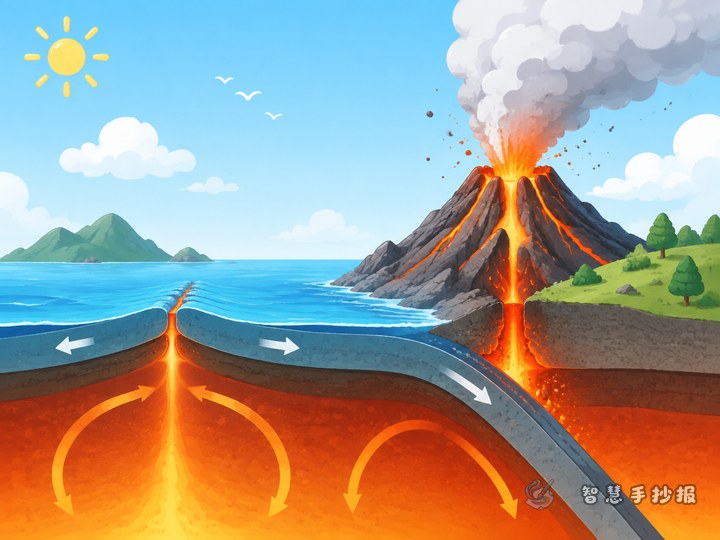
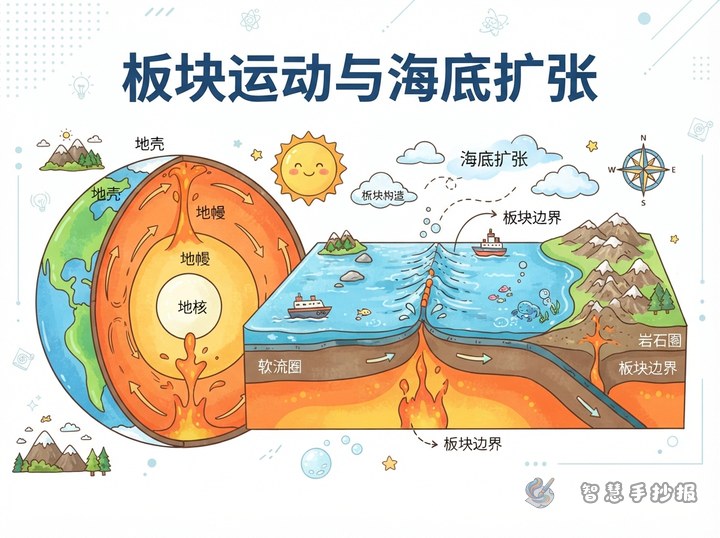
Earth’s rocky outer shell is not one solid piece. It is divided into many plates that fit together like a puzzle. Driven by heat inside Earth, these plates move very slowly. Draw several colorful puzzle pieces and use bold arrows to show their different directions.
Three basic plate relationships
- Moving apart: Two plates travel in opposite directions and may form rifts or new seafloor.
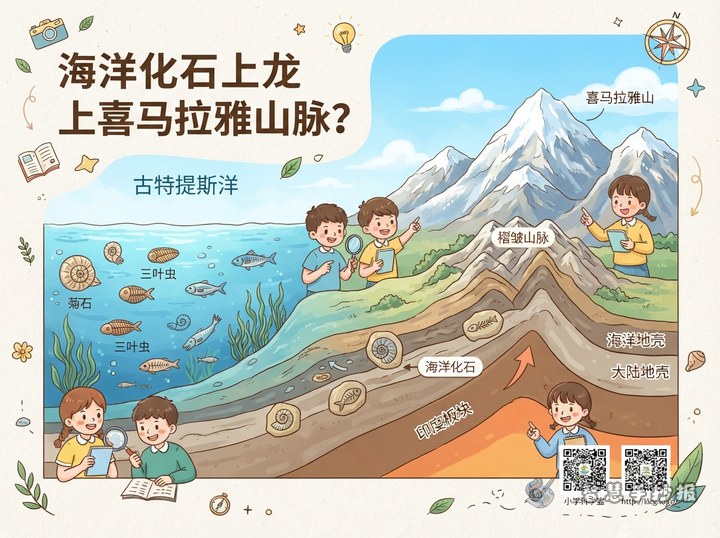
- Moving together: Two plates push toward each other and may create mountains, trenches, earthquakes, or volcanoes.
- Sliding past: Two plates move sideways along a boundary and may build up and release energy.
Use clear dashed lines for plate boundaries and label the arrows with “apart,” “together,” and “slide” so the diagram is easy for younger readers to follow.
Small science cards for the page
Place a “Quick Facts” section in a lower corner. One card can ask why Earth is hot inside. The answer is that heat left from Earth’s formation and heat released by radioactive elements both contribute. Another card can ask whether plates move quickly. They usually move extremely slowly, so people cannot notice the motion directly, but its effects can build up over a long time.
You can also add an observation note: mountains, trenches, volcanoes, and many earthquake zones are often closely related to plate boundaries. Words such as “may” and “often” are useful because geological processes are complex.
Layout and making tips
- Write the main title at the top and use orange, blue, or green to create a scientific atmosphere.
- Place the largest cutaway Earth in the center and separate the layers with related shades.
- Put the “Three Layers” section on the left and “Plate Movement” on the right.
- At the bottom, draw three arrow diagrams for separation, collision, and sliding.
- Unify the borders, lettering, and labels so the page does not look too colorful.
After planning the content, open the 智慧手抄报 WeChat mini program to continue arranging sections and making your own themed handwritten newspaper.