A Green Tree With a Red Name
The first mistake on a mangrove poster is painting the tree red. Mangrove leaves are green; the name comes from the bark, which holds tannins that turn reddish after it is cut and meets the air. Open your poster with "named red, but growing green" and readers will remember it.
- Mangroves grow in the tidal zone, so the trunks are underwater at high tide and exposed at low tide.
- Prop roots and air roots work like many legs standing in the mud, holding the tree steady when waves push in.
- Some seeds sprout while still on the parent tree, then drop into the mud already rooted. Add the word "seedling" to a small fact box.
Why It Earns the Nickname "Ocean Kindergarten"
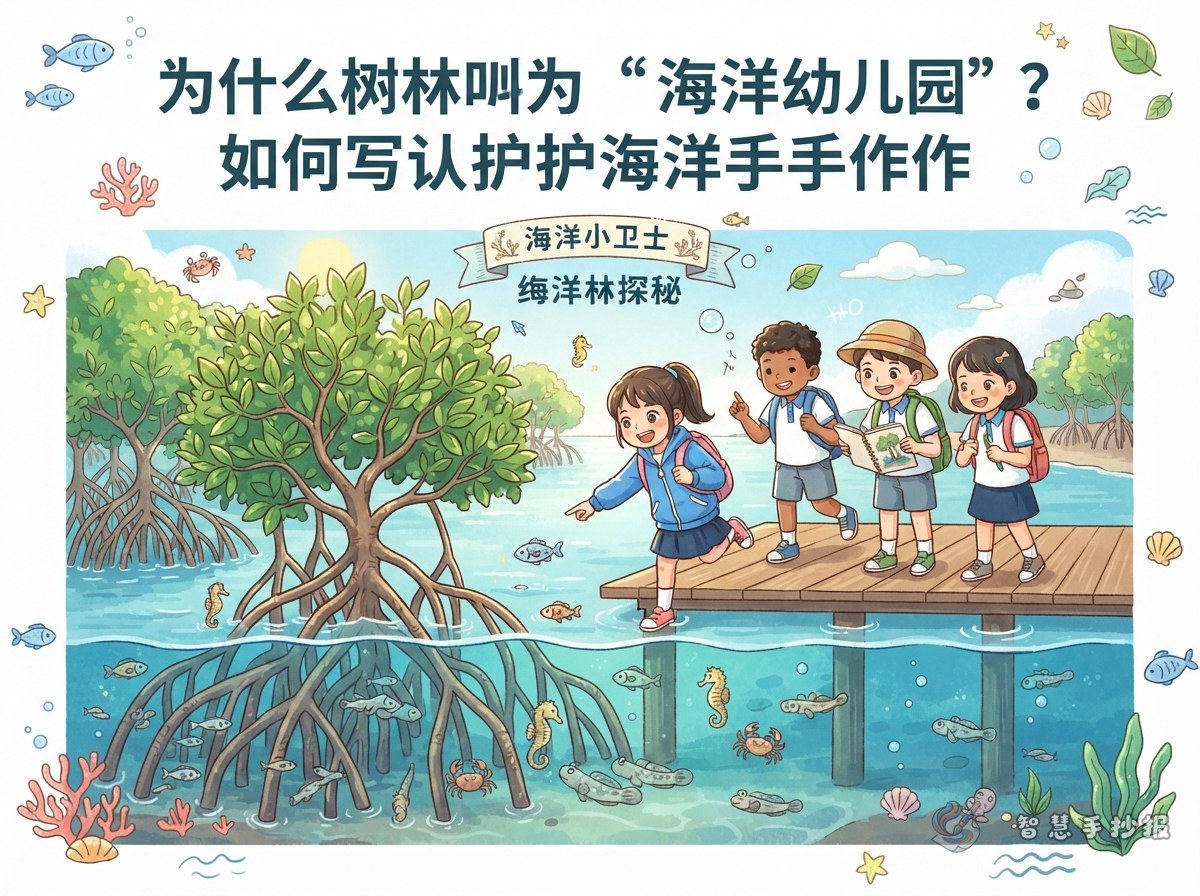
The dense roots form rows of tiny underwater rooms. Small fish, shrimp and crabs slip between them, where larger predators cannot easily follow. Because so many sea animals spend their early life here, people call mangroves the ocean's kindergarten.
- Residents worth drawing: fiddler crabs, mudskippers, small shrimp, shellfish and young fish.
- Water birds also rest and feed in the branches, so leave a corner of your page for them.
- Use words like "many" or "some" instead of claiming that every sea animal grows up in mangroves.
Three Text Blocks You Can Copy
Block 1: What Mangroves Do
- Blocking waves: a wide belt of roots breaks the force of the sea along the shore.
- Holding mud: roots grip the soil so the water stays clearer.
- Storing carbon: mangroves lock carbon into the mud, which is why they are linked with "blue carbon".
Block 2: The Trouble They Face
- Trees cut down, or cleared to make room for fish and shrimp ponds.
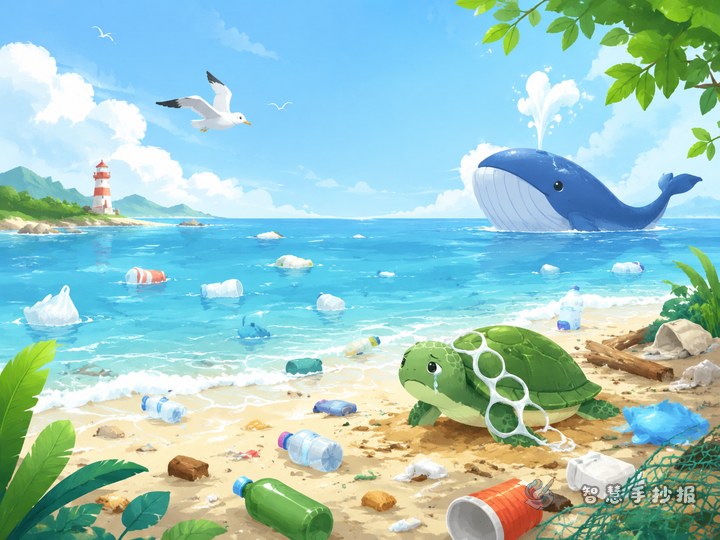
- Plastic bags and litter trapped in the roots, tangling small animals.
- Oil and dirty water flowing into the sea, harming young seedlings.
Block 3: What We Can Do
- Take every piece of your own litter home after a day at the beach.
- Do not pick mangrove leaves, pull out seedlings or trample the roots.
- Draw mangroves on your poster and read it aloud to classmates.
Layout Ideas for a Blue-and-Green Poster
- Shape the main title box like a tree and place "ocean kindergarten" in larger letters at the top left.
- Use the left column for facts and the right column for a cutaway drawing of the roots, labelled with air root, prop root and seedling.
- Draw a wavy tide line across the bottom and place your three action points under the waves.
- Stick to blue, green and a little sandy yellow, no more than four colours in total.
A Closing Line to Copy
"Mangroves guard the shore, and we guard the mangroves." A gentler option is "we protect what we understand". For more ocean-themed layouts and text you can adapt, open the 智慧手抄报 mini program in WeChat, pick a template you like, and swap in your own words before printing.