Choose a clearer angle: beach cleanup makes the topic easier
If you want an ocean-themed handwritten poster to feel informative and meaningful, a good angle is where marine litter comes from and how we can reduce it. This is more specific than simply writing about ocean protection, and it helps students organize sections, drawings, and short texts more easily.
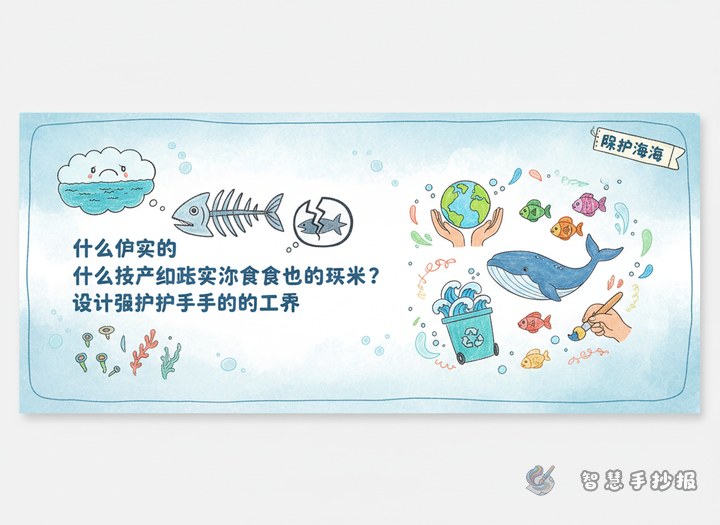
A main title can be written as a real question, such as “Why is there so much trash on the beach?” or “How can we protect the sea in daily life?” That style feels natural and searchable.
Useful sections to place on the poster
- Ocean Facts Corner: The ocean helps regulate climate and is home to many living creatures.
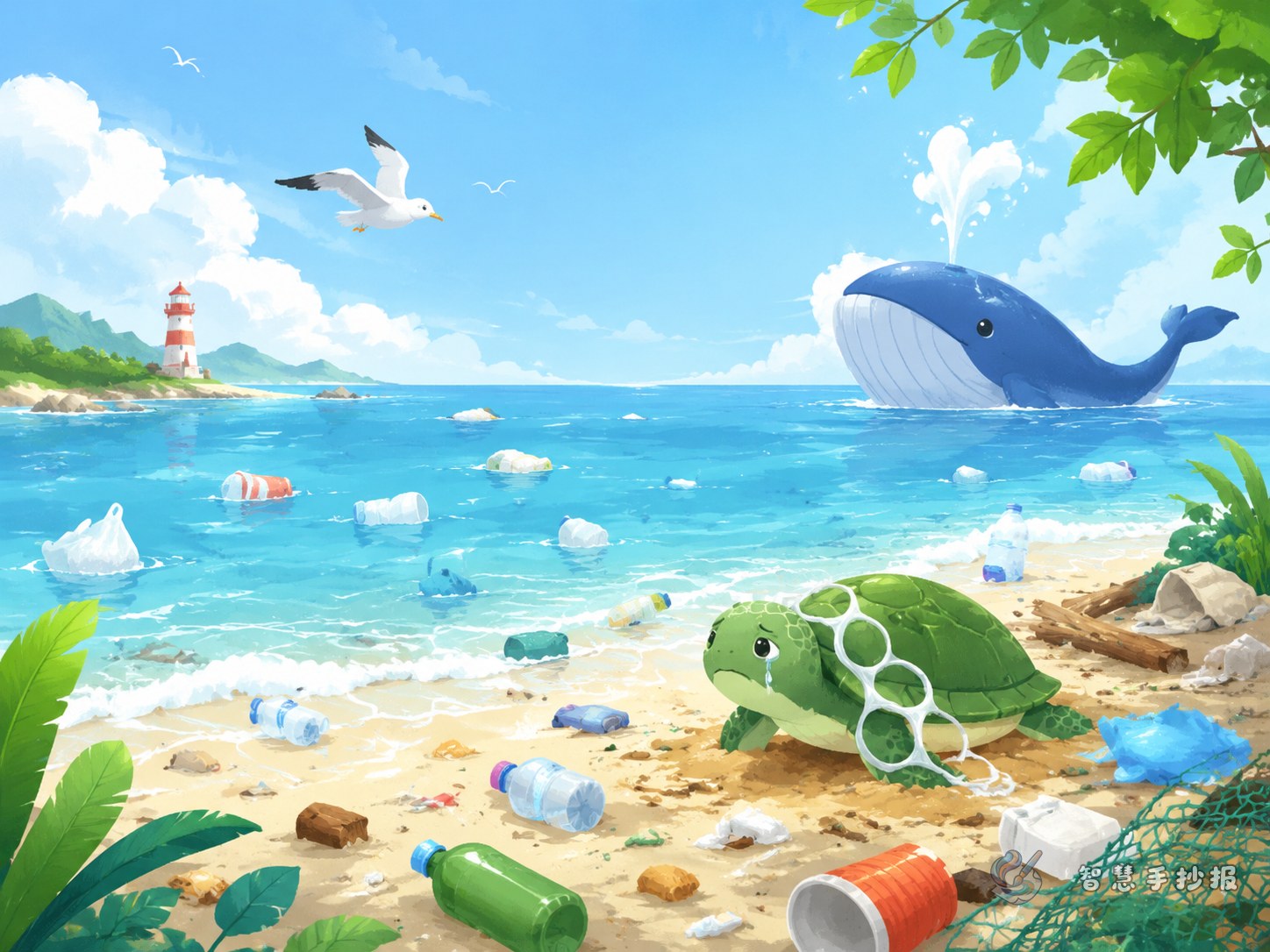
- Where Does the Trash Come From?: Plastic bags, bottles, and disposable packaging can travel from streets and rivers into the sea.
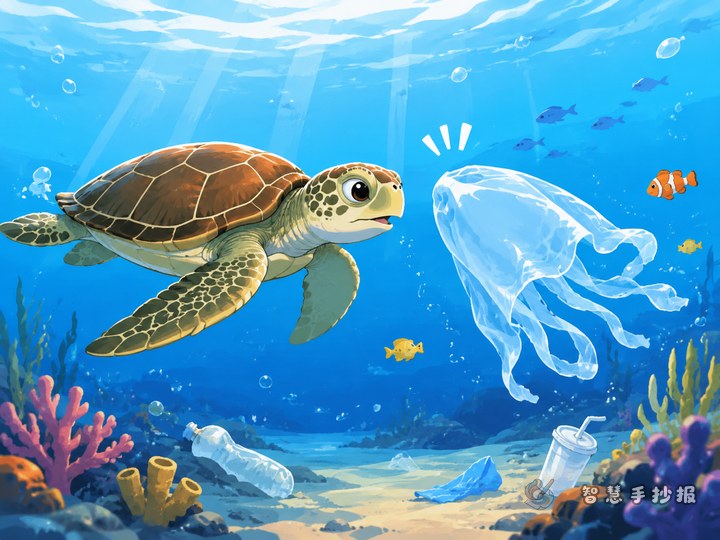
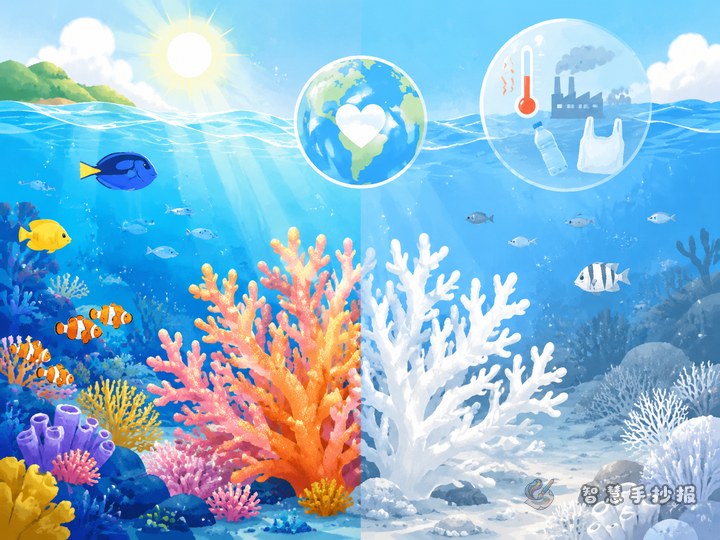
- How Sea Animals Are Affected: Turtles may mistake plastic for food, seabirds can get tangled in waste, and coral habitats may be harmed by pollution.
- What We Can Do: Use fewer disposable products, sort waste properly, and avoid littering.
- My Promise to the Ocean: Add a short call to action with simple, strong sentences.
Short text materials that fit a student poster
Poster writing should be short and easy to read. These lines can be used directly or adapted:
- The ocean is not a trash can. It is a shared home for countless lives.
- One sea connects rivers, cities, and our daily life.
- Using less plastic helps reduce the burden on the ocean.
- Protecting the ocean starts with everyday habits, not only with cleaning beaches.
If you need a central paragraph, you can write: The ocean is full of amazing life and plays an important role in keeping Earth balanced. But littering, plastic waste, and pollution can damage this blue home. Even children can help by saving resources, sorting trash, and making better daily choices.
Layout ideas that look clean and ocean-themed
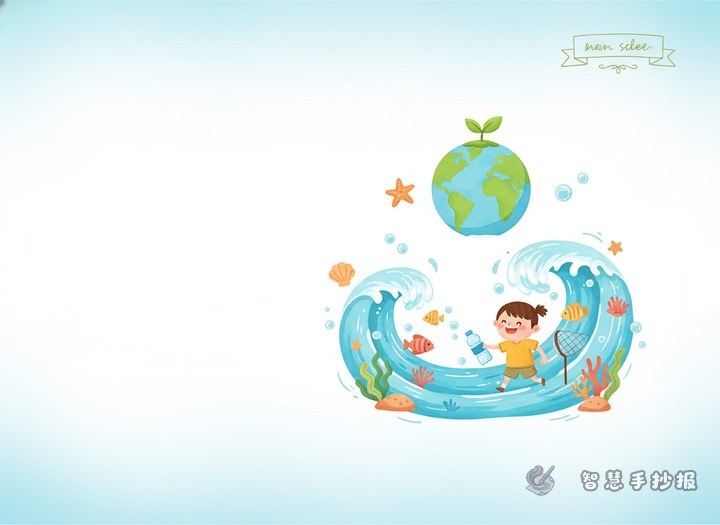
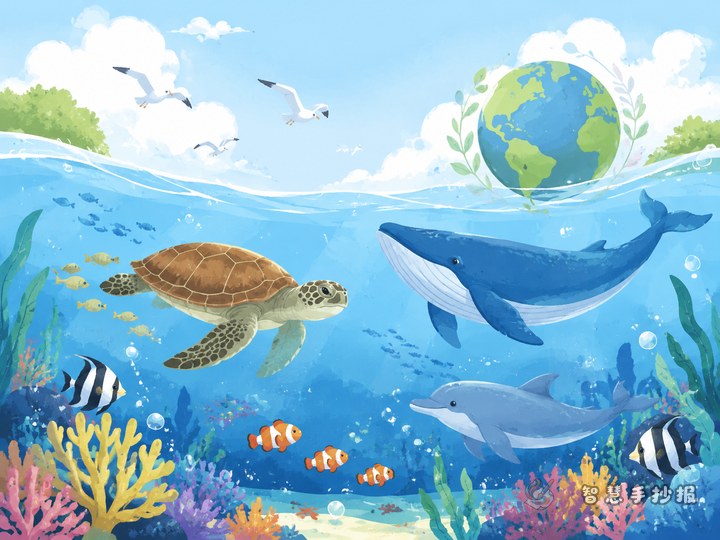
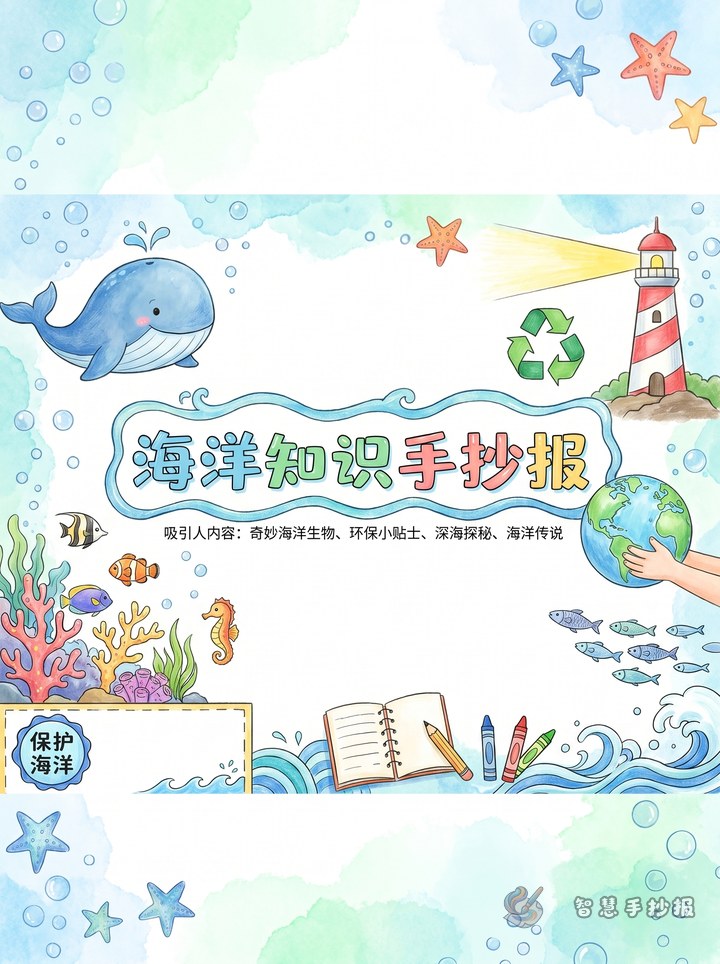
Blue, light green, and white are good main colors. Add waves, shells, fish, bubbles, coral, or small recycling icons to create an ocean feeling. To keep the page tidy, use a structure with one big title in the center or top area and several small content blocks around it.
- Place the main title at the top with waves or a sea-and-earth drawing.
- Use the left side for ocean facts and the source of litter.
- Use the right side for animal impacts and actions we can take.
- Add a slogan area or a short pledge at the bottom.
If the page still feels empty, decorate with small symbols such as turtles, starfish, boats, or recycling signs.
Titles, slogans, and a strong ending
Possible titles include Why Is There So Much Trash on the Beach?, Protect Our Blue Home, and Beach Cleanup Starts With Me.
Possible slogans include: Protect the ocean, stop littering. Use less plastic, keep more blue. One less piece of trash today, one cleaner sea tomorrow.
For the ending, write a short call to action: Let us begin with small habits in everyday life. Do not litter, cherish marine resources, and care for every fish and every wave. After planning the content, you can continue polishing the layout and colors in the Zhihui Shouchaobao WeChat mini program.