Start with a clear idea: turn “the ocean is beautiful” into “I can help protect it”
This type of poster works best when knowledge and action are combined. Your main title can focus on protection, while a subtitle adds a learning angle, such as “Learn About the Ocean, Protect Our Blue Home.” This makes the page more meaningful and organized.
A practical structure is to divide the poster into four parts: what the ocean is, why it matters, what problems it faces, and what we can do. This helps the poster feel informative instead of being only a slogan page.
Ready-to-use content sections
Section 1: Ocean facts
- The ocean covers most of Earth’s surface and is home to many living things.
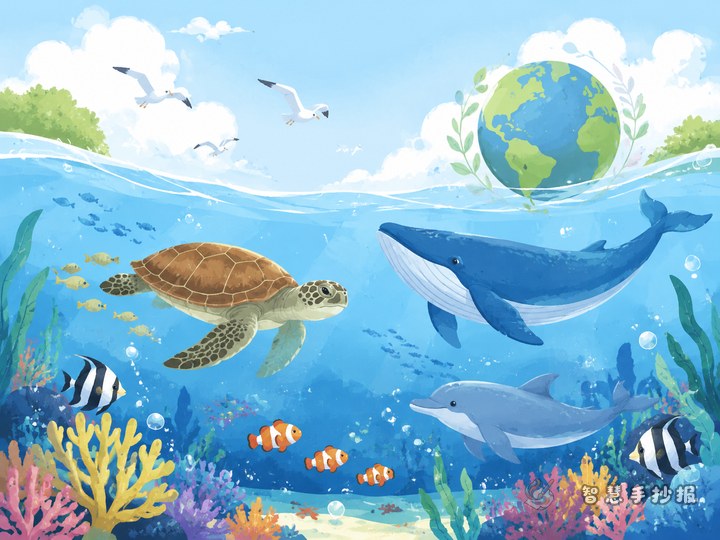
- Fish, shellfish, sea turtles, dolphins, and coral all depend on marine habitats.
- The ocean helps regulate climate and provides food and important resources.
Section 2: Dangers facing the ocean
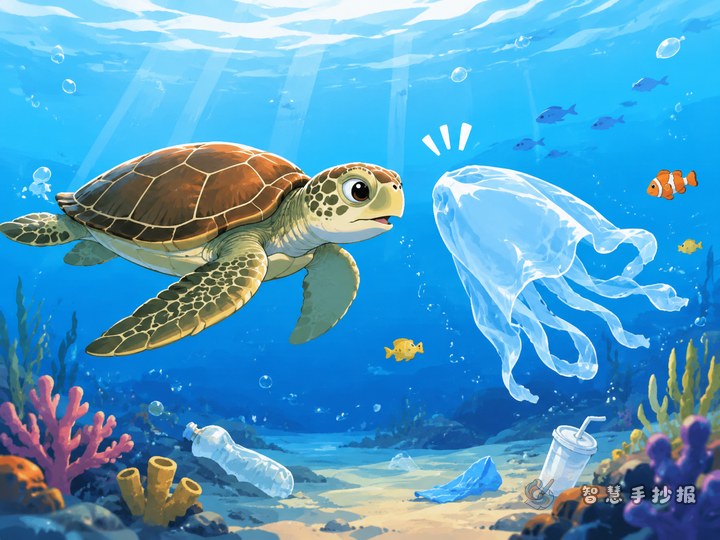
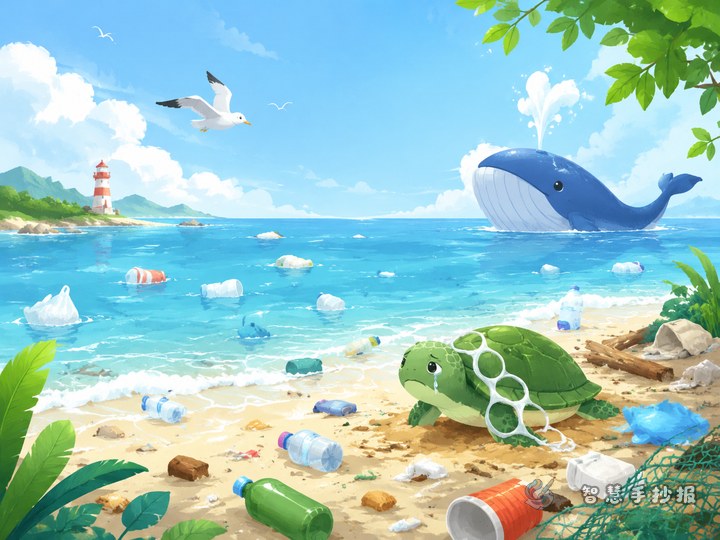
- Plastic waste can be eaten by sea animals or wrap around their bodies.
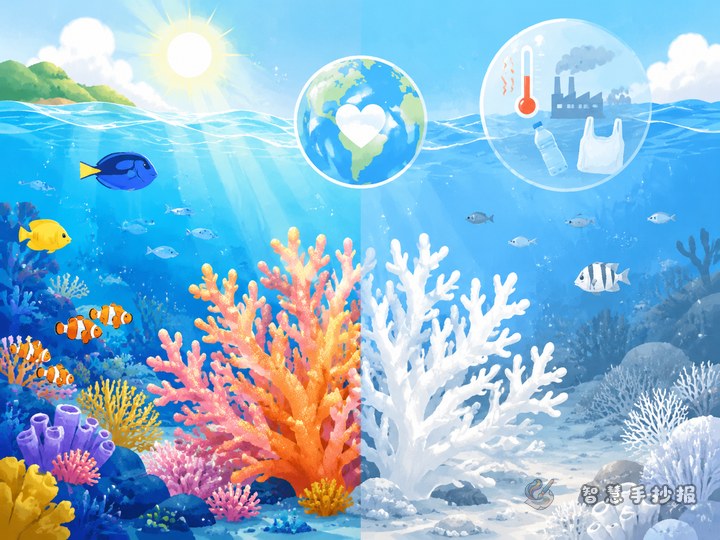
- Dirty water and oil pollution damage marine environments.
- Overfishing can disturb the balance of ocean life.
Section 3: What children can do
- Use fewer single-use plastics such as bags, straws, and disposable tableware.
- Do not litter, and sort trash properly.
- Save water and reduce pollution entering rivers and seas.
- Learn ocean knowledge and encourage others to protect marine life.
Short lines you can copy onto the poster
For the title area: Protect the Ocean, Start with Me; Guard Our Blue Home; Clearer Seas, Freer Life.
For the main text: The ocean is not a trash can. It is the cradle of life. Every time we use less plastic, the ocean becomes a little safer. Protecting the ocean is not only a big task for adults; it is also a small daily action for each of us.
For the ending: Let small actions protect the great blue sea. From today on, let us be young guardians of the ocean.
How to make the layout look better
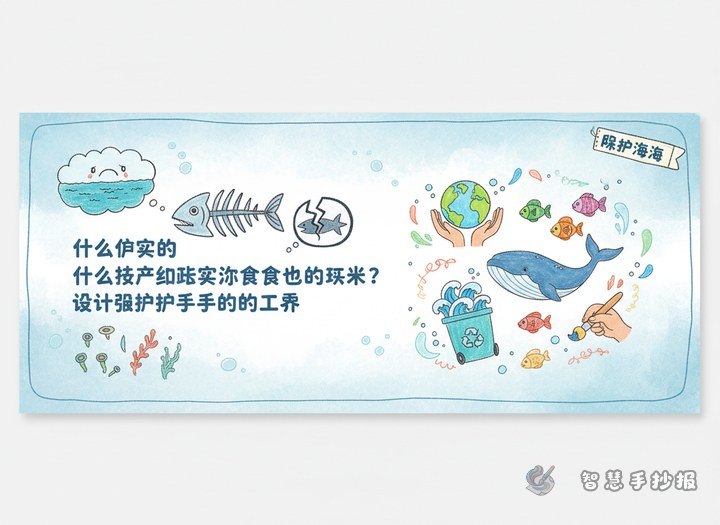
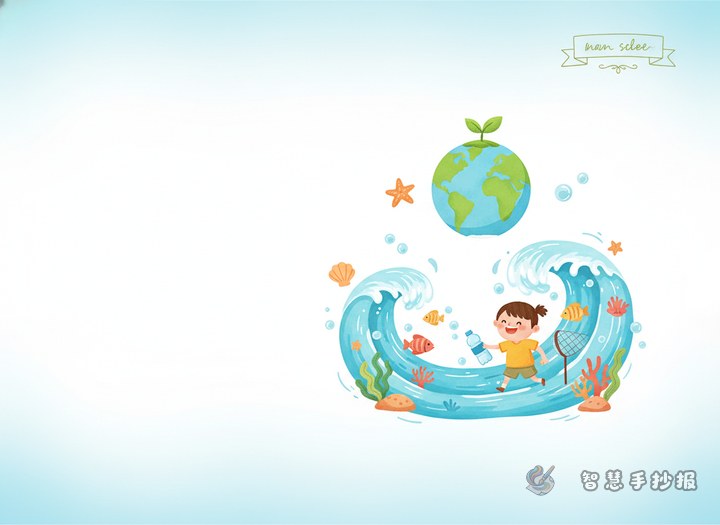
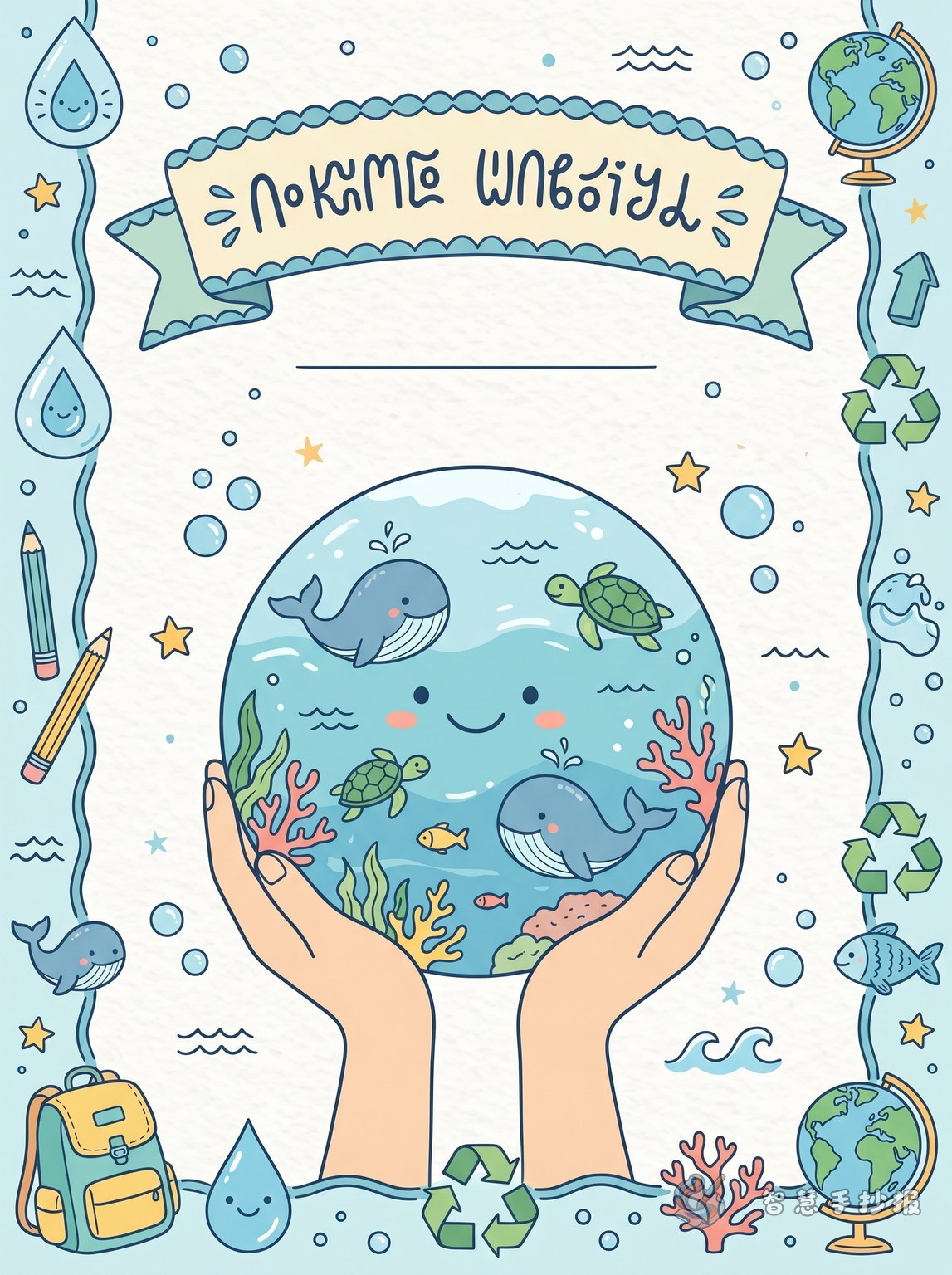
A good layout is “one main picture in the center plus information boxes around it.” In the middle, draw waves, Earth, a sea turtle, or colorful fish. Around the picture, place four small sections with facts and tips. This design looks neat and easy to read.
- Make the title letters soft or wave-shaped to match the ocean theme.
- Use bubbles, seaweed, shells, and wave lines as border decorations.
- Highlight key words like “plastic pollution,” “save water,” and “protect the ocean” in bold.
- Do not fill every space with text; some blank space makes the page cleaner.
Small details that can improve the final poster
You can add a small box called “My Promise to the Ocean,” with lines such as “I will use less plastic,” “I will not throw rubbish anywhere,” and “I will care about marine life.” This makes the poster more personal and suitable for classroom display.
Before finishing, check whether the title is clear, the sections are balanced, the wording is simple, and the colors match well. After organizing your ideas, you can also continue creating in the Zhihui Shouchaobao WeChat mini program to make your poster more efficient and polished.