Turn the page into a conversation across time
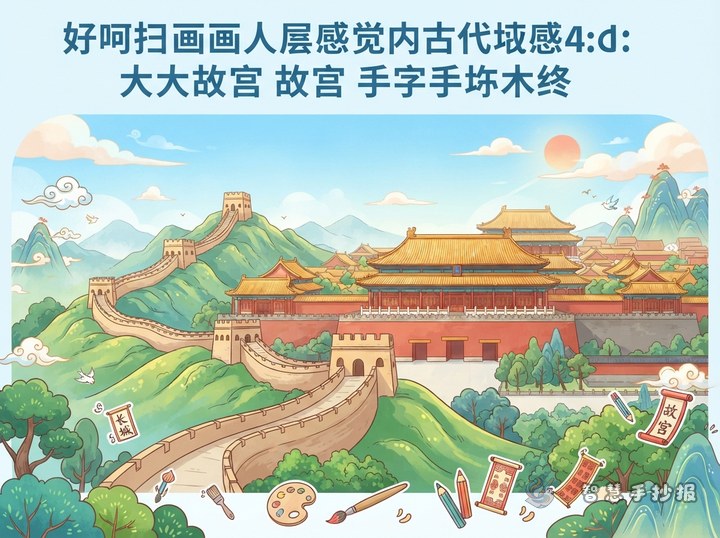
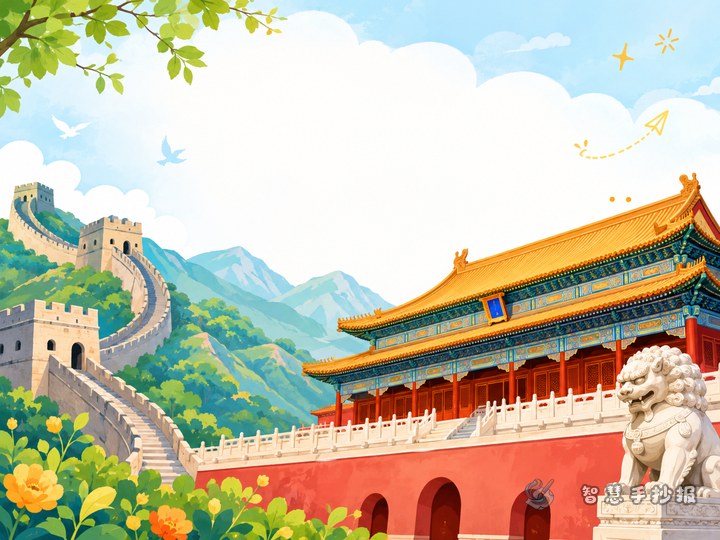
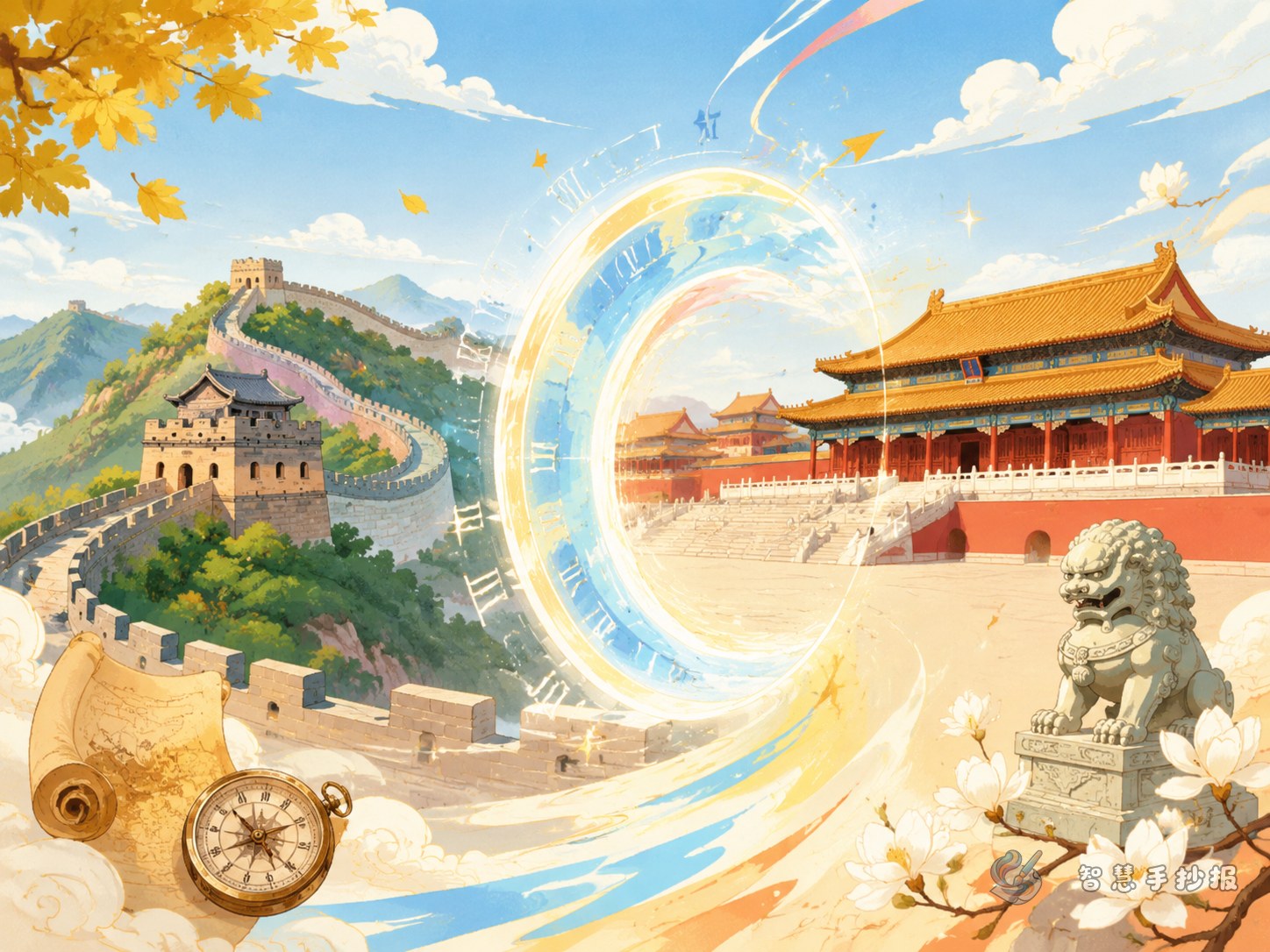
If you do not want your handwritten newspaper to feel like a plain fact sheet, a time-travel theme is a smart choice. The main idea is simple: imagine visiting the Great Wall and the Forbidden City in ancient times, then returning to today to see what has changed and what remains important. This gives the page a strong sense of story and makes the theme easy to remember.
Your title can sound imaginative but still clear, such as “A Time Journey to the Great Wall and the Forbidden City” or “Meeting Ancient Landmarks Across a Thousand Years.”
Build the content like a three-part journey
Stop One: Enter the ancient world
In this section, explain what the Great Wall and the Forbidden City meant in the past. Keep the writing short and easy to copy.
- The Great Wall stretched across mountains and served defensive purposes.
- It showed the wisdom and hard work of ancient builders.
- The Forbidden City was a grand palace complex with strict order and balance.
- Its red walls and golden roofs reflect the beauty of traditional Chinese architecture.
Stop Two: See them in the present
This part can explain why people still visit and protect these landmarks today.
- The Great Wall represents strength and perseverance.
- The Forbidden City shows the brilliance of ancient architectural art.
- Historic landmarks connect history, culture, and national memory.
- Respectful visits and cultural protection are important for everyone.
Stop Three: If I could meet people from the past
This section adds creativity. You can write short imagined questions and answers, as if you were talking to ancient builders or palace designers.
Example: If I could travel back in time, I would ask the builders of the Great Wall how they worked among the mountains. I would also ask a palace architect why the Forbidden City was designed with such perfect symmetry.
Short writing materials you can use directly
- For the Great Wall: The Great Wall is a famous ancient Chinese structure and a symbol of national spirit. It winds through mountains and reflects the wisdom of countless workers.
- For the Forbidden City: The Forbidden City is a classic example of ancient palace architecture. Its grand design and careful layout show the high level of traditional building art.
- For protection: Historic landmarks carry the memory of the past and deserve our care. We should visit politely and help protect cultural heritage.
- For personal feelings: The Great Wall makes me think of courage and endurance, while the Forbidden City makes me feel respect for history and craftsmanship.
Design the layout like a map of time
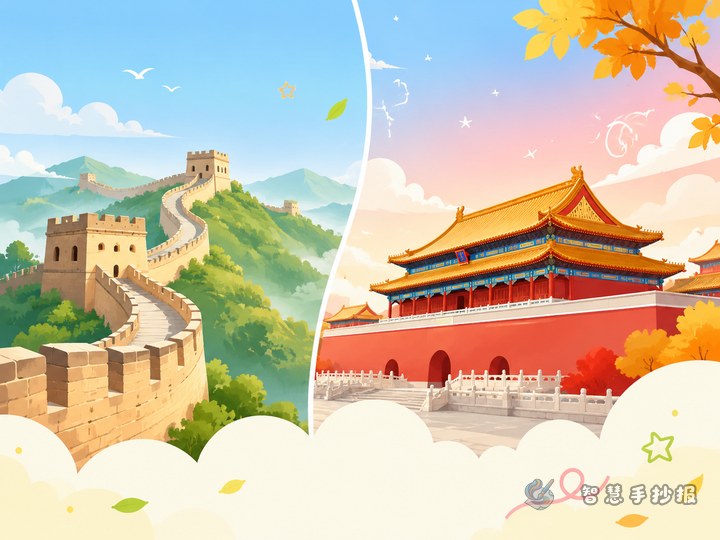
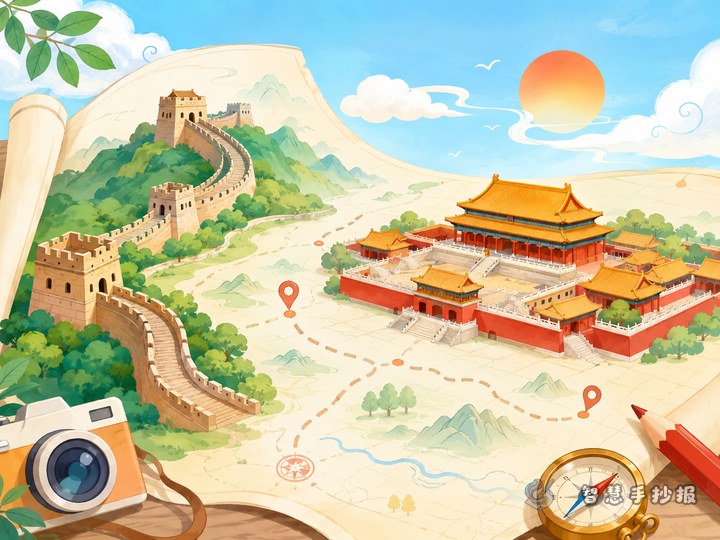
This theme works well with a split-page design. You can place a timeline, clock, scroll, or arrow in the middle to show the movement from ancient times to the present. One side can focus on the Great Wall and the other on the Forbidden City, or the top half can be “then” and the bottom half “now.”
- Use brick red, golden yellow, and gray-blue as main colors.
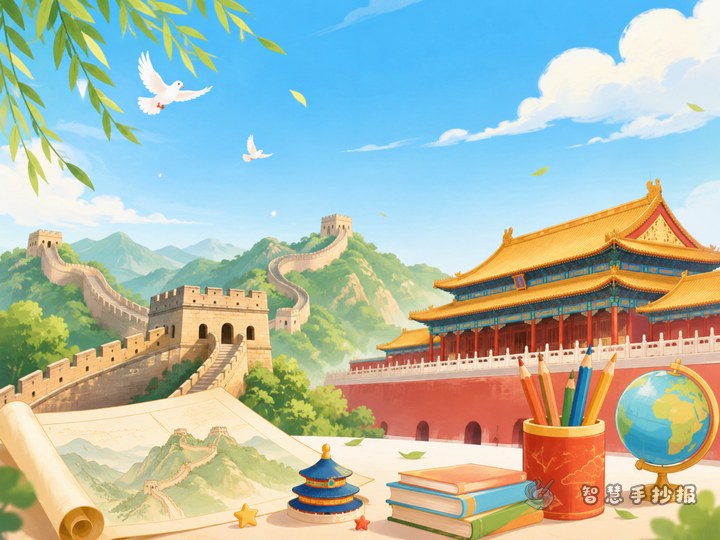
- Decorate with wall patterns, palace lanterns, clouds, gates, or watchtowers.
- Simple roof lines or wall outlines are enough for small drawings.
- Highlight key sentences with speech bubbles or time labels.
Small details that make the whole page stronger
To keep the handwritten newspaper from looking scattered, give each area a clear role. For example, add an “Ancient Identity Card” for original use, a “Today’s View” box for modern meaning, and a “Time-Travel Message Board” for your own thoughts. This makes the page feel organized and lively at the same time.
It is best to decide the main title first, then place the large sections, and only after that add short notes and decorations. Leave some blank space so the page stays neat. If you want to keep improving the title style, borders, and overall arrangement, you can continue your design in the Zhihui Shouchaobao WeChat mini program.