Build the poster around the story of one leaf
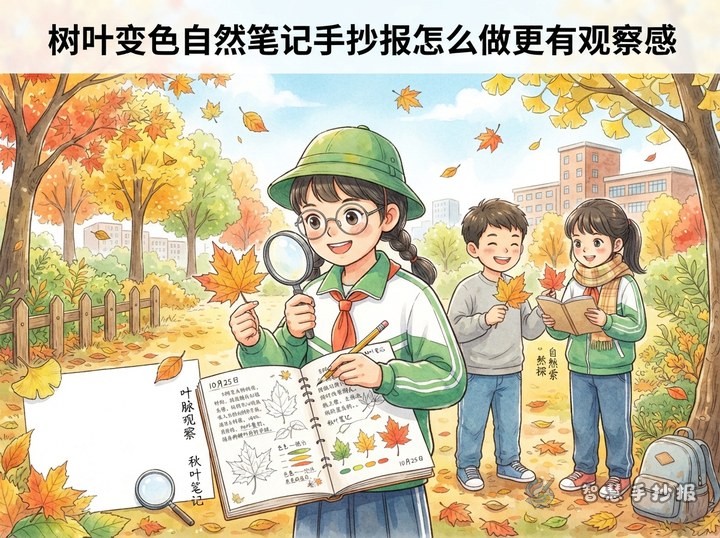
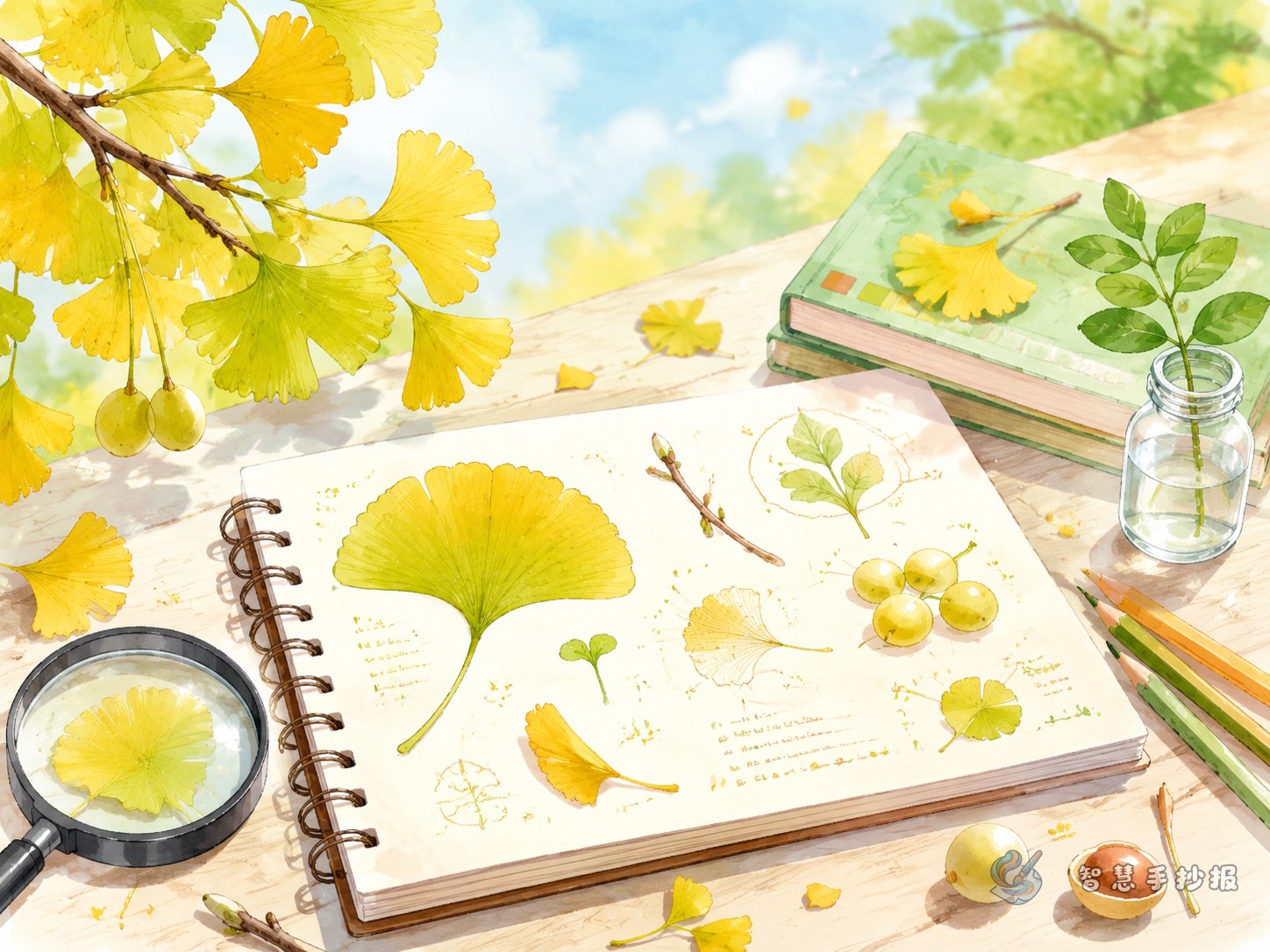
A ginkgo leaf poster looks best when it feels like a nature journal page. Instead of collecting too many plant facts, focus on one leaf: where you found it, what color it was, how the edges looked, and how it fell from the tree. This makes the poster more personal and easier for children to write.
You can also give it a small subtitle such as “The Ginkgo Leaves in My Schoolyard” or “A Golden Leaf in Autumn” to make the theme more vivid.
Useful sections you can place on the page
- Ginkgo Leaf Profile: write about its fan-like shape and seasonal color change.
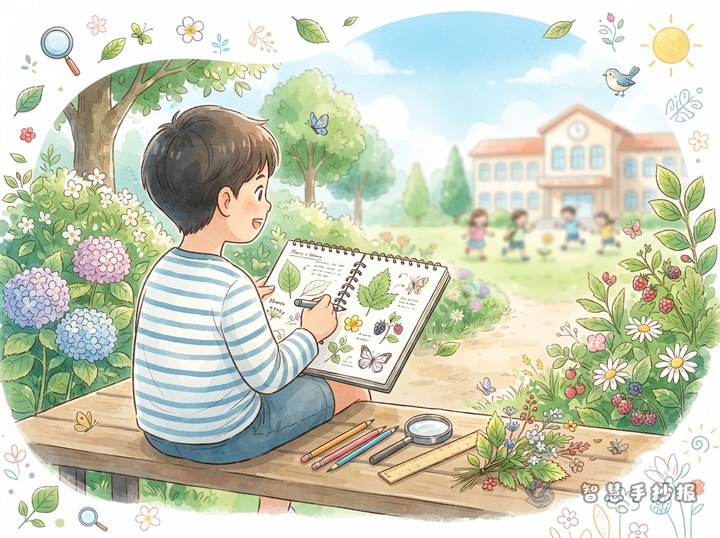
- My Observation Notes: record the date, place, weather, and what you noticed.
- A Closer Look at the Veins: describe how the veins spread outward from the stem.
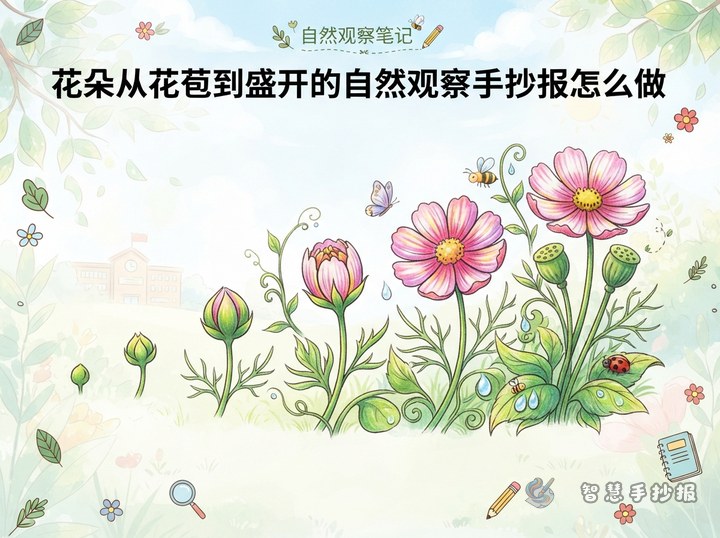
- Seasonal Changes: show spring green, summer deep green, autumn gold, and winter leaf fall.
- Feelings in Nature: add short lines about the sound of leaves under your feet or the golden ground under the tree.
You do not need every section. Choosing three or four is usually enough for a balanced school poster.
Short writing materials that fit the theme
Observation lines
- The ginkgo leaf looks like a small fan hanging quietly on the branch.
- In sunlight, the edge of the leaf seems to glow softly.
- The veins spread across the leaf like gentle lines in water.
- When the wind blows, the leaf turns slowly as it falls.
Simple fact lines
- The ginkgo leaf is easy to recognize because of its special shape.
- Its color changes with the seasons, and autumn is the most striking time.
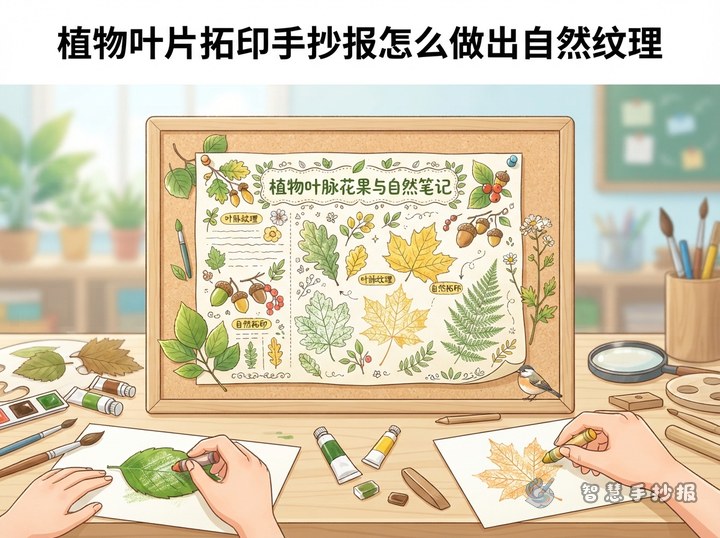
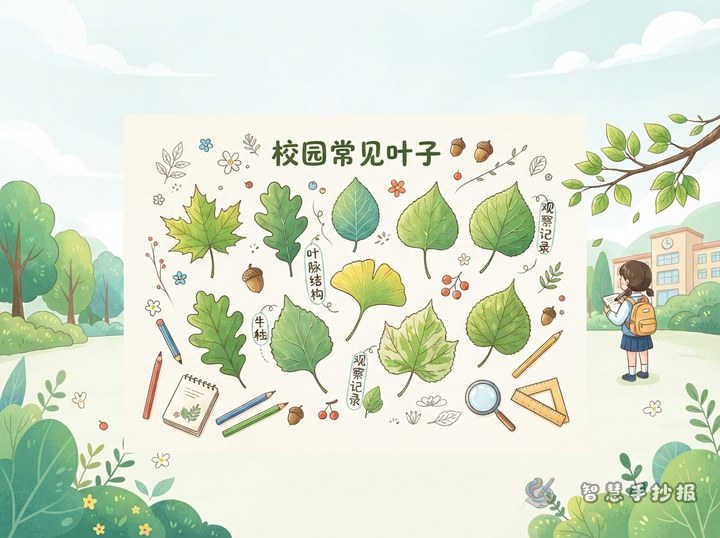
- When observing a leaf, you can look at color, shape, veins, and texture.
Nature journal prompts
- Today I noticed that leaves on the same tree can have different shades.
- My favorite detail is the wide fan shape of the leaf.
- Next time I want to observe how the leaves look after rain.
A simple layout can feel like an open field notebook
This topic works well as a spread-like design. Put one large ginkgo leaf in the middle. On the left, write what you saw. On the right, write what you learned or felt. If the page is large, add several small leaves along the bottom edge to create a natural border.
- Place the main title at the top center with clear and friendly lettering.
- Keep each paragraph short so the page stays easy to read.
- Use leaf-shaped labels or note-style boxes for subheadings.
- Leave some blank space so the poster feels fresh and not crowded.
Color choices and decoration ideas
For an autumn feeling, use golden yellow, soft orange, and light brown. For a broader seasonal theme, add pale green and light blue. Decorations do not need to be complicated. Small leaves, twigs, dew drops, and wind lines are enough to create a consistent nature theme.
You can also add tiny labels such as date, weather, and place in the corners so the poster feels more like a real observation record.
End with a small reflection
The final part of the poster can be called “What I Discovered” or “My Nature Note.” You might write that a quiet leaf can still show color, pattern, movement, and the passing of the seasons. That helps the whole poster end with a thoughtful and gentle tone.
If you already have your theme and sections ready, you can continue arranging the content in the Zhihui Shouchaobao WeChat mini program to make the layout neater and easier to complete.