Build the page around a “Math Market” idea
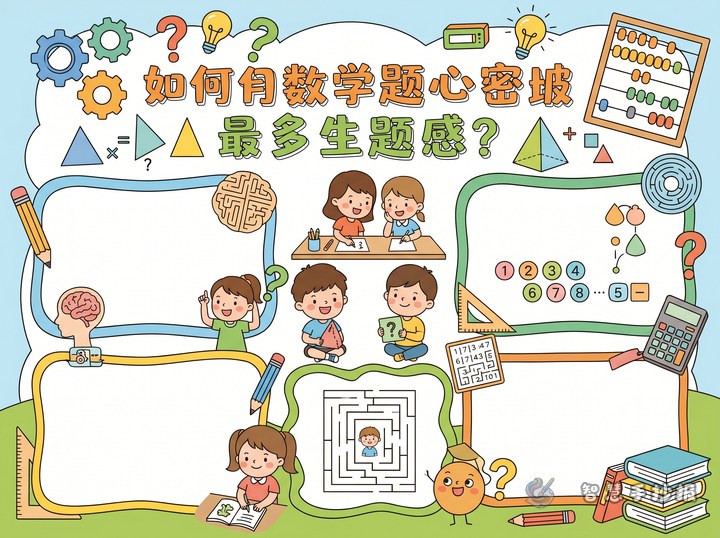
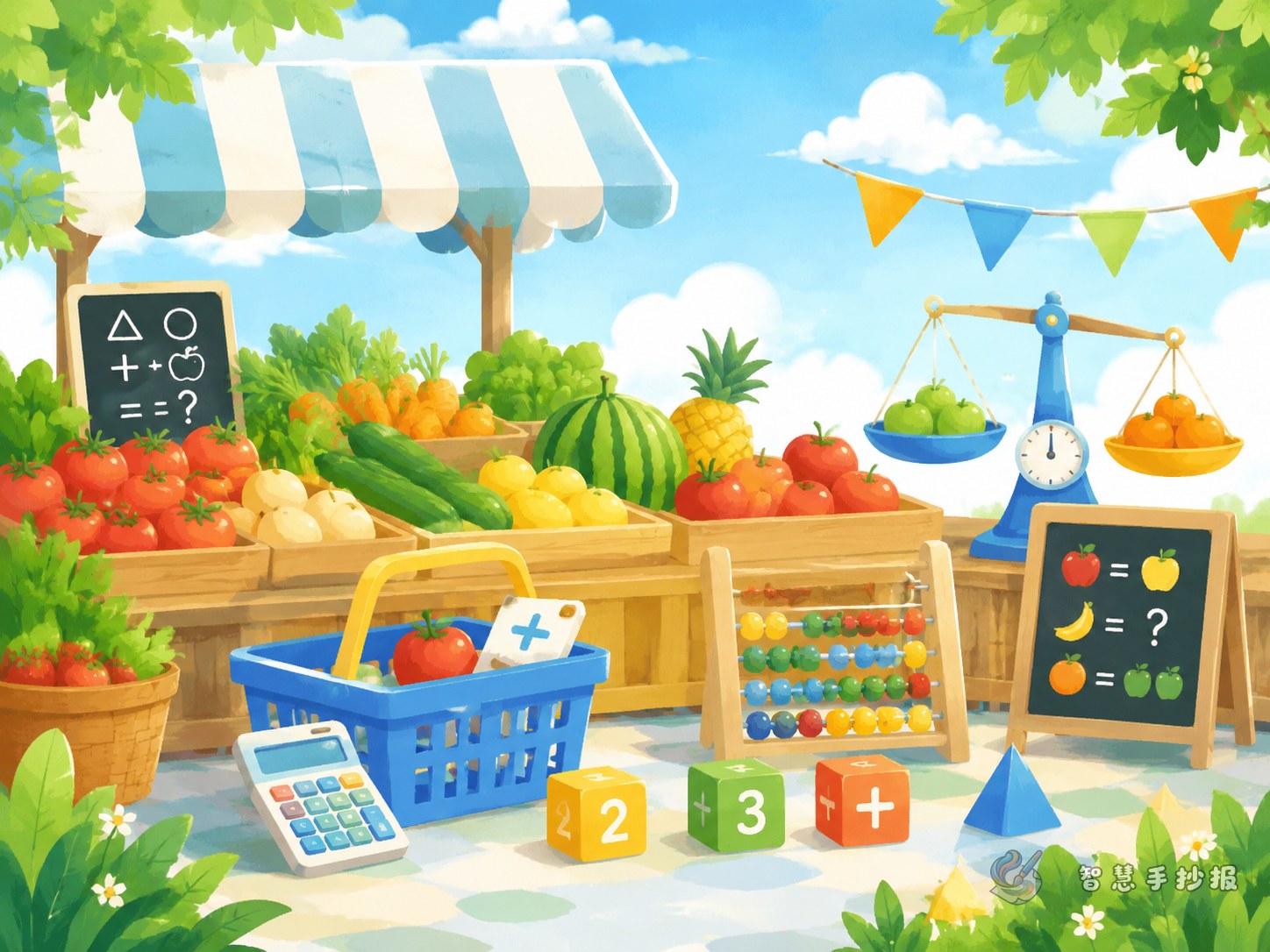
If you want a fun math poster that also shows real thinking, turn the whole page into a small “math market.” Each section can act like a booth: patterns, smart calculation, math in daily life, and challenge tasks. This makes the poster feel lively instead of looking like a plain worksheet.
Your main title could be Welcome to the Math Market, Be a Math Detective Today, or Fun Math Thinking Fair. Add small decorations such as number cards, simple shapes, question marks, or an abacus to make the theme clear at first glance.
Four sections that are easy to organize
Section 1: Pattern Corner
This area is perfect for number and shape patterns. Keep the examples short and let readers think for a moment before seeing the answer.
- 2, 4, 6, 8, ( )
- Triangle, circle, triangle, circle, triangle, ( )
- 1, 3, 6, 10, 15 — what comes next?
Section 2: Smart Calculation Booth
Here you can show easy mental math methods that children can understand, such as making ten, breaking numbers apart, or rearranging addends.
- 18 + 9: first do 18 + 2 = 20, then add 7
- 25 + 25 + 25 + 25 can become 25 × 4
- 49 + 32: think of 50 + 32, then subtract 1
Section 3: Math in Life
Use everyday scenes to make math feel close and practical. Shopping, sharing fruit, reading time, and counting steps are all good choices.
- Three pencils cost 2 yuan each. How much is that in total?
- One box has 12 eggs. How many are in 2 boxes?
- How much time passes from 7:30 to 8:00?
Section 4: Thinking Challenge Zone
Save one eye-catching area for puzzles or mini challenges. This gives the poster interaction and makes it feel more exciting.
Short text materials you can use directly
A poster does not need long paragraphs. Short, clear lines work better. You can use or adapt these sentences:
- Math is not only about answers. It is also about observing and discovering.
- When a problem feels hard, try a different way of thinking.
- Patterns are keys that help us open the door to math.
- Math can be found everywhere in daily life.
- The thinking process is just as important as the final answer.
You may also add one small explanation: Math thinking means looking for clues, finding patterns, and trying different methods. A fun math poster should show not only the result, but also the way you think.
Try a layout that feels active and playful
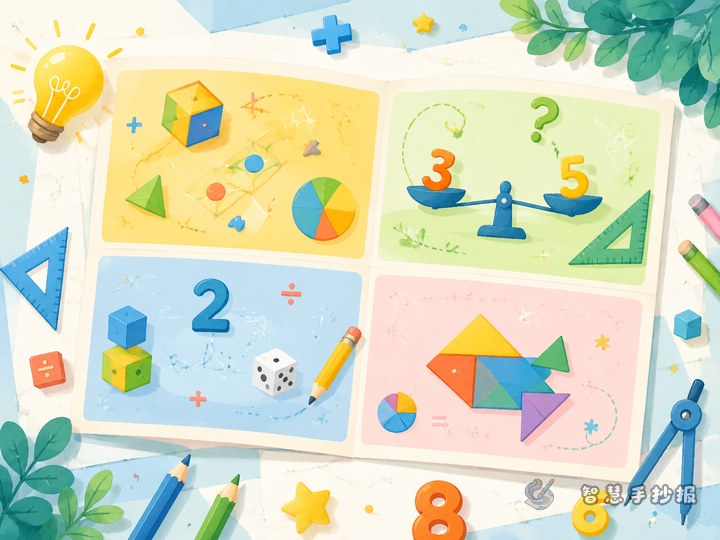
You do not have to use a strict symmetrical design. A center title with four surrounding sections works very well for this topic. It feels like a map of a busy little market. Put the title in the middle and place the four sections around it using different frame shapes.
Light blue, yellow, and green are good color choices. They look bright and friendly for elementary school posters. Keep each section to just a few lines so the page stays clean and easy to read.
- Center: main title and a short slogan
- Top left: patterns
- Top right: smart calculation
- Bottom left: math in life
- Bottom right: challenges
Small details that improve the final result
What makes a poster stand out is often not the amount of text, but the care in the details. Give each section a tiny icon: a magnifying glass for patterns, a lightning sign for quick calculation, a shopping bag for daily math, and a trophy for challenges.
You can also add number footprints, mini shape blocks, or question-mark decorations in empty spaces. Just avoid making the page too crowded. When you finish, check whether the title is clear, the sections are balanced, and the handwriting is neat.
If you already have a topic but still want help with layout, colors, or extra math materials, you can continue in the Zhihui Shouchaobao WeChat mini program to refine your poster ideas and complete a more polished design.