Start with topics young children can really understand
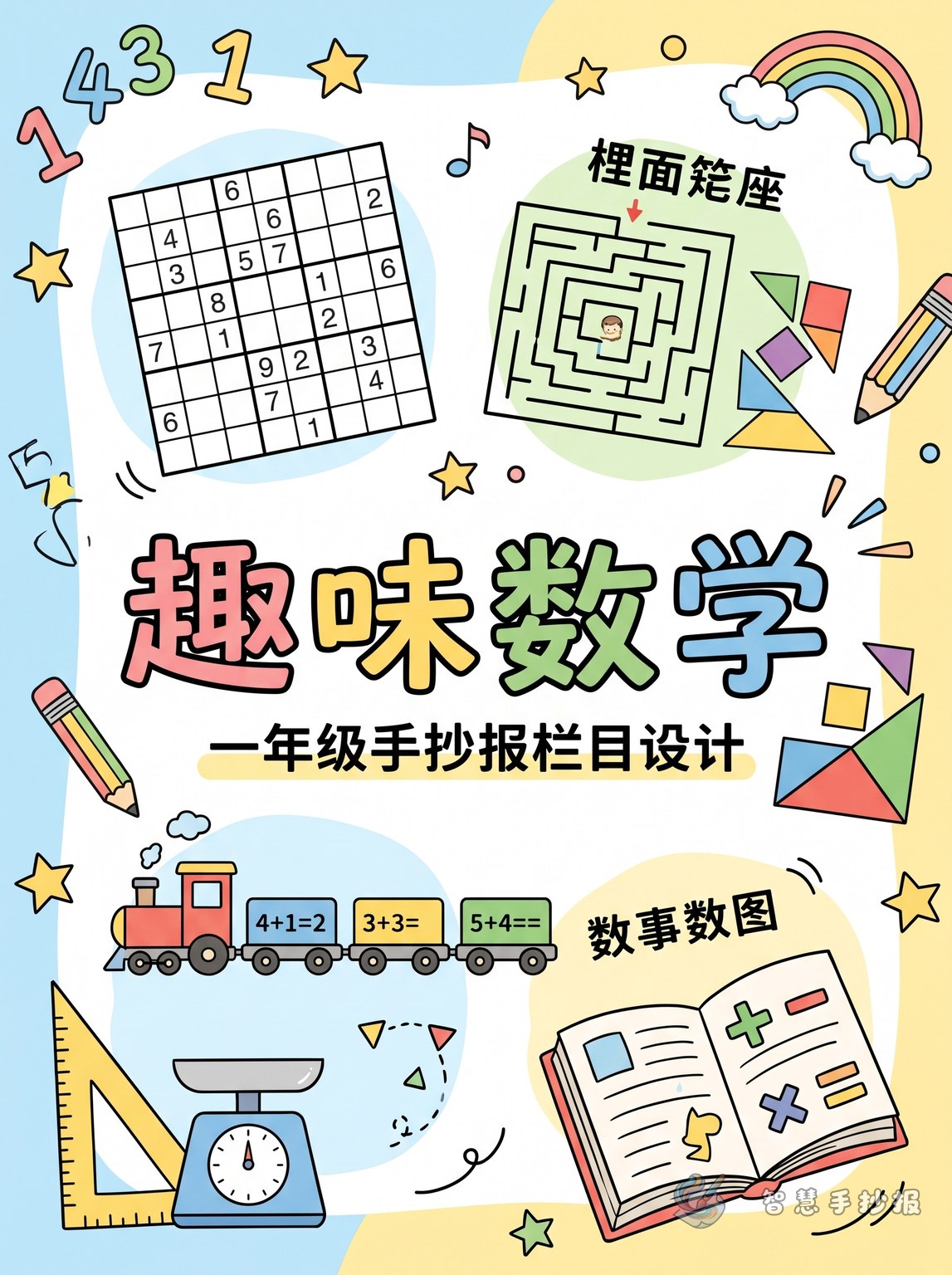
A first-grade fun math poster should be simple, visual, and interactive. Good topics include numbers, basic addition and subtraction, shapes, patterns, time, and math in everyday life. When the theme matches classroom learning, children can understand it better and enjoy making the poster.
If you are not sure where to begin, choose one main title and divide the page into a few small sections. Each section should focus on one tiny idea. This works especially well for first graders.
Best section ideas for a first-grade fun math poster
Number World
This section can include number order, what numbers look like, or a child’s favorite number. It is short, easy, and fun to illustrate.
- 1 looks like a pencil
- 2 looks like a little duck
- 3 looks like an ear
- Numbers help us count people, books, and fruit
Addition and Subtraction Challenge
Pick a few easy equations and turn them into a mini game area.
- 3+2=5
- 8-3=5
- 6+4=10
- 10-2=8
You can also add a hint such as: addition means putting together, subtraction means taking away.
Shape Friends
This is one of the easiest sections to make attractive. Introduce circles, squares, rectangles, and triangles, then match them with real-life objects.
- A circle is like the sun, a ball, or a clock
- A square is like a handkerchief or a board
- A rectangle is like a book or a door
- A triangle is like a flag or a roof
Math Riddle Corner
Add one or two easy riddles to make the poster more playful.
- What do we see every day that changes in the morning and evening? Answer: a shadow
- What has ten brothers in two groups and works without speaking? Answer: hands
You can present this section in speech bubbles to make it more engaging.
Math in Daily Life
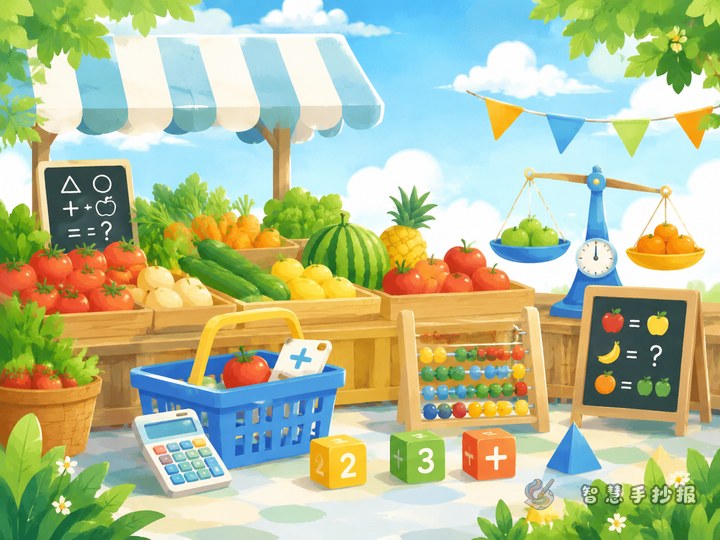
This part helps children connect math with real life.
- We count money when buying school supplies
- We tell time by reading a clock
- We count steps when walking upstairs
- We use addition and subtraction when sharing fruit
Short text materials that are easy to copy
Long passages are not suitable for a first-grade poster. Short lines are clearer and neater.
- Math is all around us.
- I like using numbers to know the world.
- Addition means putting together, subtraction means taking away.
- Shapes have different looks and different uses.
- Math helps me think better.
To make the content feel more child-friendly, you can place a small star, apple, balloon, or block icon before each sentence.
Keep the layout simple, bright, and cute
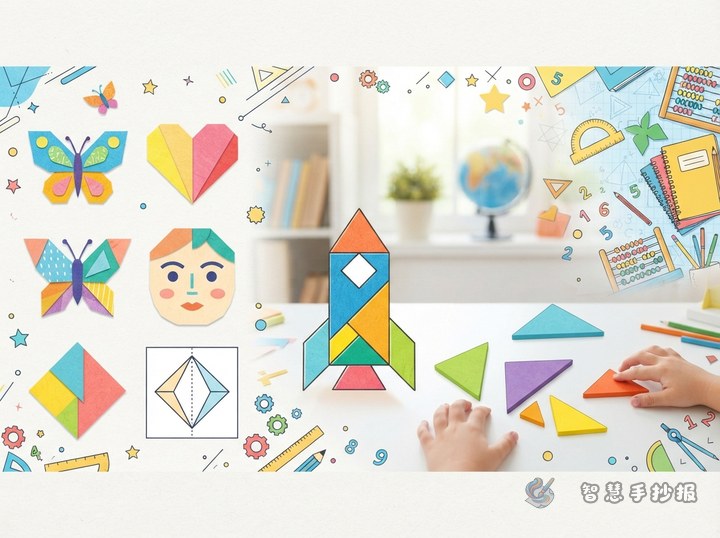
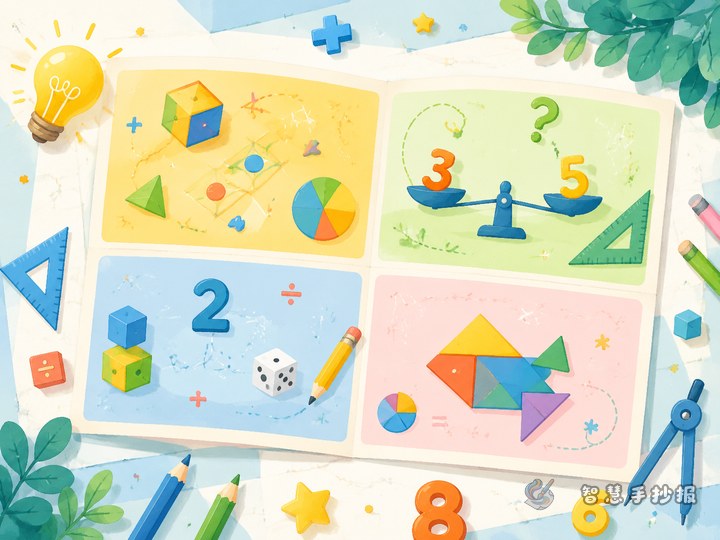
A first-grade math poster works well with a big title and four blocks or a center picture with sections around it. Put the main title at the top and decorate it with numbers, rulers, shapes, and smiling faces. Separate sections with wavy lines, colorful frames, or cloud shapes.
- Choose bright title colors such as blue, orange, or green
- Keep each section to about three to six lines
- Use slightly more drawings than text
- Leave enough blank space so the page does not feel crowded
If a child’s handwriting is still developing, parents or teachers can first draw the section boxes and then let the child fill in simple content.
Small details that make the poster better
The most common problems in lower-grade posters are too much text, very small handwriting, and too many mixed colors. A good method is to decide the sections first, then plan how many lines go into each one, and finally add drawings and borders. Do not color the entire page too early, or the poster may become hard to read.
If you want to finish the layout faster, choose a suitable style, and organize the content more easily, you can continue creating in the Zhihui Shouchaobao WeChat mini program.