Build the Theme Around Math Puzzle Challenges
If you want a fun math thinking poster to feel more engaging, center it on math puzzle challenges. Instead of filling the page with scattered facts, create a clear theme based on guessing, observing, and solving. Titles like “Math Puzzle Challenge,” “Little Math Detective,” or “Think and Solve Math Board” make the poster feel lively and interactive for elementary students.
You can also add a short line under the main title, such as “Math is not only about calculating, but also about thinking.” This helps the poster stand out and gives it a stronger focus.
Useful Sections to Include on the Poster
- Puzzle Corner: Add 3 to 5 fun problems, such as number patterns, shape reasoning, or simple logic puzzles.
- How I Solved It: Choose one puzzle and explain the steps: observe, guess, test, and answer.
- Common Mistakes: Write small reminders like “Read the question carefully” or “Find the pattern before calculating.”
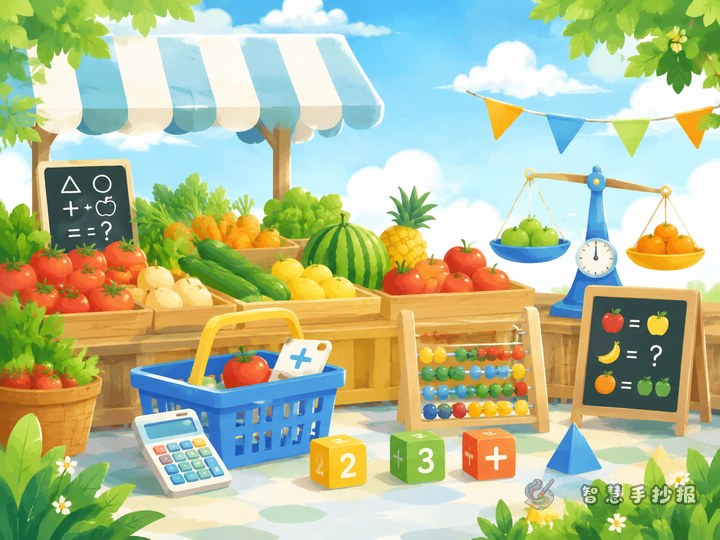
- Math in Daily Life: Use examples like sharing snacks, buying school supplies, lining up, or building with blocks.
- Fun Math Facts: Add short content about palindromic numbers, magic squares, or interesting number tricks.
This combination makes the poster more dynamic and helps show real mathematical thinking instead of plain computation.
Ready-to-Use Writing Ideas
Short Introduction
Math is more than addition, subtraction, multiplication, and division. It is a way to discover patterns, analyze problems, and find solutions. Fun math puzzles help us learn how to observe, compare, reason, and check our answers. When we think carefully, math can feel just like a game.
Useful Mini Sentences
- Do not rush to calculate. Look for the pattern first.
- If a problem feels hard, try thinking from another angle.
- Good calculation is important, but good thinking is even better.
- Math is in everyday life and in every new discovery.
Sample Puzzle Ideas
- 2, 4, 8, 16, what comes next? Hint: each number is double the one before.
- Xiaoming had 10 candies. After giving some to two classmates, he had 6 left. How many did he give away? Answer: 4.
- A square has 4 sides. If there are two squares, how many sides can you see at most? This can lead to a shape discussion.
The puzzles do not need to be difficult. The key is that children can understand them, enjoy solving them, and show their thinking steps.
Layout Ideas That Show Thinking Clearly
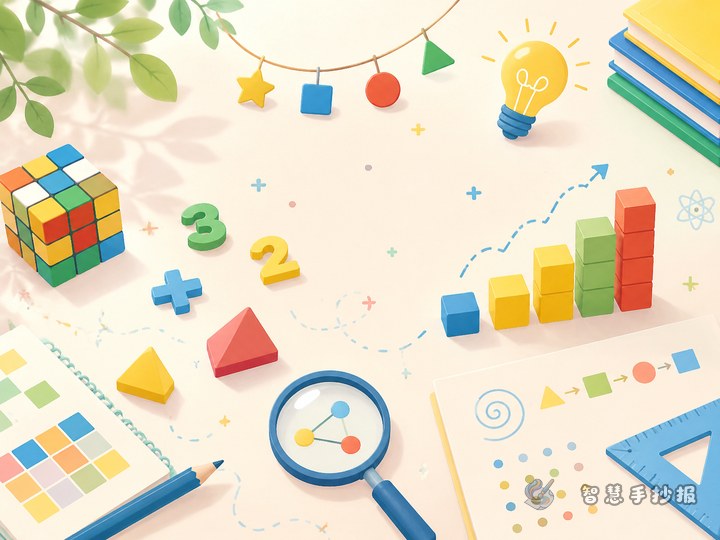
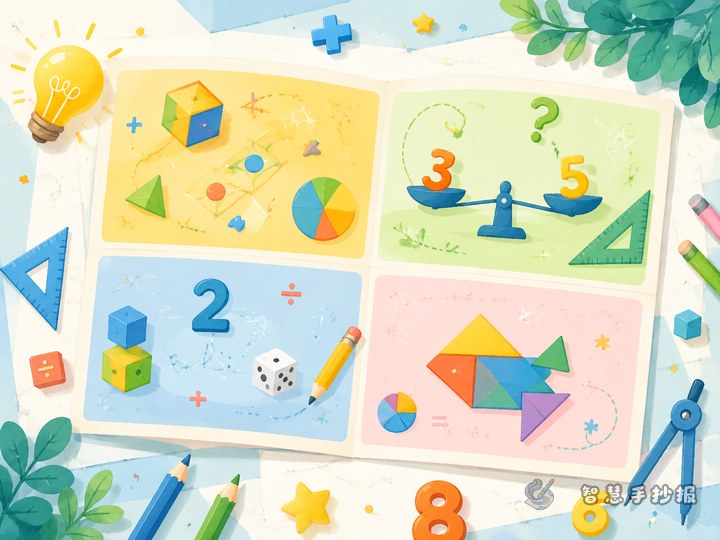
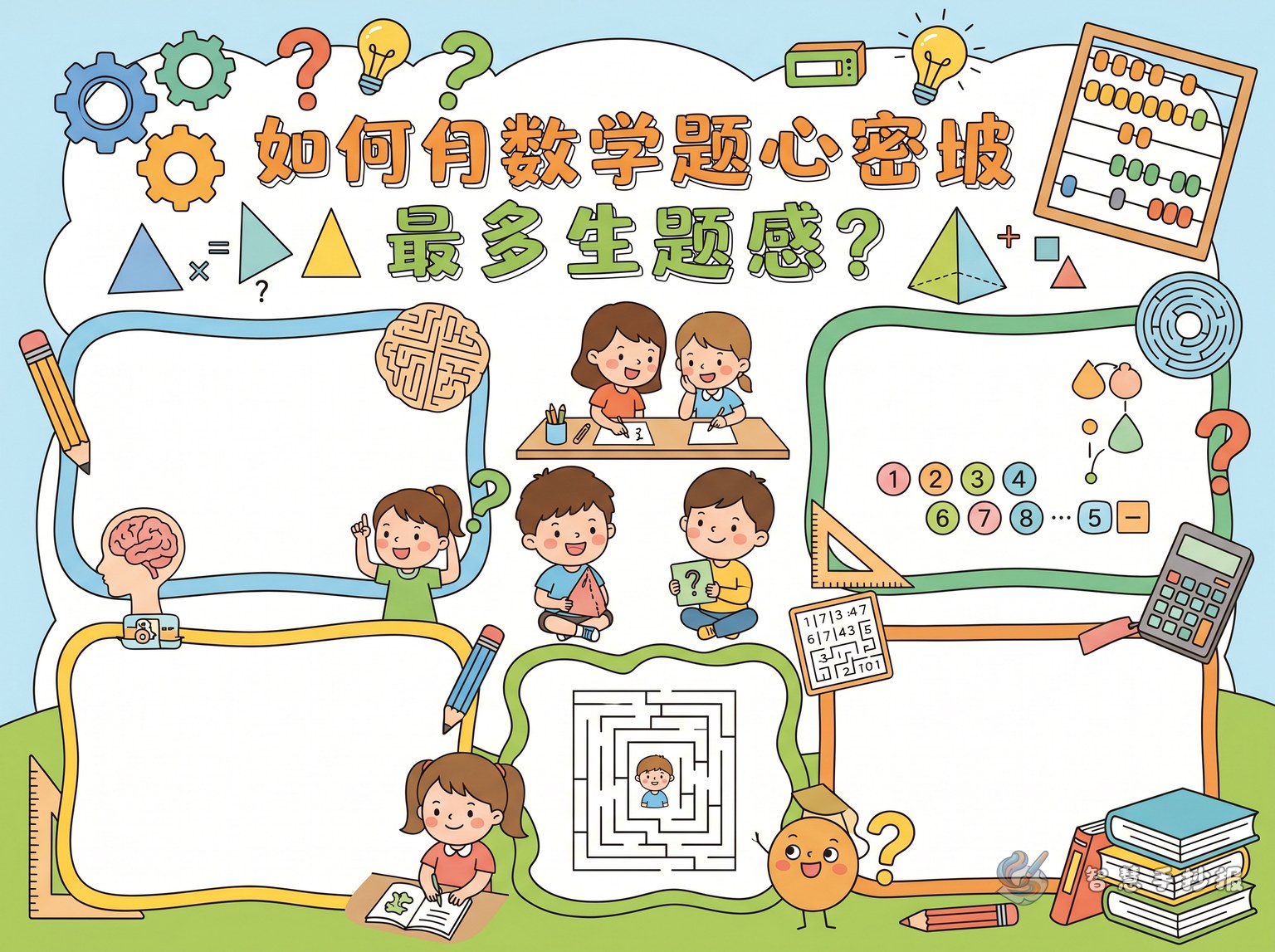
This kind of poster works best with a center title and four surrounding sections. Put the theme in the middle, then place puzzles, solving steps, fun facts, and daily-life math around it. Use arrows, question marks, light bulbs, magnifying glasses, or numbers to connect each part and create a sense of exploration.
For colors, blue, orange, and green work well together because they look bright and clean. Borders can include numbers, geometric shapes, maze lines, graph paper patterns, or rulers. If you want better readability, use different background colors for the questions and the answer hints.
Tips for Making the Poster Neat and Impressive
Teachers often look at three things: a clear theme, rich content, and neat handwriting. Before drawing the final version, first decide on three points: which puzzles to include, how to show mathematical thinking, and how to divide the page. Planning first usually leads to a much better result.
If students are not sure how to begin, they can sketch a simple layout on scrap paper, then choose two or three strong puzzle examples for the final copy. If you want to continue improving titles, colors, and section ideas, you can also explore more poster-making inspiration in the Zhihui Shouchaobao WeChat mini program.