Start with a theme that feels fun and easy to understand
For a math thinking poster, you do not need to turn it into a page full of difficult exercises. A better direction is to build it around the idea that math can be playful and smart at the same time. The center theme can include number patterns, shape puzzles, simple logic tasks, and math in daily life so readers immediately see that the poster is interesting and interactive.
A question-style headline also works well, such as “What should I write on a fun math thinking poster?” or “How can I design a math poster that looks engaging?” This feels natural for both school display and search use.
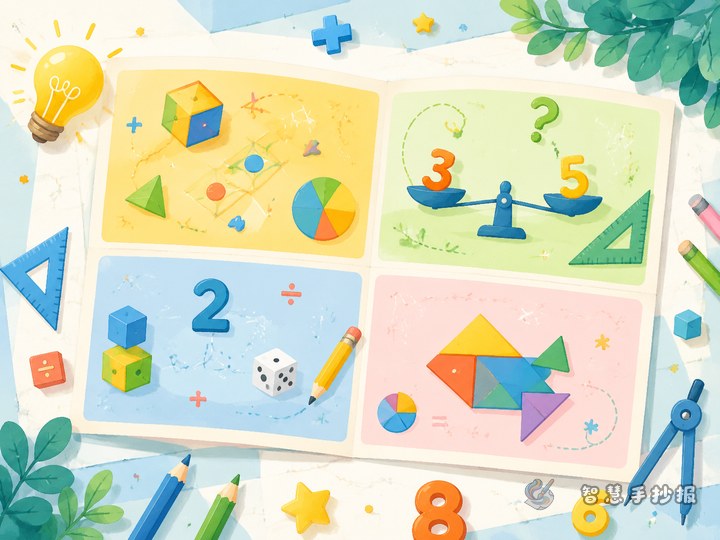
Four sections that fit this kind of poster well
Section 1: Fun math questions
- One frog has 4 legs. How many legs do 2 frogs have?
- Find the pattern: 2, 4, 8, 16, ?
- If you cut a square once, how many new shapes might appear?
These short prompts are easy to place in side boxes or speech bubbles.
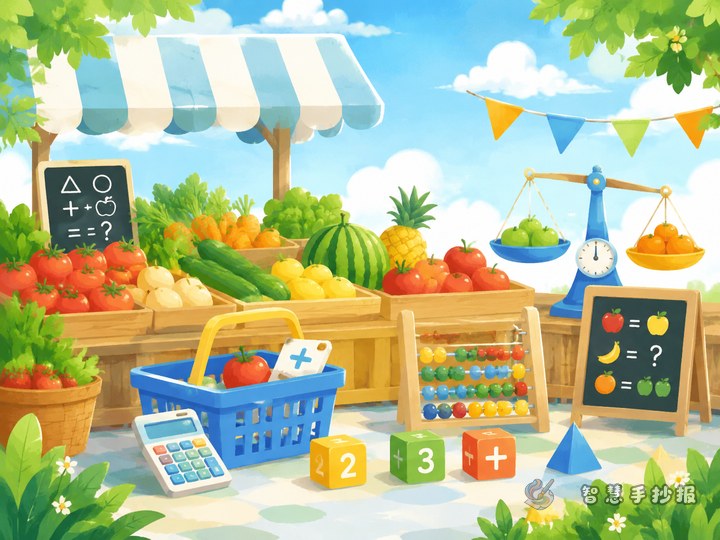
Section 2: Math in everyday life
- Comparing prices when buying school supplies
- Finding number patterns on a calendar
- Using grouping and counting in class activities
This section helps the poster show that math thinking is not only about solving textbook problems.
Section 3: Shapes and imagination
- Why triangles are stable
- The fun of symmetry
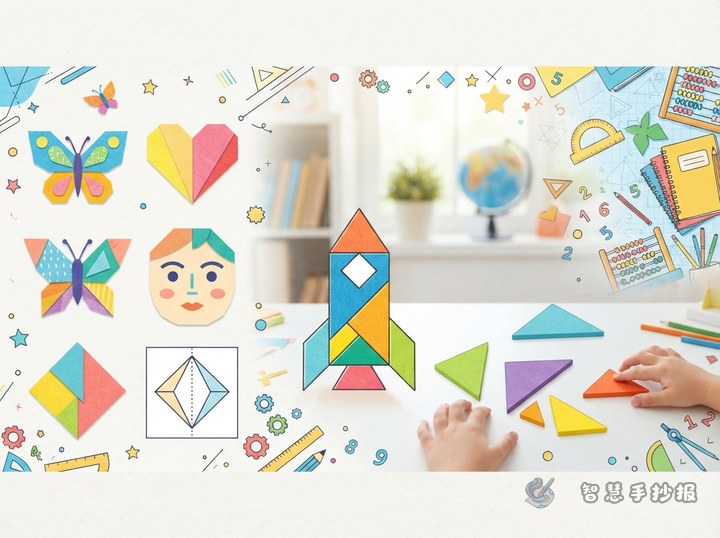
- How tangram pieces create many pictures
You can match these ideas with small shape borders and icons to make the page more lively.
Section 4: My own math discovery
Encourage students to add a short personal sentence, such as “I found that multiplication helps me calculate faster” or “Finding patterns feels like solving a mystery.” This part gives the poster more personality.
Short text materials students can copy
Math is not only about calculation. It is also a way of observing, comparing, and discovering patterns. When we look for order in numbers, changes in shapes, and logic in daily life, we are already using math thinking. Fun math makes learning lighter and helps us notice that math is all around us.
Learning math means thinking bravely, trying different methods, and checking ideas carefully. Sometimes one question can have more than one path. If we change our angle, we may discover a new answer. Math thinking is like a small key that opens a new way to understand the world.
Try a “math adventure map” instead of a simple left-right layout
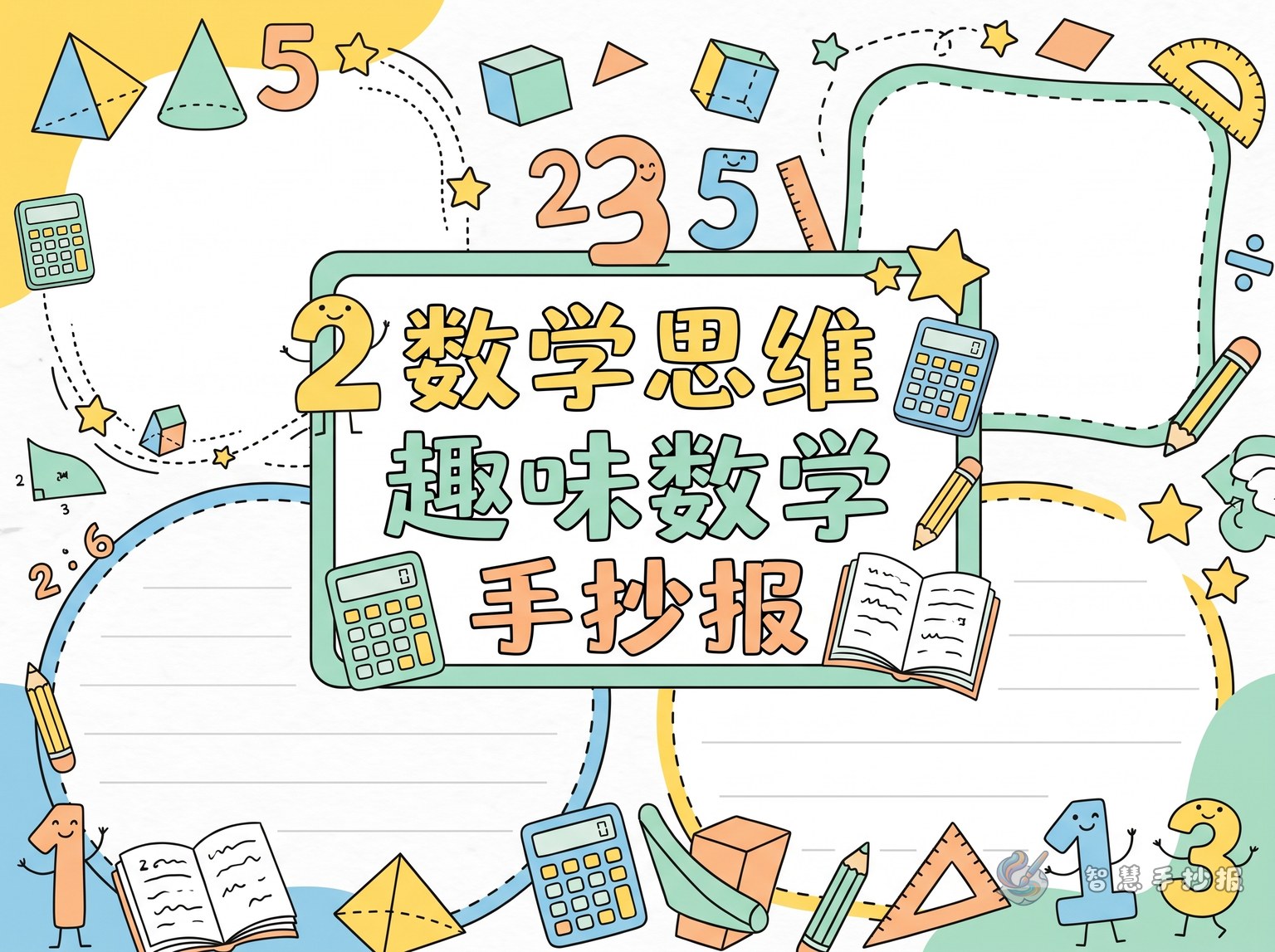
This topic works especially well as a math exploration map. Put the main title in the center and build four areas around it, such as “Pattern Stop,” “Shape Stop,” “Life Stop,” and “Challenge Stop.” This makes the reading order feel like a game.
- Place the main title in the middle or on a top banner
- Put a number-pattern puzzle in the upper left corner to catch attention
- Add daily-life math examples on one side
- Use the lower section for shapes or tangram ideas
- Decorate empty space with numbers, rulers, triangles, and question marks
If you want to refine the layout, change colors, or add more text, you can continue making the poster in the Zhihui Shouchaobao WeChat mini program.
Color and handwriting tips
Bright and clean colors fit this theme well, such as blue, orange, and green on a white background. The title can be slightly bold, while the main text should stay neat and readable. Highlighting words like “pattern,” “logic,” “shape,” and “discovery” can make the page clearer.
- Use no more than two main title colors
- Keep each section to three to five key lines
- Use short sentences for younger readers
- Choose decorations related to numbers, rulers, abacuses, and geometric shapes
A simple way to finish the poster nicely
At the end, add one sentence about how you feel about math, such as “I like discovering secrets in math” or “Fun math helps me enjoy thinking.” This gives the poster a warm and personal ending.