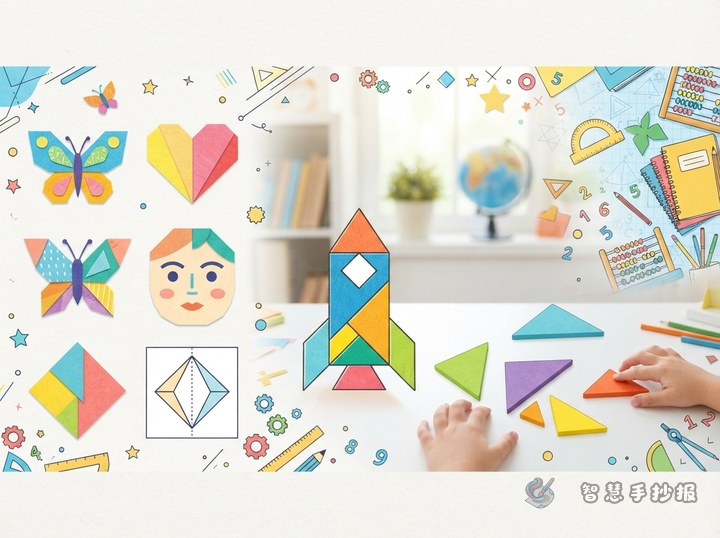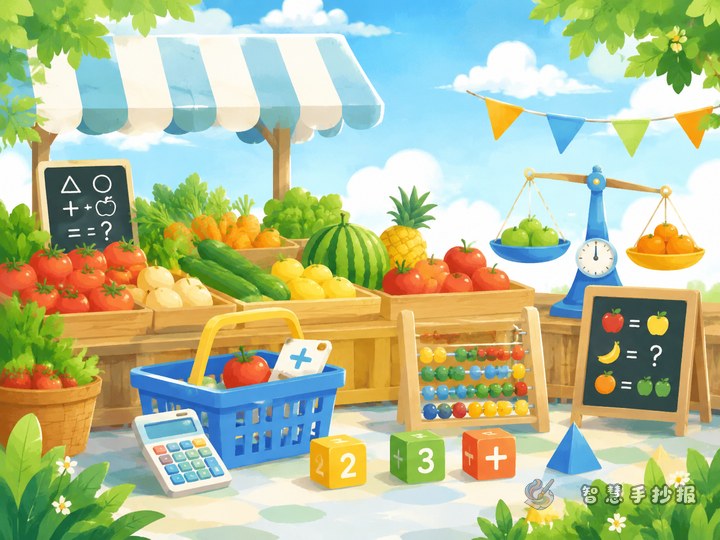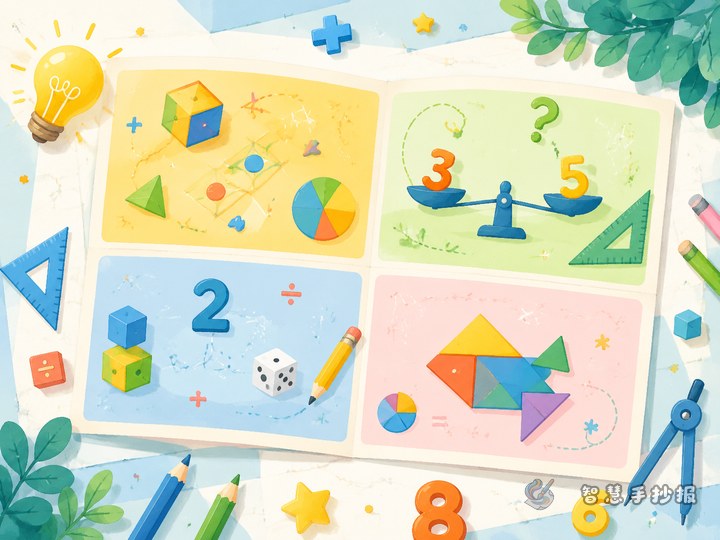
Start with a theme that feels vivid and easy to picture
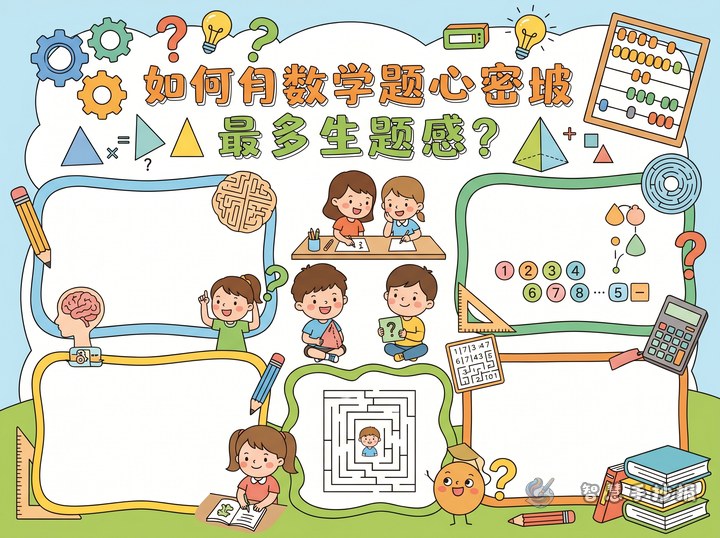
If you want a math thinking poster to look fun but not empty, try building it around the idea of “a detective of patterns in daily life”. This topic is easier to develop than simply listing math facts, and it matches how children observe the world. The main title can be “Patterns I Found” or “Number Secrets Around Me,” so readers understand the focus right away.
You can decorate the title area with a magnifying glass, footprints, rulers, clocks, blocks, or coins. These small elements help show the feeling of exploring and discovering. The final poster will feel lively while still showing key math thinking skills such as observing, comparing, reasoning, and summarizing.
Keep the sections simple and effective
1. Amazing Pattern Discoveries
This section is perfect for clear and easy examples, such as odd and even numbers, repeating shapes, number patterns on a calendar, or symmetry in a multiplication chart. Do not make it too difficult. Two or three short sentences for each example are enough. The important part is explaining how the pattern was noticed.
2. Mini Math Challenges
Add two or three child-friendly puzzles, such as fill-in-the-blank number patterns, simple matchstick questions, or shape sorting tasks. Do not include too many problems, or the page may become crowded. A little blank space around each question can make the layout more interactive.
3. Math in Everyday Life
This part can include shopping and change, lining up in order, sharing fruit equally, reading the time, or building puzzles. It helps show that math is not only in textbooks. This makes the poster feel practical and more connected to real life.
4. My Thinking in One Sentence
Use a short closing sentence such as “First observe, then compare, and finally find the pattern” or “Math thinking means finding methods from what we see.” This section is small, but it makes the whole theme stronger.
Useful text materials you can write directly
- About patterns: Many numbers seem random at first, but they often hide an order. By carefully watching how nearby numbers change, we can discover the rule step by step.
- About thinking: Doing math is not only about calculating quickly. It is also about finding a good way to think. Comparing, sorting, trying, and checking are all part of math thinking.
- About life: We use math when shopping, managing time, sharing things fairly, and solving small daily problems. Math is always around us.
- About fun: Sometimes a tiny number game can help us realize that math is much more interesting than we expected.
If the text feels too long, break it into shorter lines and spread it across different sections. That will make the poster easier to read.
Try a detective-map layout instead of a regular grid
You do not have to use a strict box layout. Place the main title near the top center, put sections on both sides, and leave the bottom area for challenges and a short conclusion. Connect parts with dotted lines, arrows, or footprints to create the feeling of following clues.
- Choose bright and clean colors such as blue, yellow, and green.
- Highlight words like “pattern,” “compare,” “sort,” and “reason” in bold.
- Keep each section to about four to six lines so the page does not look crowded.
- Decorate corners with number cards, puzzle pieces, clocks, or abacus beads.
If you are short on time, decide the title, four sections, and one main visual first, then fill in the text. This is much faster than writing everything before planning the layout.
Check these three points before finishing
- Make sure the whole poster follows one clear theme instead of mixing unrelated math facts together.
- Show the process of discovering, thinking, and summarizing, not just a list of questions.
- Balance handwriting, blank space, and decoration so readers can quickly see the key points.
If you want to improve the layout, adjust the sections, or explore more templates, you can continue creating in the Zhihui Shouchaobao WeChat mini program.