Start with the question: Why do leaves change color?
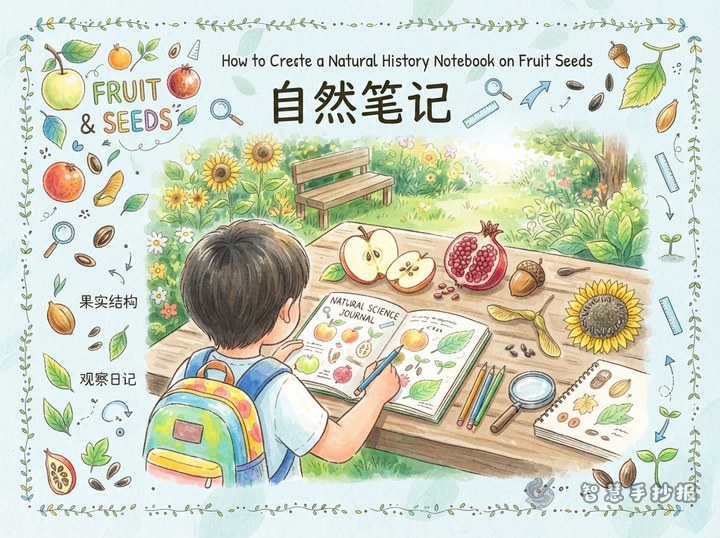
This handwritten newspaper can be more than a page of colorful leaves. It can become a small nature journal about observation, seasons, and plant details. Good title ideas include A Leaf’s Color Diary, Leaf Changes Around My School, or The Secret Colors of Autumn Leaves.
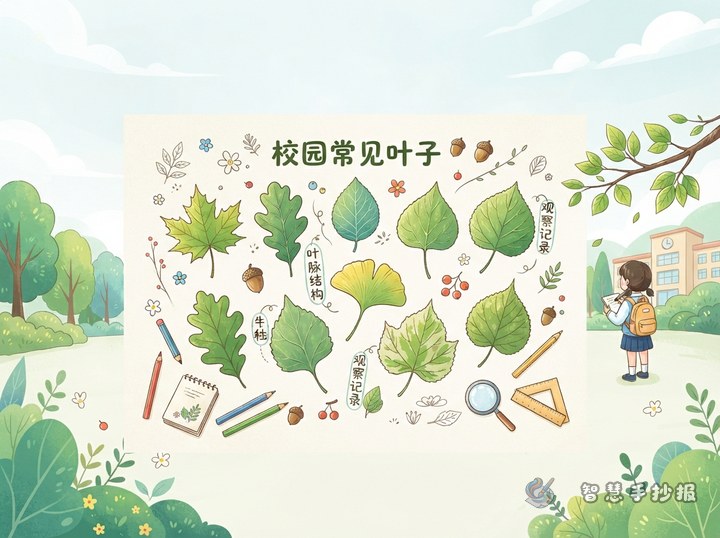
Choose two or three easy-to-observe leaves, such as maple, plane tree, ivy, or other leaves found near home or school. A focused topic will make the page clearer and easier for students to finish.
Observation notes to include
Color changes
Write short and specific notes, such as: “Some leaves turn yellow at the edges first, while the area near the veins still stays green.” This sounds more like a real nature journal than a general description.
Leaf veins and shapes
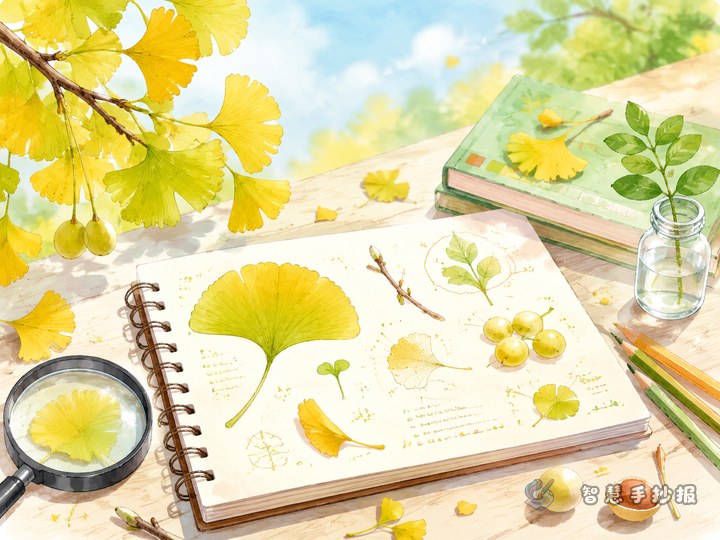
Hold a leaf up to the light and look for the main vein, side veins, and tiny vein patterns. You may write: “The main vein is like the center line of the leaf, and the side veins spread out like small roads.”
Leaves and seasons
For a student-friendly explanation, write that when the weather becomes cooler and sunlight becomes weaker, the green color in many leaves slowly fades, and yellow, red, or brown colors become easier to see.
Useful sections for the page
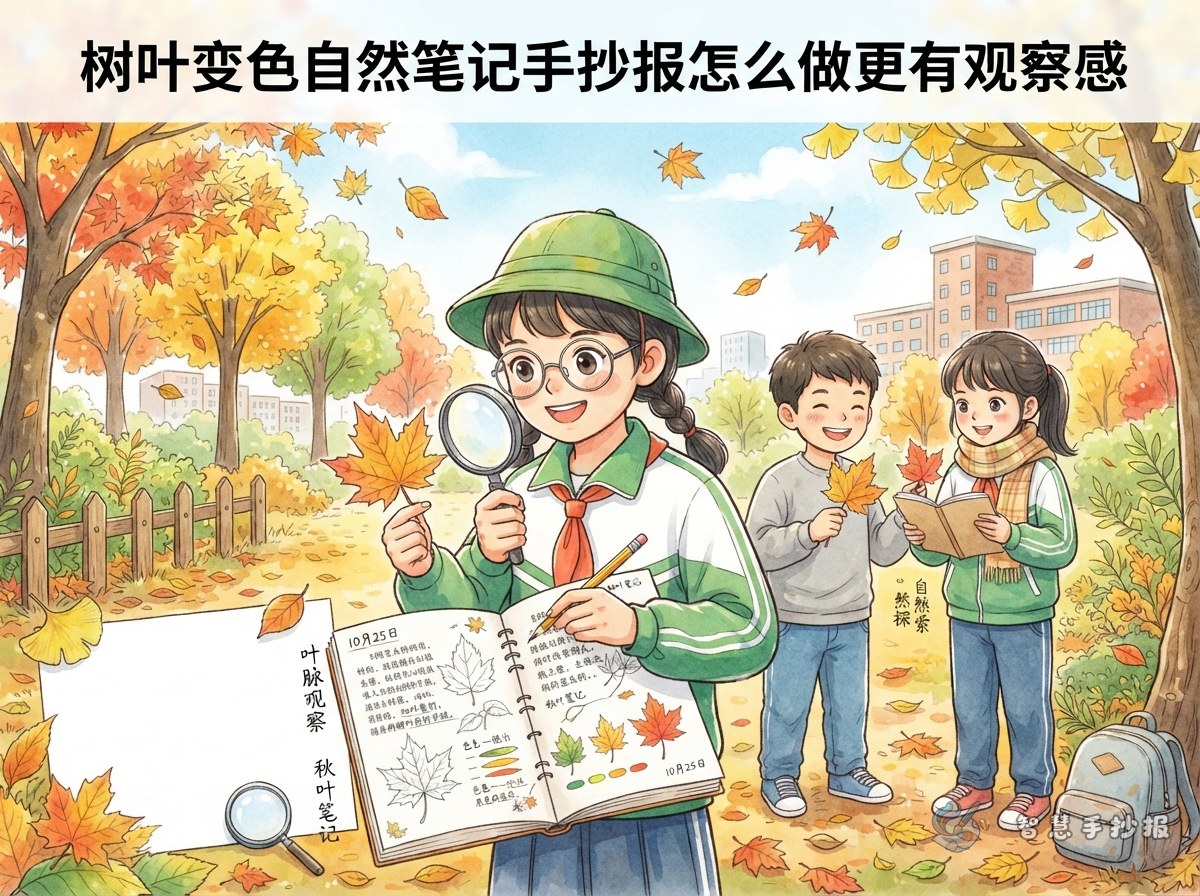
- Observation Card: plant name, place, date, weather, leaf color, and vein features.
- My Discoveries: the front and back of a leaf may look different, dry leaves are more fragile, and the color near the stem may change slowly.
- Nature Questions: Why do some leaves turn red while others turn yellow? Why do fallen leaves curl?
- Care for Nature: do not break branches; collect fallen leaves for observation and return them to nature when possible.
Make the layout look like an open nature notebook
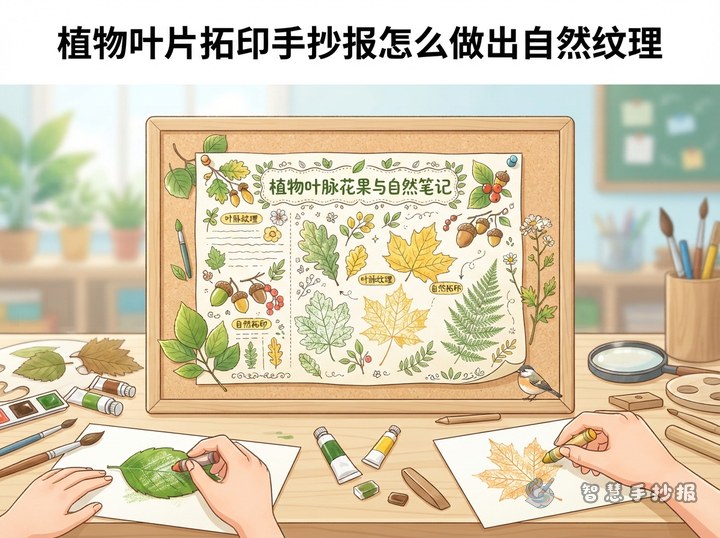
Place one large leaf drawing in the center and draw its veins carefully. Put an observation card on the left, simple science notes on the right, and a small “My Discoveries” area at the bottom.
Use warm colors such as cream, olive green, orange, red, and brown. Borders can look like tape, pencils, magnifying glasses, or date labels. The goal is to show both scientific observation and a handmade journal feeling.
Small tips before drawing
- Sketch the sections with a pencil before writing.
- Draw the main vein slightly thicker and the side veins thinner.
- Use short sentences so each section is easy to read.
- For more title, section, and layout ideas, you can continue making your page in the Zhihui Shouchaobao WeChat mini program.