Start with a practical message
This poster does not need to show every step of food moving through the body. Instead, focus on everyday habits that support comfortable digestion. A clear headline such as Care for Your Digestive System, One Meal at a Time can introduce sections about breakfast, water, chewing, balanced meals, and after-meal routines.
Build the poster around four useful sections
Meet the Digestion Helpers
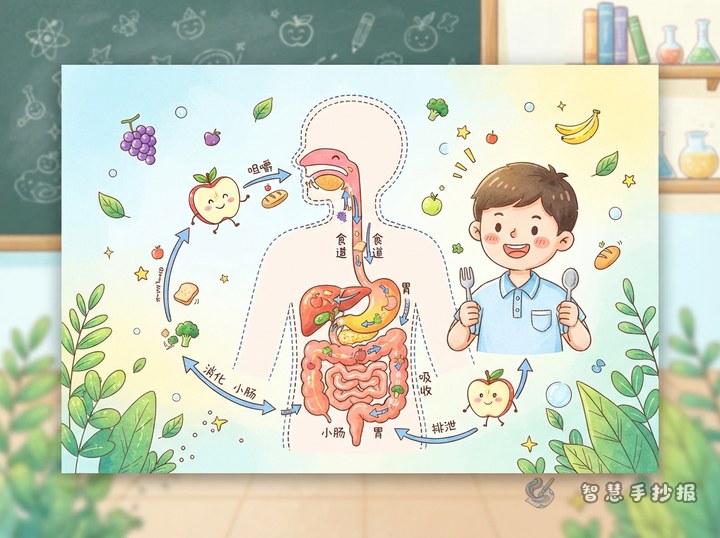
Teeth cut and grind food, while saliva begins the digestive process. The stomach stores and mixes food for a time. Most digestion and nutrient absorption take place in the small intestine. The large intestine absorbs some water and helps form solid waste.
What Makes a Balanced Meal?
Meals can include a variety of grains or starchy foods, vegetables, fruit, beans, dairy products, eggs, fish, poultry, or meat. Different foods offer different nutrients, so children should avoid relying on only a few favorites or replacing regular meals with snacks.
Habits Your Digestive System Appreciates
- Eat regular meals and make time for breakfast.
- Chew carefully and avoid eating too quickly or too much.
- Drink enough water instead of depending on sugary drinks.
- Wash hands before meals and avoid spoiled food.
- Do not begin intense exercise or lie down immediately after eating.
Habits Worth Changing
Overeating, rushing through meals, choosing too many greasy or sugary foods, and being extremely selective about food can make balanced eating difficult. Use memorable contrasts such as “Slow down and chew well” to turn this section into an easy checklist.
Design the page as a day of meals
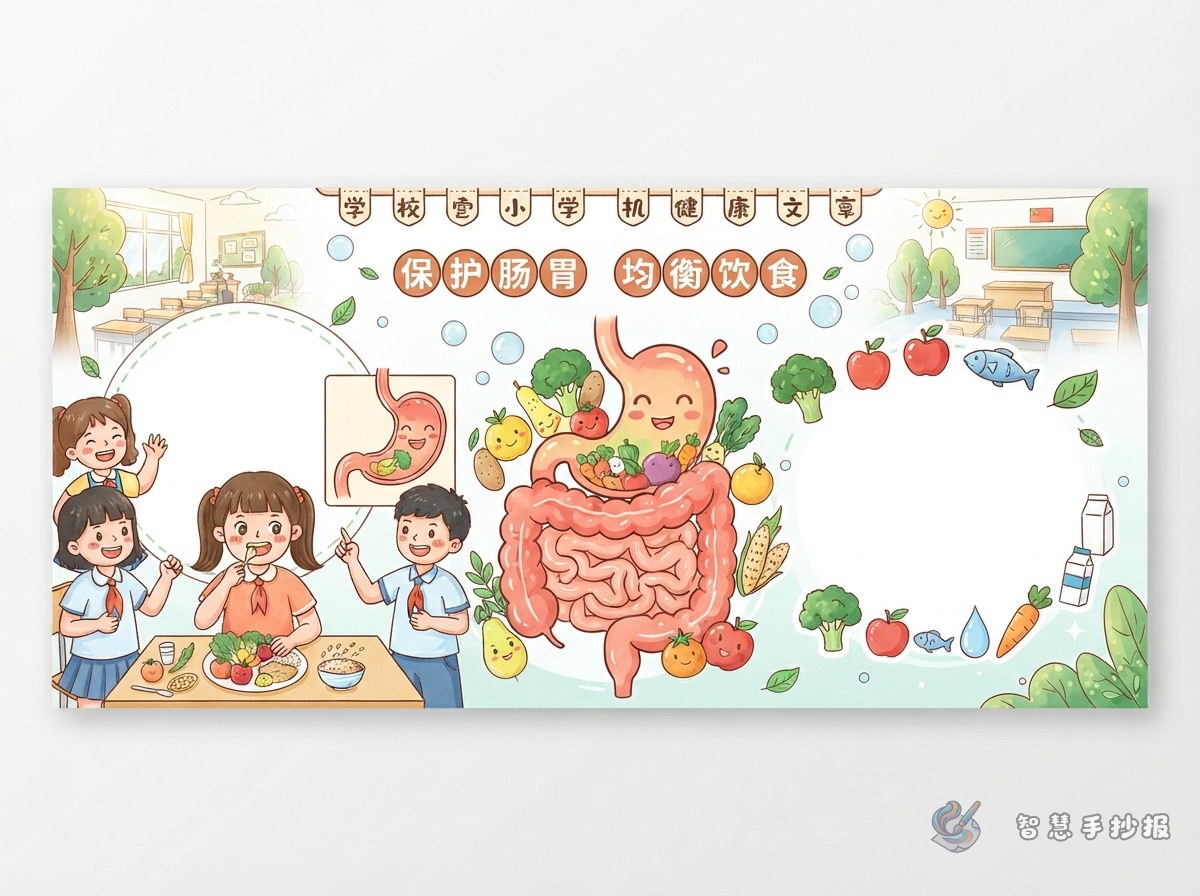
Divide a landscape page into breakfast, lunch, and dinner areas. Place the title and small grain or egg drawings near breakfast. Make lunch the largest area for food groups and digestive facts. Use the dinner area for healthy habits and reminders. Small drawings of cups, vegetables, spoons, and a smiling stomach can fill gaps without covering the text.
Short facts ready for the poster
- Chew well: Chewing breaks food into smaller pieces and encourages a slower eating pace.
- Choose variety: Selecting different kinds of food helps the body obtain a broader range of nutrients.
- Eat an appropriate amount: Avoid overeating and choose portions that fit your needs and activity level.
- Keep food clean: Clean hands and fresh food are important parts of digestive health.
Finishing touches for a clear result
- Sketch the headline, meal plates, and text boxes in pencil before outlining them.
- Try orange and green for energy and freshness, and limit the palette to about three main colors.
- Give each box one main idea and use short sentences or bullet points instead of dense paragraphs.
- Check that the finished poster includes digestion facts, balanced-food ideas, and practical habits.
To adjust the sections, lettering, and page layout more easily, scan the code to continue creating in the 智慧手抄报 WeChat Mini Program, then adapt the material to the student’s grade and paper size.