Start with the contrast at the heart of the story
The most important part of a Lord Ye Loves Dragons handwritten newspaper is not the full original text. It is the contrast between claiming to love something and being unable to accept it in real life. Once this contrast is clear, the whole page feels focused and meaningful.
You can use a main title like “Lord Ye Loves Dragons” and add a subtitle such as “What Real Interest Means” or “The Difference Between Pretend and True Love.”
Choose a few useful sections instead of filling the page
1. Short story summary
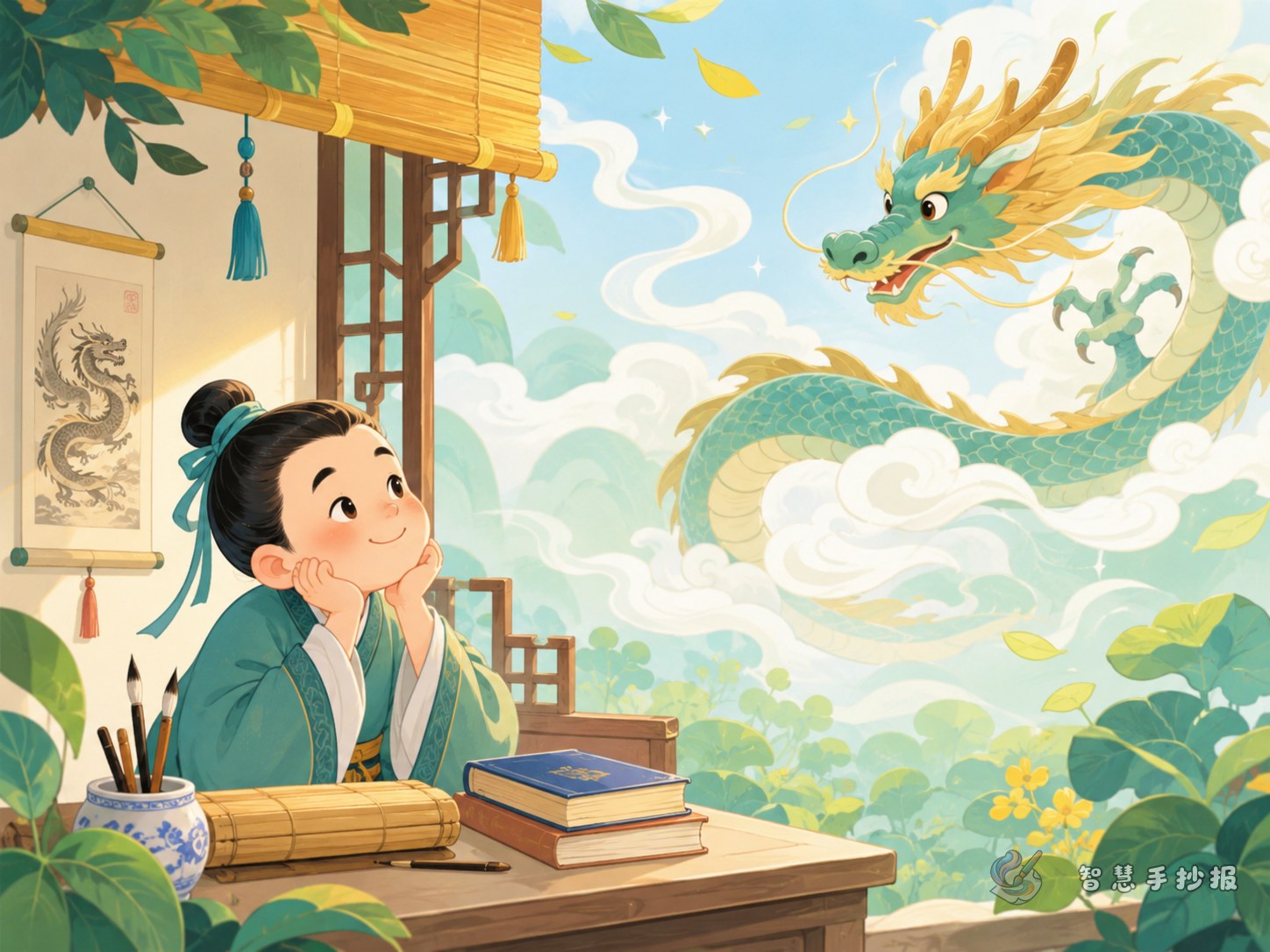
Write a brief version of the tale: Lord Ye decorated his home with dragon patterns and seemed to love dragons very much. When a real dragon finally came to visit, he became frightened and ran away.
2. Meaning of the idiom
This idiom is often used to describe someone who appears to like something on the surface but does not truly understand or accept it. Keep this explanation short and easy to read.
3. My understanding
- Real interest is more than words.
- True love for something requires learning and experience.
- What we imagine we like may be different from reality.
4. Real-life examples
You can connect the idiom to student life. For example, someone may say they love reading but never open a book, or claim to enjoy sports but never practice. This makes the handwritten newspaper more thoughtful.
Short text materials you can use directly
- Idiom meaning: seeming to love something without truly understanding it.
- Story keywords: dragon patterns, admiration, real dragon, fear, escape.
- Theme sentence: True interest can stand up to real contact and deeper understanding.
- Lesson sentence: We should be sincere in what we love, not only talk about it.
You can also add a personal reflection such as, “I want to be someone who truly loves learning, not someone who only says so.”
A layout that naturally shows the idea
This topic works especially well with a comparison-based design.
- Place the main title at the top and use a dragon drawing as the visual center.
- Use the left side for “How Lord Ye showed his love” and the right side for “What happened when the real dragon arrived.”
- Put “Idiom Meaning” and “What I Learned” at the bottom to complete the page.
Decorative elements can include dragon scales, clouds, scrolls, or simple traditional borders. Good color choices include green, gold, light blue, and red.
Let the drawings help tell the story
The page may feel flat if it has only text. Simple illustrations can make it much better:
- Dragon patterns on walls, clothes, or objects.
- A real dragon appearing near a window or rooftop.
- Lord Ye smiling at first and panicking later.
- Small arrows or labels to show the “before” and “after” contrast.
These visuals make the message easier for teachers and classmates to understand at a glance.
End with a clear takeaway
The final section should point back to the theme. You might write that we should be genuine in our attitude toward learning, hobbies, and goals instead of staying on the surface. This kind of ending is simple, thoughtful, and perfect for a school handwritten newspaper.
If you want to keep improving your title design, decorations, and full-page arrangement, you can continue in the Zhihui Shouchaobao WeChat mini program.