A clear theme makes the page stand out
If you want a handmade newspaper about traditional opera mask culture to look thoughtful, choose a small but focused topic. A practical choice is How to design a Peking Opera mask by role type. This angle is different from simply explaining colors. Students can compare sheng, dan, jing, and chou, show how lines, eyes, eyebrows, and patterns create different personalities, and make the whole page more organized and vivid.
Suggested sections for the page
- What is an opera mask: Briefly explain that it is a stylized painted face used in traditional Chinese opera to show identity and personality.
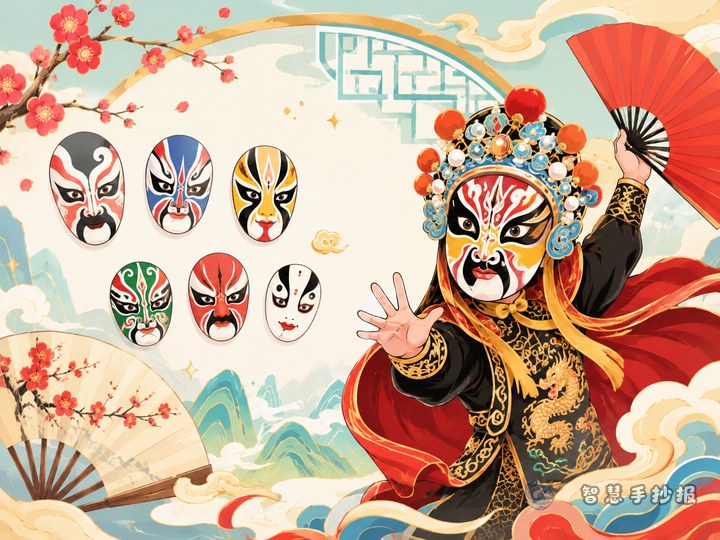
- Main role types: Introduce sheng, dan, jing, and chou in simple words, focusing on which types often use stronger facial designs.
- Mask pattern features: Write about eyebrows, eye shapes, forehead patterns, and nose lines.
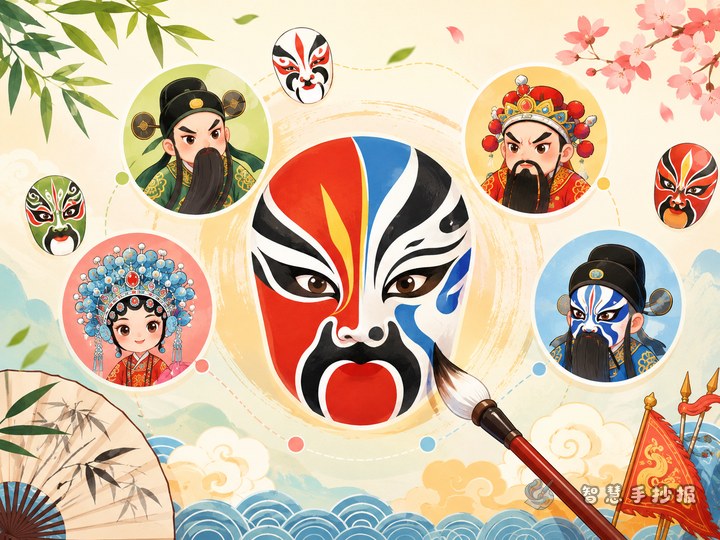
- Classic character examples: Choose two or three familiar figures and describe their visual traits.
- My own mask idea: Add a small design section where the student imagines a character and explains the choices.
Short text materials students can use
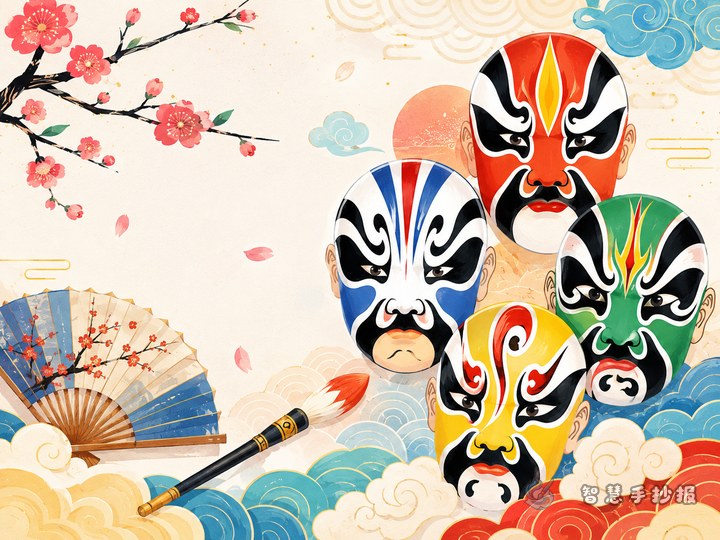
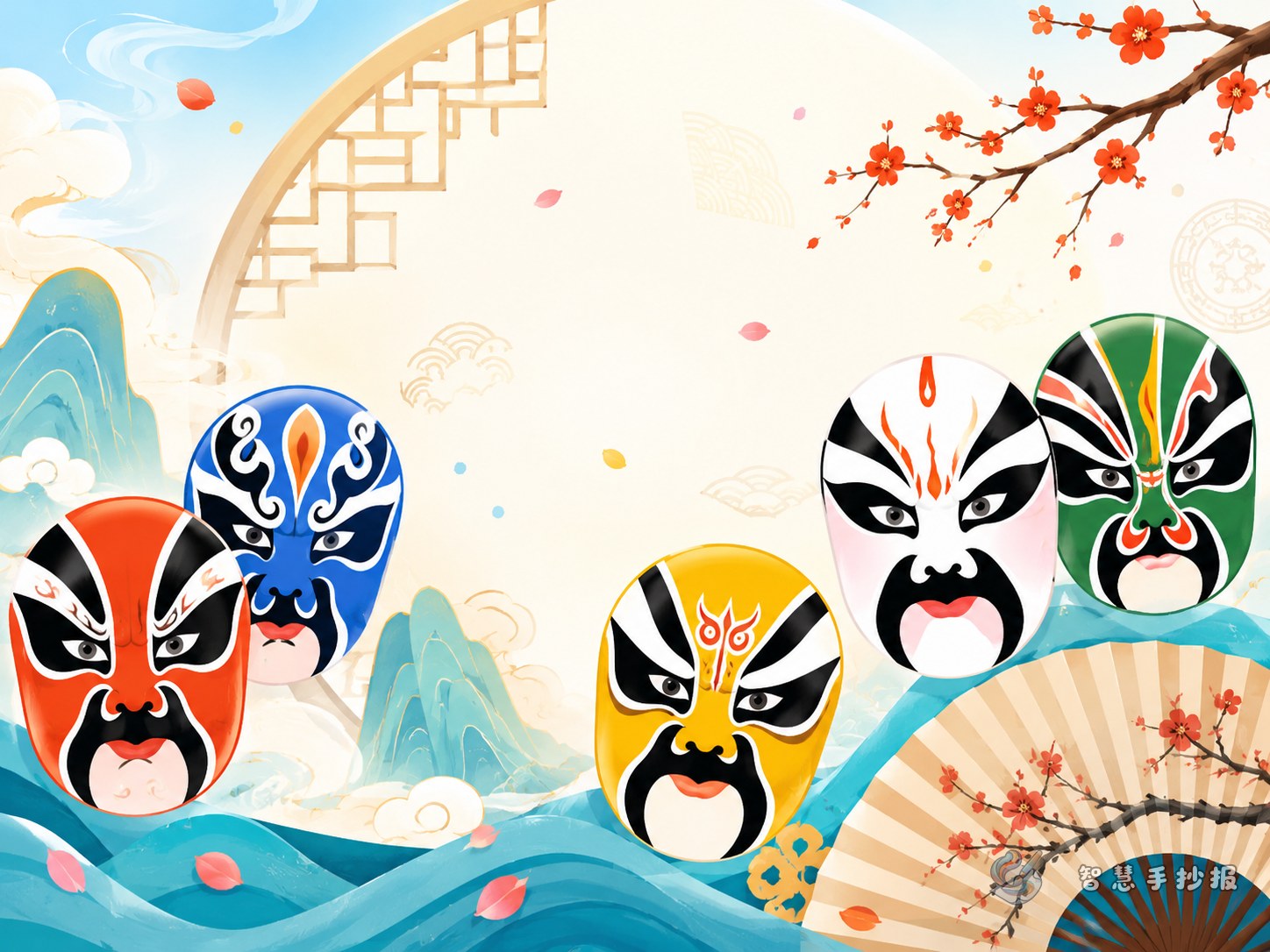
Opera masks are an important part of traditional Chinese opera culture. They do not simply make faces colorful. Through bold lines, shapes, and decorative patterns, they help show whether a character is brave, serious, lively, clever, or funny. Looking at a mask, people can quickly feel the role’s spirit and stage style.
Different role types create different visual impressions. Some masks look powerful and dignified, while others appear humorous or alert. Students can write from the idea that mask design combines performance, painting, and cultural symbols, which is why it is both artistic and meaningful.
How to organize the layout beautifully
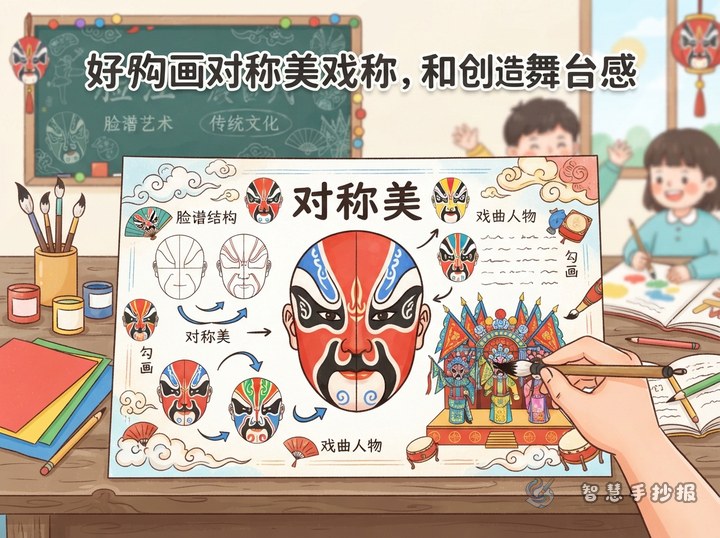
The page can be divided into three main parts. Put the title in the top center, such as How to Design a Peking Opera Mask by Role Type. The left side can explain role types, the middle can show facial pattern features, and the right side can present character examples. A bottom section can be used for a hand-drawn mask frame or a short reflection.
Use decorative borders inspired by clouds, drums, tassels, or stage curtains. The title can be highlighted with red, black, gold, and blue, but do not overload the page with too many colors. Leave enough blank space so the newspaper looks clean and easy to read.
Useful details for finishing touches
- Write short paragraphs instead of long blocks of text.
- Use small labels next to drawings, such as eyebrow shape, eye line, and forehead pattern.
- Add one comparison box to show how two role types differ in appearance.
- Keep handwriting neat and make subtitles slightly larger.
- After drafting on paper, students can continue refining the layout in the WeChat mini program of Zhihui Shouchaobao.